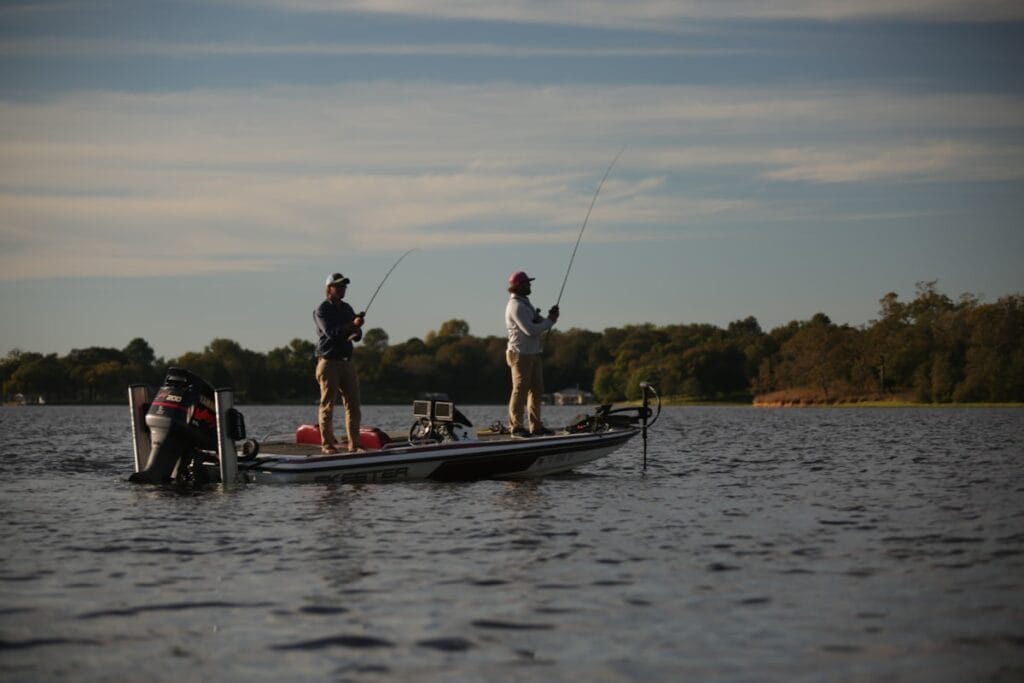
The pre-spawn bass fishing gets all the attention. Anglers mark their calendars, watch water temps, and spend weeks targeting bedding bass in the shallows. But what happens after the spawn is over? For a lot of fishermen, that transition period feels like the bass just vanished. The beds are empty, the shallows seem lifeless, and suddenly nothing’s working.
The truth is, post-spawn bass are incredibly catchable — if you understand what they’re doing and where they’re going. This is one of the most overlooked windows of the bass fishing calendar, and anglers who figure it out can have some of their best days on the water. Here’s how to make the most of the post-spawn period.
Understanding Post-Spawn Bass Behavior
After spawning, bass are in recovery mode. They’ve just expended an enormous amount of energy guarding beds, and they need to eat. But they don’t immediately charge offshore to deep structure. The transition happens in stages, and understanding those stages is the key to catching them.
Male bass typically stay shallow longer than females because they guard the fry after the eggs hatch. You’ll often find males hovering around the nesting areas for a week or two after the spawn is complete. They’re aggressive and will eat, but they tend to be smaller fish.
Female bass — the bigger fish — leave the beds first and move to nearby staging areas. These are transitional spots between the spawning flats and the deeper water they’ll eventually occupy for summer. Think about the first significant depth change off a spawning flat: a channel swing, a dock line, a point that drops from 4 feet to 10 feet, or the outside edge of a grass bed. That’s where the big females set up first.
Where to Find Post-Spawn Bass
The key to locating post-spawn bass is finding that transitional zone — not too shallow, not too deep. Bass are moving from spawning depths (usually 2-6 feet) toward their summer haunts (often 10-20+ feet), and they stop at predictable waypoints along the route.
Points and Secondary Points
Main lake points and secondary points that extend from spawning pockets are prime post-spawn real estate. Bass use these as highways between shallow and deep water. The tip of a point that drops into a creek channel is a spot that can hold a dozen post-spawn fish. Focus on points with some kind of cover — rocks, stumps, or isolated grass — which give bass something to relate to as they stage.
Docks Near Deep Water
Docks that sit near a channel or a significant depth change are magnets for post-spawn bass. The shade provides comfort, and the pilings and cables offer ambush points. If a dock is positioned at the mouth of a spawning pocket where the water goes from 5 feet to 12 feet, that’s a high-percentage target. Skip a jig or a weightless senko under those docks and be ready.
Grass Edges and Transitions
On lakes with aquatic vegetation, the outside edge of a grass bed often marks the border between spawning territory and deeper water. Post-spawn bass will slide out to that edge and patrol it looking for easy meals — bluegill, shad, and crawfish that are also using the grass. A swim jig or a spinnerbait worked along the outside grass line can be incredibly productive during this period.
Bluff Walls and Steep Banks
In highland reservoirs, bluff walls and steep rocky banks adjacent to spawning flats are textbook post-spawn areas. Bass can slide from 3 feet of water to 15 feet just by moving a few yards, and they don’t have to travel far to find food. Parallel a bluff wall with a crankbait or jerkbait and you’ll find where they’re stacking up.
Best Lures for Post-Spawn Bass
Post-spawn bass are hungry but not always aggressive. They’re feeding to recover energy, so they’ll often eat opportunistically rather than chasing down fast-moving baits. That said, they can be caught on a wide range of lures if you match the presentation to their mood.
Soft Plastic Stickbaits
A weightless Senko or similar stickbait is arguably the single best post-spawn bass lure. It’s subtle, slow-falling, and works in the shallow-to-mid-depth transition zone perfectly. Cast it to docks, points, and laydowns and let it fall on a slack line. The slow, shimmying descent triggers strikes from lethargic post-spawn fish that won’t chase a faster presentation. Use a 5-inch stickbait in green pumpkin or watermelon in clear water, or black and blue in stained water.
Medium-Diving Crankbaits
Once bass move out to points and channel swings in the 6 to 12-foot range, a medium-diving crankbait becomes a search tool you can cover water with. Choose a crankbait that reaches the depth where bass are holding and crank it into rock, stumps, or the bottom. The deflection off hard objects triggers reaction strikes from post-spawn bass that might not be actively feeding. Shad colors work well when baitfish are present; crawfish colors are better over rocky bottom.
Spinnerbaits
A 3/8 oz spinnerbait with a willow leaf and Colorado blade combo is a versatile post-spawn option. You can slow-roll it along grass edges, burn it over shallow cover, or let it helicopter down next to a dock piling. Spinnerbaits cover water efficiently and trigger reaction strikes from bass that are starting to feed actively again. White and chartreuse is a reliable color combo in most water clarity conditions.
Topwater
As the post-spawn period progresses and water temps climb into the upper 60s and 70s, topwater becomes increasingly effective. A walking bait like a Zara Spook or a popper worked over shallow points and along grass edges early and late in the day can produce explosive strikes. Post-spawn bass are transitioning into a summer feeding pattern, and topwater is one of the first signs that the aggressive bite is coming back.
Post-Spawn Tactics by Time of Day
Early morning is your best window during the post-spawn. Bass are most active in low light, and they’ll push shallower to feed before retreating to deeper staging areas as the sun gets high. This is when topwater, spinnerbaits, and swim jigs shine. Work the shallow edges of points, grass lines, and dock-lined banks.
Midday, expect bass to pull off to slightly deeper water or bury up in shade under docks and overhanging trees. This is when a Senko pitched under a dock or a jig dragged along a deeper point produces best. Slow down and target specific pieces of cover rather than running and gunning.
Late afternoon often brings another shallow feeding push, similar to the morning. Bass that spent the day in 10-12 feet of water will slide back up to 5-8 feet to feed along structure edges. A crankbait or a swim jig paralleled along a point can load the boat during this window.
Common Post-Spawn Mistakes
The biggest mistake anglers make during the post-spawn is continuing to fish the spawning flats. By the time most of the females have left the beds, those shallow flats hold mostly small males and the occasional straggler. Shift your focus to the first breakline or depth change adjacent to those flats and you’ll immediately find better fish.
Another common error is fishing too fast. Post-spawn bass are recovering and aren’t always willing to chase. Slow, natural presentations fished in the right area will outperform power fishing tactics in most post-spawn situations. Match your speed to the fish’s energy level.
Finally, don’t overlook current. In reservoirs with current flow, post-spawn bass will position on the current side of points, humps, and channel bends. Current brings food, oxygenated water, and cooler temperatures — all things post-spawn bass are looking for. Finding current-related areas in the post-spawn can be a major pattern that other anglers miss entirely.
Putting It All Together
The post-spawn isn’t a dead zone — it’s a transition. Bass are moving, feeding, and setting up in predictable locations. Focus on the areas between the spawning flats and deeper summer structure: points, docks near channels, grass edges, and bluff walls. Keep your presentations natural and match your lure speed to the fish’s mood. Early and late, go with moving baits along shallow edges. Midday, slow down with soft plastics and jigs in shade and deeper staging spots.
If you’ve been struggling after the spawn wraps up, try this approach on your next trip. The fish are there — they’re just one cast away from where you’ve been looking.
❓ Frequently Asked Questions
How do you fish a hollow body frog for bass?
Cast the frog onto lily pads or heavy vegetation and walk it across the surface with a rhythmic rod tip twitch — creating a side-to-side walk-the-dog action. Pause over holes in the cover to trigger strikes.
When is the best time to fish a frog for bass?
Frog fishing peaks in summer and early fall when bass push into heavy matted vegetation. Morning and evening on overcast days produce the most surface strikes. Post-rain conditions with rising water also trigger topwater frog bites.
What is the best frog for bass fishing?
The SPRO Bronzeye Frog, Booyah Pad Crasher, and Livetarget Frog are the top hollow-body frogs. Pair any frog with a 7’3″ heavy casting rod and 50–65 lb braided line for solid hooksets in heavy cover.
📖 Keep Reading
Sandro
Bass Fishing Enthusiast & Founder of Bass Fishing Blueprint
Sandro has been chasing bass from the bank and the boat for over a decade. He created Bass Fishing Blueprint to share straightforward, practical tactics that help everyday anglers catch more fish â no fluff, no filler, just what actually works on the water.