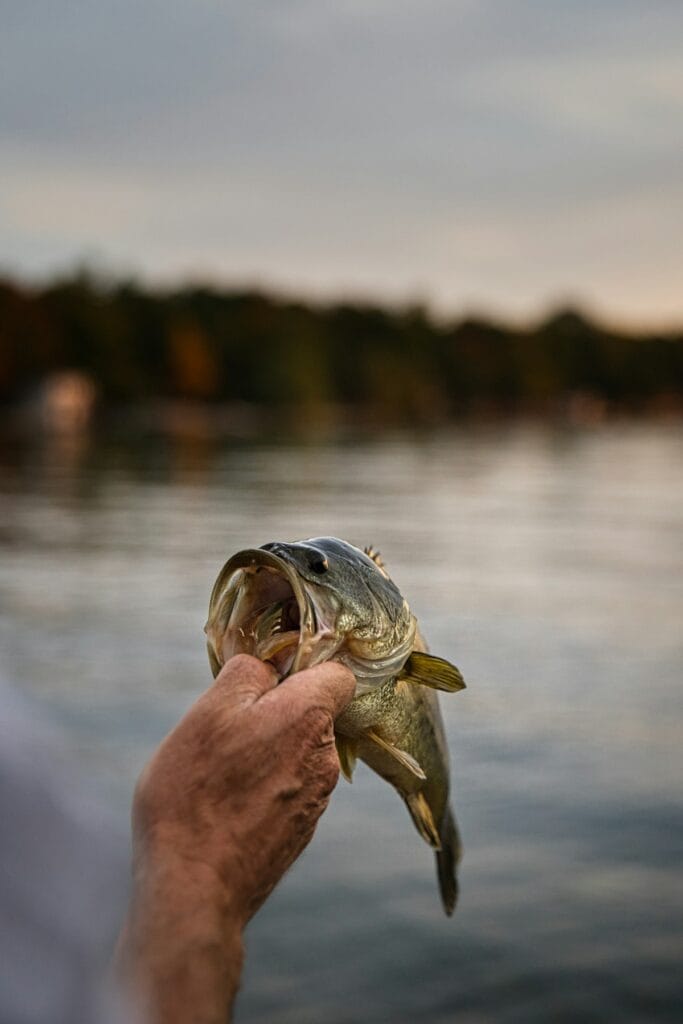

Spring is the season. If you bank fish and you’re not on the water from mid-March through late May, you’re missing the best bass fishing of the year by a wide margin. No other time comes close.
Here’s why: the entire bass population moves shallow to spawn. Fish that spent the winter in twelve, fifteen, twenty feet of water compress onto the banks, the points, the flats. They come to you. The fish are aggressive, they’re in predictable locations, and the biggest fish of the year — the heavy females loaded with eggs — are within casting distance of shore.
I’ve had spring mornings from the bank where I caught more quality fish in two hours than I’d normally catch in a full week. That’s not luck. That’s understanding what’s happening and being in the right place at the right time.
Understanding the Three Phases of Spring Bass
Spring bass fishing isn’t one thing — it’s three distinct phases happening in sequence, and how you fish each one is different.
pre-spawn is when water temperatures are climbing from the low 50s into the low 60s. Bass are staging — holding on the first significant depth change near spawning flats, feeding heavily before the spawn. They’re not yet on the beds, but they’re close, and they’re eating everything. This is arguably the most productive feeding window of the year.
Spawn happens when water temps hit 60–75°F, depending on your region and the species of bass. Largemouth will build beds in 1–6 feet of water on firm, sandy or gravelly bottom, usually near some form of cover. The fish are there, you can often see them, but they’re not always eating — they’re protecting the bed. This is the most divisive phase for anglers. Some love sight fishing, some won’t do it on principle. Either way, understanding it helps you know where the fish are.
Post-spawn is the most overlooked phase. The male bass stay to guard the fry for a week or two. The females — the big ones — slide off the beds exhausted and need to recover. They stage on the first available depth nearby, often suspended slightly off bottom, not feeding aggressively. This is a tough bite, but the fish are still shallow and recoverable with the right approach.
Pre-Spawn: The Best Fishing of the Year
Pre-spawn bass are staging bass — and staging bass are feeding bass. They’re packing on weight before the energy demand of spawning, and they’re concentrated on predictable structure.
From the bank, you want to fish the areas that connect deep water to shallow spawning flats. Points are perfect. A point that extends from a shallow cove out to deeper water is a pre-spawn superhighway — bass move up and down it as conditions change, and the tip of the point is a consistent ambush spot.
The best lures for pre-spawn are reaction baits and aggressive presentations. A 1/2 oz spinnerbait worked just off the bottom on a slow roll. A square-bill crankbait deflecting off the rocks or wood at the base of a point. A lipless crankbait yo-yoed along a depth change. These fish are in a feeding mindset, and they’ll chase.
Pay attention to water temperature. The north-facing banks stay colder longer — avoid them in early spring. The south-facing banks warm first because they get more direct sun. Fish those banks earliest in the season. By mid-spring as temps stabilize, the whole lake comes alive, but in those early weeks the warm banks are measurably better.
Spawn Phase: Sight Fishing and Bed Fish
Spawning bass build beds in shallow, firm-bottomed areas near some form of cover. Sandy pockets in a cove, gravelly points, hard clay banks with scattered rock — these are the spawning grounds. If you can see the bottom in 2–4 feet of water and it’s firm, there are probably bass beds somewhere nearby.
Look for round, cleared circles on the bottom. Bass fan the silt away to create a clean hard-bottomed nest. In clear water you can sometimes spot these from twenty feet away with polarized sunglasses — an absolute essential for spring bank fishing.
The classic approach is to drop a bait directly onto the bed — a soft plastic craw, a Ned rig, a finesse worm — and leave it there. Aggravate the fish into striking. The male will bite out of aggression before the female will. The female may take many more casts. She’ll mouth the bait, spit it, mouth it again. The hookset on a bed fish feels different than a normal bite — often just a heaviness or the line going sideways as the fish tries to move the bait off the nest.
If you see bass but they won’t bite, back off. Give the fish ten minutes without pressure. Come back with a different lure or a different angle. Sometimes the approach makes all the difference — a bed fish that’s watched a Texas rig land on its nest a dozen times will sometimes crush a swimbait it’s never seen before.
Post-Spawn: Targeting Recovering Fish
Post-spawn is overlooked because people don’t understand what the fish are doing. The spawn is over, the big females are tired, and the bite cools off noticeably. A lot of anglers write off the season at this point. That’s a mistake.
Post-spawn females are staging in slightly deeper water adjacent to the spawning flats — usually 6–12 feet, on the first significant drop or piece of cover they find after leaving the bed. They’re not feeding aggressively, but they can be caught on slower, finesse presentations.
A shaky head worm or a Ned rig dragged slowly along the bottom near a depth change is the right move here. Small profile, subtle action, fished slowly. Cast to the base of a point where it drops into 8–10 feet of water and drag it. The bite will be subtle — a slight pressure, a line tick. Don’t set the hook on tension alone; reel down until you feel the fish and then swing.
The males guarding fry are a different story. They’re shallow, they’re aggressive, and they will bite. A small buzzbait, a walking bait, a swimbait — anything that invades their territory gets attacked. These aren’t big fish, but they’re fun, and they’re willing.
Spring Bank Fishing Tactics: What Actually Works
Get there early. Spring bass are most active during the warmest part of the day early in the season — mid-morning to afternoon, when surface temps peak. Later in spring as temps climb, flip back to the early morning window. Pay attention to when you’re catching fish and replicate it.
Fish the north end of the lake last. South-facing banks on the north end of the lake warm first. The north-facing banks warm last. Early season, stack your time on the warm banks. Simple as that.
Polarized sunglasses are non-negotiable. I don’t bank fish in spring without them. The ability to see into the water, spot beds, see fish cruising, watch your lure — it changes everything. Any decent pair will do. Costa and Oakley make great options at the higher end. A $25 pair from a gas station is better than nothing if that’s where you’re at.
Slow down more than you think you should. Spring fish can be aggressive, but in cold fronts and early cold-water conditions, the fish are sluggish. A bait that’s sitting on the bottom doing nothing outfishes a fast-moving bait more than you’d expect. Leave it there longer than feels productive. You’ll be surprised.
Work the secondary points first. Main lake points are well-known and get hit constantly. The smaller secondary points inside a cove — barely even bumps in the bank — get overlooked. In the spring those secondary points, especially ones with any wood or rock nearby, hold pre-spawn and spawning fish all season long. Don’t walk past them to get to the obvious spots.
The Window You Can’t Miss
There will be a week or two every spring — the timing varies by region but in most of the country it’s somewhere between early April and late May — where the bass are stacked shallow, the weather is stable, and the fishing is as good as it gets. You can feel it when it’s happening. The bites come quickly. The fish are healthy and heavy. The water is warming but not hot yet.
Clear your schedule for that window. Bank fish every morning you can. The season is long, but that peak is short, and if you miss it chasing other things, you wait another year.
Get out there. The fish are already thinking about it.
❓ Frequently Asked Questions
How do you catch bass consistently?
Consistency comes from understanding seasonal patterns and adjusting your presentations accordingly. Fish the right depth for the water temperature, match your bait to local forage, and focus on structure and cover rather than open water.
What time of day are bass most active?
Bass are most active during the first two hours after sunrise and the last hour before dark. These low-light windows trigger the most aggressive feeding behavior.
How do I catch bass when they are not biting?
Downsize your presentation to a finesse bait — a drop shot, shaky head, or Ned rig worked very slowly near the bottom. Bass that won’t chase fast-moving lures will often pick up a small worm sitting still on the bottom.
📖 Keep Reading
Frequently Asked Questions
When is the best time to go bank fishing for bass in spring?
The best spring bank fishing window is the pre-spawn and spawn period, typically when water temperatures hit 55-65°F. At this time, bass are moving from deep water toward the bank to feed aggressively before spawning. This window produces some of the biggest bass of the year from shore.
What lures work best for spring bass fishing from the bank?
In early spring, use slow presentations like jigs, drop shots, and crawfish-imitating plastics near the bottom. As water warms past 60°F, add lipless crankbaits, swimbaits, and spinnerbaits that cover water quickly. During the spawn, a wacky-rigged stick worm or Texas-rigged creature bait is hard to beat.
How do you find spawning bass from the bank?
Look for light-colored, clean patches of gravel or hard bottom in 1-5 feet of water, often near the bank. Bass fans (clears debris from) their beds, creating a visible light circle. Polarized sunglasses are essential for spotting beds. Focus on protected areas like coves and backs of pockets that warm up first.
Sandro
Bass Fishing Enthusiast & Founder of Bass Fishing Blueprint
Sandro has been chasing bass from the bank and the boat for over a decade. He created Bass Fishing Blueprint to share straightforward, practical tactics that help everyday anglers catch more fish â no fluff, no filler, just what actually works on the water.