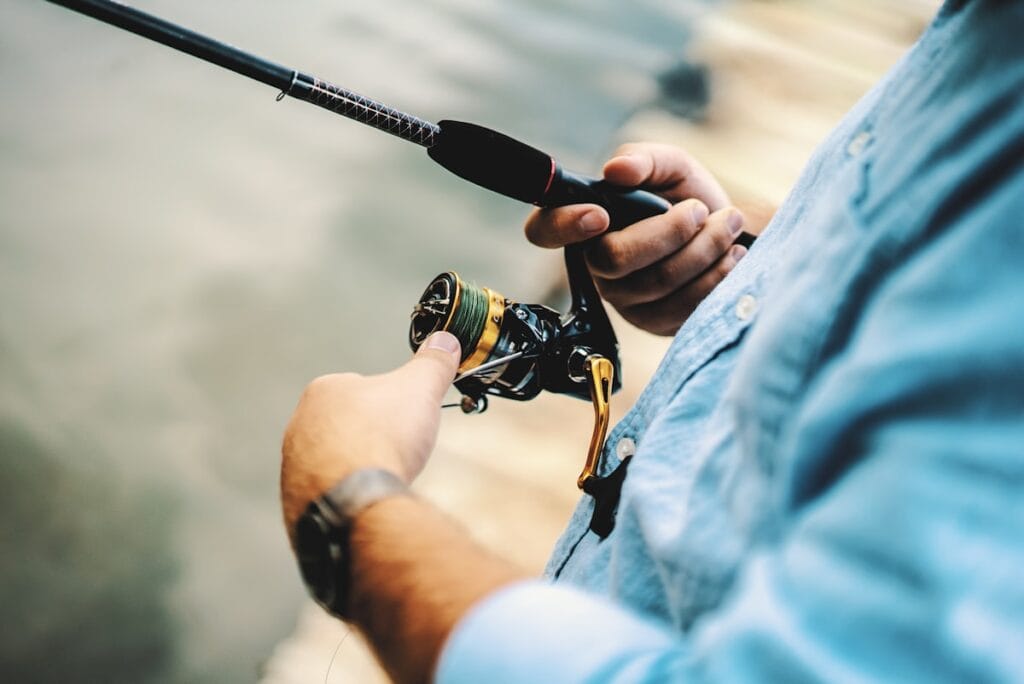
I grew up fishing one lake. Same lake my whole childhood — a 200-acre flood-control reservoir about six miles from my house. No boat. No access to a boat. Just whatever bank I could walk to, whatever cover I could reach with a cast, and whatever bass were willing to cooperate that day.
I learned more about bass fishing in those years than I have in any time since. When you can’t move, you’re forced to pay attention. You learn to read the water. You learn that bass don’t just sit randomly — they’re somewhere specific, for a reason, and if you can figure out why, you can find them.
This is everything I’d tell someone starting from scratch. How to think about it, how to approach it, and what to actually do once you’re standing on the bank with a rod in your hand.
First Thing: Forget Everything You’ve Seen on TV
Tournament fishing on television is not bass fishing. It’s a spectator sport that happens to involve rods and reels. Those guys are on a fully-rigged bass boat with forward-facing sonar that shows them individual fish in real time, making precision casts to specific bass they can watch on a screen. That’s not your situation.
Your situation is better in some ways. You’re slower. You’re quieter. You’re not throwing a wake every time you reposition. Bass that have been pushed out of shallow water by boat pressure often slide back toward the bank — right where you’re standing. I’ve caught some of my biggest bass within ten feet of shore on pressured lakes where every boat angler assumed they’d already been fished out.
The mindset for bank fishing is patience and precision. You’re not covering 40 acres a day. You’re working a stretch of bank thoroughly, making smart presentations to the best-looking spots, and moving on when you’ve given it enough time.
Where Bass Actually Live (And Why)
Bass are predators, and predators don’t hang out in open water waiting for food to stumble by. They ambush. That means they sit near something — a dock post, a laydown tree, a weed edge, a point that drops into deeper water, a submerged rock pile. They wait, they react, and they eat.
From the bank, your job is to identify what cover and structure exists in the water you can reach, and prioritize the best-looking spots. Here’s what I look for, roughly in order of priority:
Visible cover near a depth change. A laydown tree that falls from shallow into deeper water is prime real estate. The bass can sit in the shade and cover at medium depth, slide shallow to feed in low light, and drop back deep when the sun gets high. A dock that’s positioned over a depth change is even better.
Points and corners. Any place where the bank changes direction concentrates baitfish, and bass know it. A small point jutting out into the water creates current breaks and food funnels on both sides. A corner where two bank lines meet often has deeper water nearby. Work both sides of every point you find.
Vegetation edges. Wherever aquatic vegetation ends and open water begins, bass patrol. They sit just inside the edge waiting for baitfish to wander by. Cast parallel to the weed edge, not into it — you want your lure running right along the outside where the bass are hunting.
Hard bottom transitions. Where sand meets mud, where gravel meets clay, where rock meets sand — baitfish and crawfish concentrate at these transitions, and bass follow. You won’t always be able to see this, but you can often feel it through your line. Rock bottom has a different sensation than muddy bottom when you’re dragging a jig or soft plastic.
Timing Is Half the Battle
If I had to pick the single most impactful change a bank angler can make to catch more fish, it’s this: be there at the right time.
Bass are most aggressive and most catchable during low-light periods. The two hours after sunrise and the two hours before dark are consistently the most productive windows throughout the year. In summer especially, bass that have gone deep and dormant during midday will push shallow and feed hard during these windows. If you’re fishing a summer morning and you’re not on the bank before the sun clears the treeline, you’re late.
Overcast days are also excellent. Cloud cover keeps light levels low all day and keeps bass in a feeding mood longer. Some of my best all-day trips have been on cloudy days in October when the bass seemed to bite all morning and most of the afternoon without the usual midday shutdown.
Wind matters too. A light chop on the surface diffuses light penetration, masks the angler’s presence, and pushes baitfish. Bass set up on the windward bank — the bank the wind is blowing into — and feed. It’s uncomfortable fishing into the wind sometimes, but the bank that’s getting blown is almost always better than the calm bank.
How to Approach the Water Without Spooking Fish
Bass in shallow water are spooky. Especially clear-water bass. Especially pressured-lake bass. Walk up to the water’s edge stomping around and you’ve already blown any fish within thirty feet — fish you didn’t even know were there.
Get in the habit of making your first cast before you’re fully at the water’s edge. Stay back three or four feet, make a long cast parallel to the bank or slightly out, and work your way in. More than once I’ve caught bass on that first cast that I would have spooked if I’d walked all the way to the water first.
Keep a low profile around clear water. Crouch if you need to. Avoid throwing shadows across the shallows. Move slowly and deliberately along the bank. This sounds like overkill until you watch a three-pounder sprint to deep water because you walked up too fast, and then you’ll never rush an approach again.
The Basic Technique That Works Year-Round
Everything has its season, but if you need one approach that works twelve months out of the year in most lakes and ponds, it’s a Texas-rigged soft plastic worked slowly around cover. I’ve covered the Senko in other articles but the principle extends to any soft plastic — creature baits, lizards, finesse worms, crawfish imitations.
The key word is slowly. Most beginners fish too fast. They cast, they reel back quickly, they cast again. That works for covering water with a crankbait. For soft plastics it’s almost always wrong. Cast near cover, let the bait fall completely to the bottom on a semi-slack line, and watch the line the whole time. Once it’s on the bottom, shake it in place two or three times. Then lift it a foot and let it fall again. Take thirty seconds per cast, at minimum.
The two times to pay closest attention are when the bait first hits the water and when it first touches bottom. Most bites happen on the initial fall, or the moment it contacts the bottom and the bass has a split second to decide. If your line jumps, twitches sideways, or just feels heavy when it shouldn’t — reel down fast and swing. You’ve got a fish.
Adjusting by Season
Spring is the best time of year to be on the bank. Bass move shallow to spawn, and they come to you. Fish slower presentations — soft plastics, jigs — near the bank. Look for beds in sandy or gravelly shallows. Pre-spawn fish are feeding actively and are the most catchable bass of the year.
Summer means early and late. During midday, bass drop to deeper water to find cooler temperatures. Unless you can reach deep structure from the bank, work the low-light windows hard and take a break in the afternoon. Topwater early, switch to slower presentations mid-morning, and pick back up with aggressive baits in the evening.
Fall is underrated from the bank. Baitfish move shallow as water temperatures drop, and bass go on a feeding binge before winter. Cover water with faster-moving baits — lipless crankbaits, spinnerbaits, bladed jigs — and stay close to the bank where the shad are pushed up. Some of the biggest one-day hauls I’ve ever had came in October.
Winter is slow, but bass are still there. Drop your presentation down to finesse — a Ned rig or a small shaky head worm on 6 lb fluorocarbon — and fish it painfully slowly on the bottom. The bite will be subtle and the fish won’t move far to get a bait. Put it on their nose and don’t move it much. Winter bass from the bank are possible, but you need patience and you need to be there when the sun warms the shallows in the afternoon.
A Few Mistakes That Cost Bank Anglers Fish
Fishing the same spot the same way every trip. Bass adapt. If the dock by the boat ramp gets hammered with Senkos every weekend, eventually those bass learn. Change your approach angle, your lure, your presentation, or find a spot that doesn’t get as much pressure.
Ignoring the middle of the bank. Everybody fishes visible structure. The dock, the big laydown, the point. The flat, featureless stretch of bank between two obvious spots gets ignored — which is exactly why bass sometimes pile up there. Don’t walk past fifty feet of bank to get to the next dock without at least making a cast or two along the way.
Not moving when it’s not working. Ten unproductive casts to the same spot is enough. Either the fish aren’t there or they don’t want what you’re showing them. Move on. Come back later if you think fish should be there. Stubborn repetition in the wrong spot is the enemy of a good day on the water.
Using line that’s too heavy. Thick line is visible and moves unnaturally through the water. In clear water especially, dropping from 17 lb to 12 lb monofilament can double your bites. Match your line weight to your technique and your water clarity.
You Don’t Need a Boat to Be a Good Bass Angler
I know guys with bass boats who couldn’t catch a fish from the bank if their life depended on it. The bank teaches you things a boat never will — patience, reading water, approaching fish quietly, making precise casts to tight targets. These are the fundamentals of bass fishing, and you can spend a lifetime sharpening them without ever leaving shore.
Get out there early. Pay attention. Fish slow. Move when it’s not working. That’s really the whole thing. The rest is details.
❓ Frequently Asked Questions
What is the most effective bass lure?
The Texas-rigged soft plastic worm is consistently the most effective bass lure across all seasons and conditions. It works everywhere, requires no special technique, and catches fish when nothing else will.
What color lure is best for bass?
In clear water, use natural colors like green pumpkin, watermelon, and shad patterns. In stained or murky water, go with high-visibility colors like chartreuse, white, or black and blue.
Do expensive bass lures catch more fish?
Not necessarily. Presentation, location, and timing matter far more than lure price. Many of the best bass lures — Senko worms, chartreuse spinnerbaits, and classic crankbaits — are affordable and outperform expensive alternatives regularly.
📖 Keep Reading
Frequently Asked Questions
Can you catch bass from the bank?
Yes, bank fishing for bass is highly effective. Many of the best bass-holding spots — like shallow flats, points, laydowns, and dock areas — are easily accessible from shore. With the right techniques and lure selection, bank anglers consistently catch as many (or more) bass than boaters.
Where do bass hold when you are fishing from the bank?
Bass from the bank are most often found near visible structure: fallen trees, dock pilings, overhanging brush, rocky points, and grass edges. Look for transitions — where hard bottom meets soft, or where shade meets sun. These edge zones are where bass ambush prey.
How do you cast far enough when bank fishing?
Use lighter lures (1/4 oz or less) on a longer rod (7 foot or more) with low-stretch line like braid for maximum casting distance from the bank. Work on your casting technique — a smooth, full arm cast beats a short, snappy one. Longer casts also mean less spooking fish near shore.
Sandro
Bass Fishing Enthusiast & Founder of Bass Fishing Blueprint
Sandro has been chasing bass from the bank and the boat for over a decade. He created Bass Fishing Blueprint to share straightforward, practical tactics that help everyday anglers catch more fish â no fluff, no filler, just what actually works on the water.