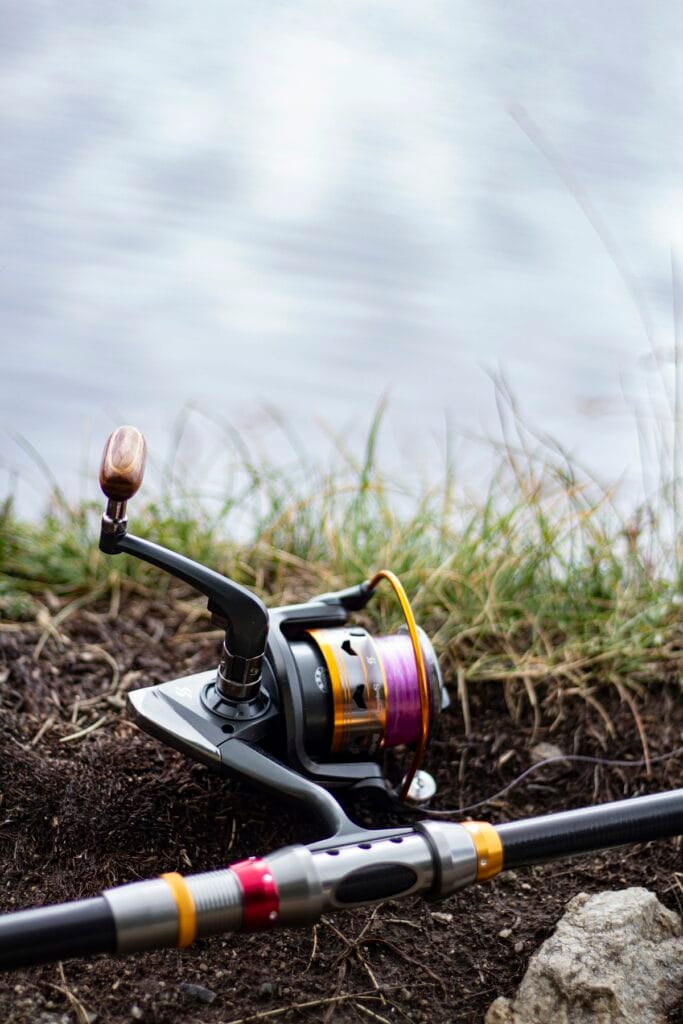
You don’t need a boat to catch big bass. Some of the most productive bass fishing in the country happens from the bank — and in many ways, bank fishing offers advantages that boat anglers don’t have. You can fish quietly without the noise of an outboard or trolling motor, access areas that are too shallow for boats, and cover spots that pressured fish aren’t accustomed to seeing lures from. This guide gives you a complete bank fishing system that consistently produces bass.
1. Find the Best Bank Fishing Spots
Not all bank access is equal. The anglers who catch the most fish from the bank aren’t just fishing wherever they can physically stand — they’re reading the water and finding spots where bass are most likely to be positioned.
Points
Land points that extend into the water create underwater points as well. Bass use these as ambush spots and migration highways, especially during seasonal transitions. A point at the mouth of a creek arm or near a channel bend is a prime location. Fish the tip of the point and both sides, covering different depths.
Docks and Piers
Docks provide shade, best bass fishing spots in a lake, and baitfish — everything bass love. Fish the shadiest side of the dock, skip lures as far back under the dock as possible, and don’t neglect the dock cables and corners. Bass often hold tight to the metal supports and corners where cables enter the water.
Laydowns and Fallen Trees
A fallen tree extending into the water is one of the most reliable bass-holding structures you’ll find from the bank. Work the entire length of the tree — bass can be anywhere from the root ball (deeper) to the branch tips. Don’t just cast to the obvious spots: work a bait through every gap between branches and under the thickest areas.
Riprap and Rock Banks
Rock riprap (like the banks of causeways, dam faces, and rip-rapped shorelines) holds bass in most seasons. Rock absorbs heat from the sun, warming the nearby water — which attracts baitfish and bass. Crawfish are also abundant in rocky areas, making it a full-service feeding station for bass.
Grass Edges and Pockets
If your lake has aquatic vegetation, work the edges. Bass use the shadow line of the grass edge as a feeding lane, ambushing baitfish that wander too close. Pockets and cuts in the grass are especially productive — bass set up inside the pockets and wait for prey to pass the opening.
2. Move and Cover Water Efficiently
One of the biggest mistakes bank anglers make is staying in one spot too long. Unless fish are actively biting, keep moving. Cover water methodically — work a section, take 3-4 steps, cast again. You’re looking for concentrations of fish. Once you find one, slow down and thoroughly work that area. If you catch a fish near a brush pile or stump, make multiple casts from different angles before moving on. There are almost always more bass in the same spot.
3. Master the Essential Bank Fishing Lures
You can’t carry a tackle bag full of lures when you’re bank fishing. You need a small selection of versatile lures that cover multiple situations. Here are the five that belong in every bank angler’s kit:
Texas-Rigged Worm
The Texas rig is the most versatile bank fishing setup in existence. A 6-7 inch worm on a 3/0 offset hook with a 3/16 or 1/4 oz bullet weight can be fished in any cover, at any depth, in any season. It’s weedless, it’s proven, and bass everywhere eat it. If you could only have one lure from the bank, make it a Texas-rigged worm.
Topwater Popper or Walking Bait
Keep a topwater tied on for early morning, late evening, and overcast days. The strikes are explosive and visible, making topwater one of the most exciting ways to fish from the bank. A Heddon Zara Spook or a Rebel Pop-R will work on virtually any body of water.
Spinnerbait
A 3/8 oz white or chartreuse spinnerbait is a bank fishing staple. It covers water quickly, handles moderate cover well, and triggers reaction strikes even when bass aren’t actively feeding. Slow-roll it along the bottom in deep water or buzz it just under the surface near shallow grass.
Ned Rig
For tough-bite situations, the Ned rig is unmatched. A small mushroom-head jig with a 3-inch Z-Man Finesse TRD or TRD CrawZ is incredibly effective on pressured fish. It works best on exposed rock, sand, or hard bottom areas near cover.
Weedless Swim Jig
A 3/8 oz swim jig with a paddle-tail trailer is a power fishing option that bank anglers often overlook. Throw it along dock edges, grass lines, and past laydowns — the weedless design lets you come through cover without getting hung, and bass absolutely crush it.
4. Time Your Bank Fishing Sessions Strategically
From the bank, timing is everything. Here’s when to maximize your time on the water:
- Early morning (first 2 hours of daylight): Bass are shallow and feeding. Topwater is king during this window — cover water fast and target active fish.
- Late evening (last hour before dark): Another prime topwater window. Bass move shallow to feed as light fades.
- Overcast days: Cloud cover keeps bass shallow and active throughout the day, not just in morning and evening.
- Post-cold-front: Wait 1-2 days after a cold front passes and fish are toughest. The stabilizing conditions that follow a front often trigger excellent feeding activity.
- Hot midday summer: This is the toughest time to bank fish. Focus on shaded areas — under dock overhangs, in the shadow of a bridge, along north-facing banks — and slow your presentation way down.
5. Stay Quiet and Stealthy
Bass in shallow water are easily spooked — especially from the bank where you’re often very close to the fish. Walk softly, avoid crunching gravel or snapping sticks, and keep your shadow off the water. Approach spots from an angle that keeps you out of the fish’s line of sight. Make your first cast count — the first cast to a fresh piece of cover is almost always the most likely to produce a strike before the fish detects your presence.
6. Bank Fishing Gear Recommendations
You don’t need a lot of gear to bank fish effectively, but the right setup matters. A 7-foot medium-heavy spinning rod paired with a 2500-3000 size reel works for most bank fishing applications — it’s versatile enough for finesse rigs and light enough to fish all day without fatigue. Spool with 10-15 lb fluorocarbon or a 20 lb braid to 12 lb fluoro leader. For heavier applications like a Texas rig in thick cover or a frog in pads, switch to a medium-heavy casting setup with 17-20 lb fluorocarbon or 30-40 lb braid.
A small tackle bag or backpack keeps you mobile — mobility is one of your biggest advantages as a bank angler. Don’t weigh yourself down with gear you won’t use.
7. Use the Wind to Your Advantage
Wind pushes baitfish and concentrates them along windward banks — the banks that the wind is blowing into. Bass follow the bait. If there’s a steady wind and you can access the windward side of a point, a cove, or a flat, fish it. You’ll often find fish stacked up and feeding actively in what would otherwise be a dead-looking piece of bank.
Bank fishing for bass is not a consolation prize for not having a boat. Done right, it’s a focused, skilled approach that can produce limits of quality bass on any public water. Study your spots, fish them at the right times, and stay mobile. The bass are there — you just have to meet them on their terms.
❓ Frequently Asked Questions
Do docks attract bass?
Yes — docks are among the most reliable bass-holding structures on any lake. They provide shade, vertical cover, and a food chain of small fish and crayfish. Many anglers catch more bass from docks than from any other single structure type.
How do you fish a dock for bass?
Skip a jig, soft stick bait, or paddle tail swimbait under the dock to reach fish in the shade. Work the corners, the cable shadows, and any cross-member angles. Parallel casts along the side of the dock also produce strikes.
What is the best bait for fishing docks for bass?
A skipping jig (3/8 oz with a compact trailer), wacky-rigged Senko, or swim jig are the best dock baits. These present horizontally under the dock and stay in the strike zone through the entire retrieve.
📖 Keep Reading
Frequently Asked Questions
Is bank fishing for bass effective without a boat?
Absolutely. Bank fishing for bass is highly productive — many public lakes and rivers have excellent bank access near structures that bass use heavily. Anglers without boats often out-fish boaters by targeting areas boats cannot access, like tight under brush overhangs and flooded timber along the bank edge.
What is the most important thing to do when bank fishing for bass?
Move quietly and approach the water carefully. Bank anglers spook fish more often than boaters because they are closer to the structure bass are using. Stay low, avoid shadows on the water, and make your first cast count — it is often the best cast of the day to any given spot.
How much bank should I cover when fishing for bass on foot?
Cover water efficiently — do not spend more than 5-10 minutes on any unproductive stretch of featureless bank. Move until you find structure (points, laydowns, docks, rocks), then slow down and work that area thoroughly. Bank anglers who move and stay mobile consistently out-fish those who plant in one spot.
Sandro
Bass Fishing Enthusiast & Founder of Bass Fishing Blueprint
Sandro has been chasing bass from the bank and the boat for over a decade. He created Bass Fishing Blueprint to share straightforward, practical tactics that help everyday anglers catch more fish â no fluff, no filler, just what actually works on the water.