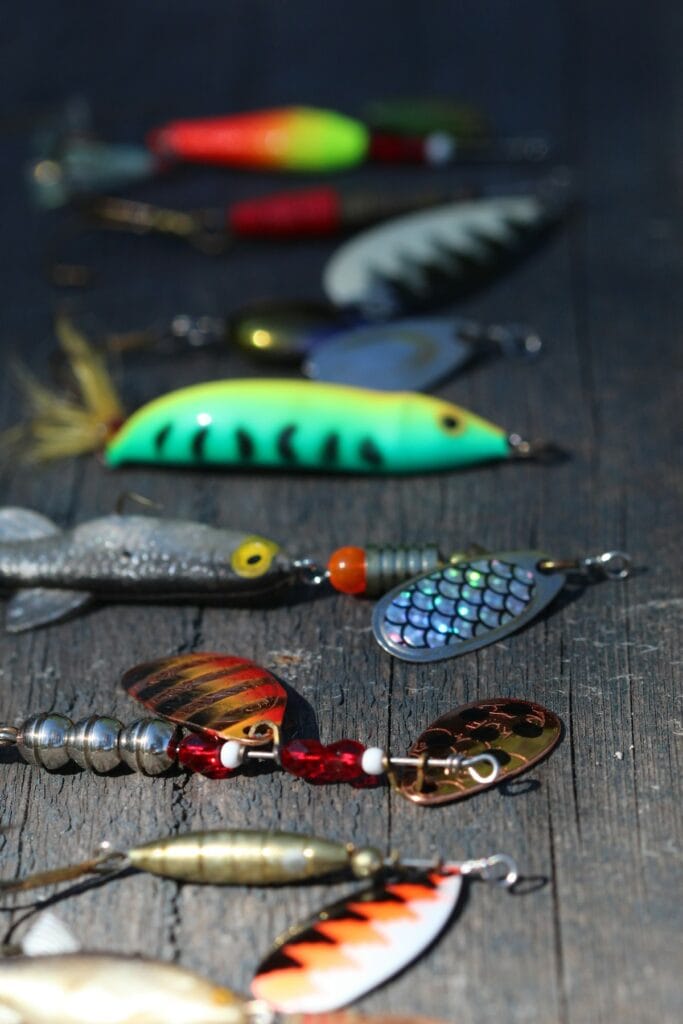
A swimbait is a soft plastic or hard-bodied lure designed to imitate a swimming baitfish with a lifelike, paddling tail action. Done right, swimbait fishing catches some of the largest bass of the season — and done wrong, it feels like you’re dragging plastic through water for no reason. Here’s how to fish them effectively.
Types of Swimbaits
Paddle-tail swimbaits: The most common and versatile style. A soft plastic body with a flat, boot-shaped tail that kicks side to side on the retrieve. Available in 2–8+ inches. The 3.8–5 inch range is most useful for bass fishing. Fish them on a weighted swimbait hook or a swimbait jig head.
Glide baits: A hard-bodied, jointed swimbait that glides side to side on the retrieve. These are large — typically 5–10 inches — and designed to target giant bass specifically.
Hollow-body swimbaits: A soft hollow swimbait with built-in weight and hooks. These are more lifelike than paddle tails and often outperform them in clear water situations.
Underspin swimbaits: A paddle-tail swimbait rigged on a jig head with a small willow blade spinning below the bait. The blade adds flash and vibration. Excellent around shad schools and over mid-depth structure.
How to Rig a Swimbait for Bass
Weighted swimbait hook (most popular): A 3/0–5/0 hook with a screw-lock collar and a belly weight. Push the screw into the nose of the swimbait to secure it, thread the hook through the body, and expose just the point through the back. Use 1/8 oz for shallow water, 3/8 oz for medium depths, 1/2–3/4 oz for deeper presentations.
Swimbait jig head (exposed hook): A specialized jig head with a flat collar designed to hold the swimbait body in alignment. The exposed hook gives the best hook-up ratio but snags more. Use in open water or over sparse cover.
Underspin head: A jig head with a willow blade spinner beneath the hook. Adds flash and lift to the swimbait — excellent for mid-column presentations and around baitfish schools.
When to Fish a Swimbait for Bass
Summer shad patterns: When bass are chasing shad in summer and fall, a swimbait in a silver, white, or pearl pattern in the 3.8–5 inch range is the most natural match possible. Fish it with a steady retrieve at the depth where bass are holding.
Clear water: Swimbaits shine in clear water where bass get a long look at baits. The natural profile and movement are more convincing than most other presentations when fish are scrutinizing every lure.
Deep structure in summer: A large paddle-tail swimbait (5–7 inch) on a 1 oz swimbait head dragged across deep ledges and channel edges is a proven technique for catching big bass in summer.
Swimbait Retrieve Techniques
Steady retrieve: The simplest and most effective approach. Cast, let the bait reach the desired depth, and retrieve at a consistent speed that activates the tail. Too fast and it rises too high; too slow and it loses action.
Slow roll: A very slow steady retrieve, typically used deeper. The swimbait barely moves — just enough to keep the tail ticking. Particularly effective in cold water and for finicky bass in clear conditions.
Lift and drop: Swim the bait at mid-depth, then let it fall. Repeat. The drop mimics an injured baitfish and triggers reaction strikes from following bass.
Burn: Fast retrieve, right under the surface. Works during aggressive feeding frenzies when bass are chasing surface bait.
Best Swimbait Colors for Bass
In clear water, match the natural forage: shad patterns (white, silver, pearl), bluegill patterns (green with orange), or natural baitfish profiles. In stained water, go with more contrast — white, chartreuse-white, or bold patterns. Translucent colors like smoke and watermelon work in slightly stained water and produce a natural glimmer.
Swimbait Rod and Line Setup
For 3–5 inch paddle-tail swimbaits on 1/4–1/2 oz heads, a 7-foot medium-heavy casting rod with 12–15 lb fluorocarbon is the standard setup. For larger swimbaits (5–8 inch, heavier heads), bump up to a heavy power rod with 20 lb fluorocarbon. Spinning gear works well for smaller swimbaits — a 7-foot medium rod with 10 lb fluorocarbon handles 3/16–1/4 oz setups perfectly.
Frequently Asked Questions
What size swimbait should I use for bass?
A 3.8 to 5 inch paddle-tail swimbait covers the widest range of conditions and matches most shad sizes that bass feed on. Use smaller 3–3.8 inch swimbaits in pressured or cold-water conditions, and larger 5–7 inch swimbaits when targeting big bass on deep ledges in summer.
What weight swimbait head should I use?
Match head weight to depth and retrieve speed. Use 1/8 to 3/16 oz for shallow water (less than 6 feet), 3/8 oz for medium depths (6–12 feet), and 1/2 to 3/4 oz for deeper structure or faster retrieves. The bait should swim nearly horizontal during the retrieve.
What is the best color swimbait for bass?
In clear water, match natural forage: white, silver, or pearl for shad-dominant fisheries; green/orange for bluegill-heavy lakes. In stained water, use white or chartreuse-white for visibility. Translucent colors like smoke and watermelon work in slightly stained conditions.
Can you fish a swimbait on a spinning rod?
Yes — smaller swimbaits (2.8 to 4 inch) on 3/16 to 1/4 oz heads fish well on a 7-foot medium spinning rod with 10 lb fluorocarbon. Spinning gear excels in clear water where lighter line is needed. For larger swimbaits (5+ inches) on heavier heads, a baitcaster provides better control.
Sandro
Bass Fishing Enthusiast & Founder of Bass Fishing Blueprint
Sandro has been chasing bass from the bank and the boat for over a decade. He created Bass Fishing Blueprint to share straightforward, practical tactics that help everyday anglers catch more fish â no fluff, no filler, just what actually works on the water.