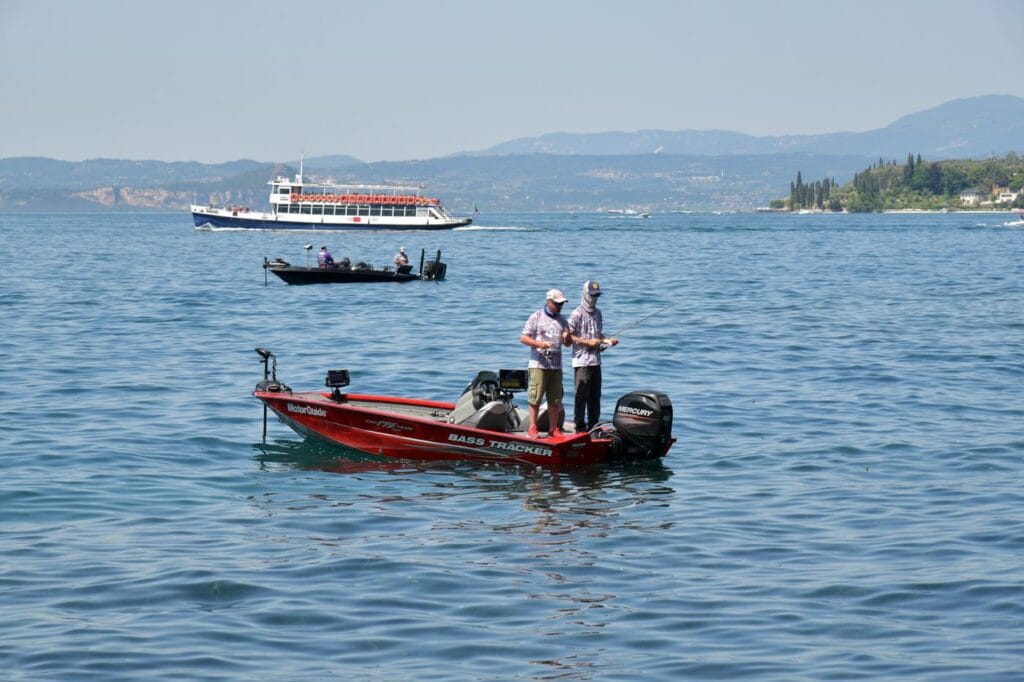
Smallmouth bass don’t get nearly the attention they deserve. Most fishing content is written about largemouth, but smallmouth — pound for pound — fight harder, jump more, and often live in cleaner, more beautiful water. They also require a different approach. If you’ve been targeting largemouth and wondering why you keep getting skunked on smallmouth water, this is what you need to know.
Smallmouth vs. Largemouth: Key Differences
Smallmouth bass prefer cooler, clearer, and harder-bottomed water than largemouth. They’re found throughout the Great Lakes region, the upper Mississippi drainage, the Tennessee River system, the Appalachian highlands, and in quality rivers and streams across much of the country. While largemouth gravitate toward weeds, timber, and murky warmwater lakes, smallmouth prefer rock, gravel, wood, and current.
Smallmouth are also more finesse-oriented, more line-shy, and more attuned to natural forage profiles. What works for largemouth often doesn’t work nearly as well for smallmouth — and vice versa.
Where to Find Smallmouth Bass
Rocky points and shoals: The number-one smallmouth structure in lakes is a rocky point or submerged shoal. Smallmouth use rock as an ambush point and hold tight to the bottom. Find rock with depth access and you’ve found smallmouth real estate.
Current breaks in rivers: In rivers and streams, smallmouth position behind large boulders, in eddies, and at the heads and tails of pools — wherever current slows and food collects. Current breaks are everything in river smallmouth fishing.
Gravel and hard bottom transitions: Where a gravel or rocky bottom meets a softer substrate, smallmouth stage along the edge. This is especially productive during spring pre-spawn when fish are moving toward gravel spawning beds.
Deeper rock piles in summer: As water warms above 72°F, smallmouth move to cooler, deeper rock structure — 15–25 feet — especially in natural lakes where cold, well-oxygenated deep water is available.
Creek and river mouths: Inflows bring cool, oxygenated water and baitfish into a lake. The transition zone where a tributary enters the main body is a reliable smallmouth spot throughout the season.
Best Smallmouth Bass Lures
Drop shot: The single most versatile smallmouth technique across all seasons. A 4-inch finesse worm or tube bait on a drop shot, worked on light fluorocarbon (6–8 lb), is effective from ice-out through late fall. Smallmouth will bite a drop shot even when they refuse everything else.
Tube bait: A 4-inch tube jig in natural colors (green pumpkin, watermelon, or smoke) is as close to a dedicated smallmouth lure as exists. Rig it on a 3/16 to 1/4 oz tube head and drag it along rocky bottom. The tentacles mimic a crayfish naturally.
Ned rig: The Ned rig — a small ElaZtech stick bait on a mushroom-head jig — is absolutely deadly on smallmouth in clear, rocky environments. Its small size, natural buoyancy, and subtle action perfectly matches the finesse requirements of clear water smallmouth.
Crayfish crankbait: Smallmouth eat enormous quantities of crayfish, especially in rocky environments. A natural-colored crawfish crankbait that digs the bottom and deflects off rocks produces aggressive reaction strikes. Medium-diving and deep-diving craw patterns in brown and orange are the best colors.
Topwater: Early morning and evening smallmouth fishing with a Zara Spook or Heddon Pop-R produces some of the most exciting strikes in freshwater fishing. Smallmouth are particularly aggressive surface feeders around rocky points in low-light conditions.
Smallmouth Bass Fishing Techniques
Go lighter than you think necessary: Smallmouth live in clear water and see your line. Drop down to 6–8 lb fluorocarbon for most presentations. Braid/fluoro leader setups with 20 lb braid and 8 lb fluoro leaders are an excellent compromise for sensitivity and invisibility.
Work slower in cold water: Smallmouth in water below 55°F are even more sluggish than largemouth. A drop shot barely moving, or a tube jig dragged at a crawl, will outfish faster presentations by a wide margin.
Fish current seams in rivers: A seam is the line between fast and slow water. Cast upstream of the seam and let your bait drift naturally along it. Smallmouth stage along current seams and ambush prey without expending energy fighting the current.
Target crayfish habitat: Anywhere you see rocks and gravel with signs of crayfish activity, you’ll find smallmouth. Use natural brown and orange colors that match the crayfish in that specific body of water.
Seasonal Smallmouth Patterns
Spring smallmouth fishing peaks during the pre-spawn and spawn (water 55–65°F), when fish are shallow on gravel points and beds in rivers and lakes. Summer fish move deep to cool water but feed aggressively on rocky points early and late. Fall is excellent on reaction baits as shad move shallow. Winter smallmouth in rivers seek deep, slow pools with little current, and respond only to the slowest finesse presentations.
Frequently Asked Questions
What is the best bait for smallmouth bass?
Tube jigs, drop shot rigs, and crayfish-imitating plastics are the top smallmouth bass baits. In rivers, a tube jig bounced along rocky bottom is extremely effective. In clear lakes, a drop shot with a finesse worm at 10–20 feet produces consistently throughout the season.
Are smallmouth bass harder to catch than largemouth?
Smallmouth bass are not necessarily harder to catch, but they prefer different habitat and presentations. They favor cooler, clearer water, rocky structure, and more finesse-oriented tackle. Anglers targeting largemouth in warm, weedy shallows will often miss smallmouth entirely.
What depth do smallmouth bass live at?
Smallmouth bass use a wide depth range depending on season and water temperature. In summer, they hold at 15–25 feet along rocky structure during the day and move shallow to feed. In rivers, they relate to current breaks and rocky structure at any depth with sufficient current shelter.
What is the best season for smallmouth bass fishing?
Late spring through early summer is peak smallmouth fishing — the spawn and post-spawn period produce the most active fish. Fall is a close second, as smallmouth feed aggressively on crayfish and baitfish before winter. Cold-water fall fishing with tubes and drop shots can be outstanding.
Sandro
Bass Fishing Enthusiast & Founder of Bass Fishing Blueprint
Sandro has been chasing bass from the bank and the boat for over a decade. He created Bass Fishing Blueprint to share straightforward, practical tactics that help everyday anglers catch more fish â no fluff, no filler, just what actually works on the water.