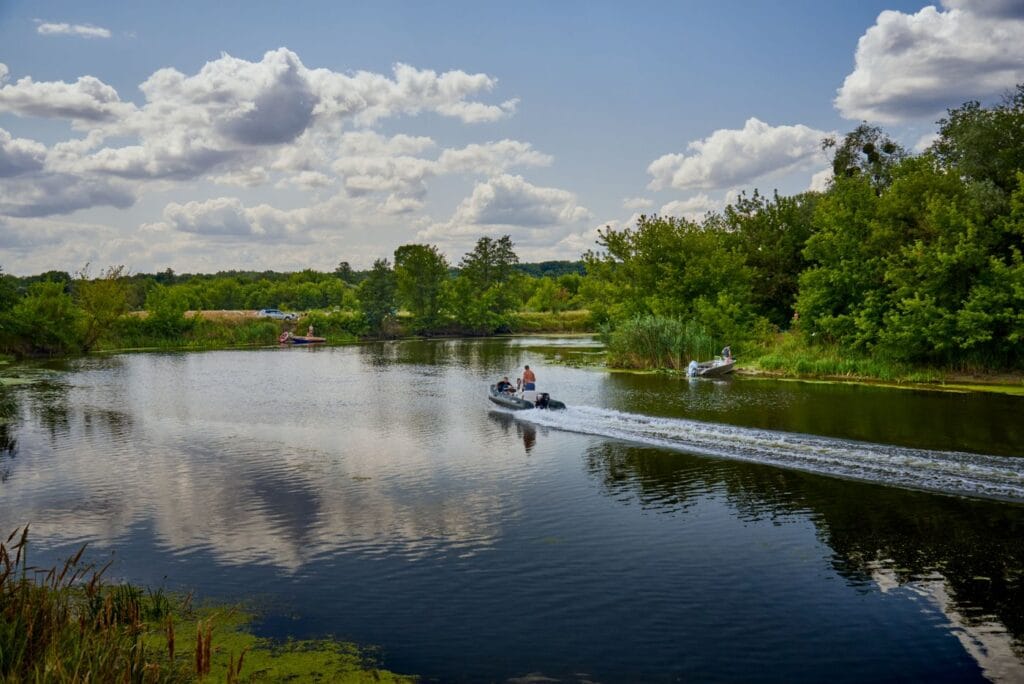
Late May into June is the most misunderstood stretch on the bass calendar. The spawn is over, the shallow bite is fading, and the famous summer offshore school bite has not fully turned on yet. Anglers who stay shallow get frustrated. Anglers who run straight to their July ledge spots find the bass have not arrived. The bass that drive a successful trip during this window are scattered between the two zones, and you have to fish the transition itself.
This is a working playbook for the late spring to early summer transition: where bass are, why they are there, what to throw, and how to slow down and find the schools that will set up your summer.
What the Bass Are Doing Right Now
Once water temperatures climb into the upper 60s and into the 70s, post-spawn bass start a predictable migration. Females recover from the spawn and feed heavily, males that guarded fry abandon them, and the entire population begins moving from spawning pockets back toward deeper main-lake water. They do not jump straight to 20 feet. They follow specific roads.
Bass move along secondary points, creek channel swings, the lips of flats, and any continuous piece of structure that connects shallow spawning areas to deeper summer haunts. Stop a fish along that highway and you find the rest of them.
Find the Highways First
Before you launch the boat or walk to the bank, open a contour map and identify the routes bass have to use to leave the major spawning flats on your lake. Look for these features:
- Secondary points inside major creeks that drop from 4 to 6 feet into the channel.
- Channel swings where the deepest cut bends close to a flat or point.
- Ditches and depressions running off shallow flats into deeper water.
- Brush piles or stumps placed between spawning bays and the main lake.
- Long tapering points that extend from the bank out to the main river or main lake.
Mark every one of those high-percentage spots. You are not fishing single targets, you are pattern-fishing a depth and a structure type across the whole lake.
The Three Depths to Cover
During the transition, bass are spread vertically. On any given day, fish will be set up at three different stages of the move. Your job on the water is to figure out which depth holds the most active fish, then commit.
- Shallow holdovers (1 to 5 feet): males still around fry, females shading up on docks, laydowns, and the inside edge of grass. Often eat slowly but produce the biggest bite of the day.
- Mid-depth movers (6 to 12 feet): the largest population during this window. Sitting on secondary points, the edge of grass lines, and brush piles in the mouths of pockets.
- First-stage offshore fish (13 to 20 feet): the earliest groups to set up on main-lake points, the upper end of ledges, and isolated brush. These schools will grow through June.
The Best Baits for Each Zone
You can simplify a transition trip to four rods and cover every situation effectively.
- Topwater walking bait or hollow body frog: shallow holdovers at first and last light. The shad spawn is fading but bluegill are still bedding, and topwater triggers reaction strikes from recovering females.
- Squarebill or shallow swim jig: mid-depth movers along grass edges and on the front of secondary points. Bump cover and force reaction bites.
- Football jig or Texas-rigged worm: any time you locate a brush pile, channel swing, or hump in 10 to 18 feet. The most versatile mid-depth presentation.
- Deep crankbait or magnum swimbait: the early offshore schools. Use the crankbait to cover water and find schools, then slow down with a Carolina rig or big worm.
A Sample Day on the Water
A productive transition day usually unfolds like this. Start at first light in the back of a major spawning creek, throwing topwater along the inside edge of grass, around shallow brush, and over any flat that still has bait flickering on the surface. As the sun climbs and the topwater bite dies, shift to the secondary points coming out of that same creek. Work the squarebill or swim jig across the top of the point, then drop a football jig or Texas rig down the slope into 10 to 15 feet.
By mid-morning, run to the mouths of major creeks where the channel swings closest to a main-lake point. This is where the first offshore schools set up. Idle and look for arches and bait on your electronics. When you find them, hold the boat off, make long casts with the deep crank, and follow up with a worm or magnum swimbait if you mark fish but cannot get reaction bites.
Late afternoon, work backwards into the creek, hitting the same secondary points and shallow brush as the sun comes off the water.
Weather and Timing Adjustments
The transition is weather-sensitive. After a calm, sunny day, bass push toward the shadier side of cover and deeper into the structure. After wind, current, and clouds, expect those same bass to move up on the points and feed actively. Slight cold fronts in late spring can shut the deep bite down for a day or two while the shallower groups keep feeding.
Watch surface water temperature. The transition tends to lock in once temps hold above 75 degrees for several days in a row. Below that, expect a mix. Above 80 degrees, expect bass to commit to summer locations and the bite to settle into morning and evening peaks.
The Mindset That Catches Transition Bass
The single biggest mistake during this window is sticking with shallow water out of habit. The fish are moving, and the anglers who catch them are willing to move with them. Cover water, fish multiple depths in a single stop, and pay attention to where in the water column you get bit. Once you boat two or three fish in the same depth range on the same structure type, you have your pattern. Repeat it across the lake and you will have one of the best days of your year.
Sandro
Bass Fishing Enthusiast & Founder of Bass Fishing Blueprint
Sandro has been chasing bass from the bank and the boat for over a decade. He created Bass Fishing Blueprint to share straightforward, practical tactics that help everyday anglers catch more fish â no fluff, no filler, just what actually works on the water.