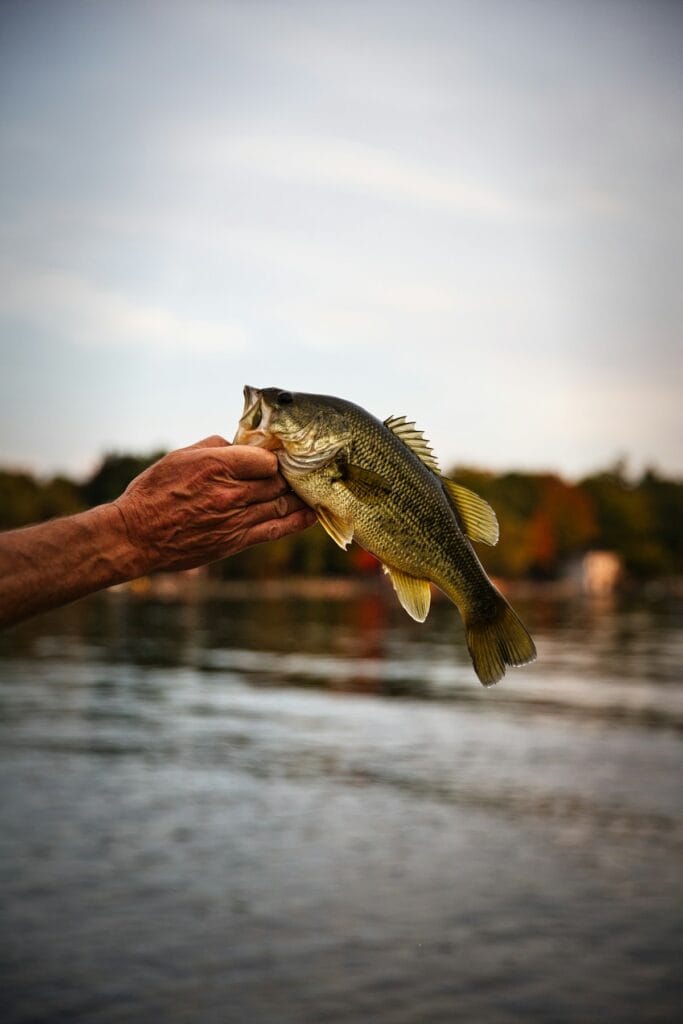
Pre-spawn is arguably the single best time to catch a giant bass. Females are loaded with eggs, feeding aggressively to build energy reserves before the spawn. They’re big, they’re fat, and they’re in predictable locations. Miss this window and you’ve missed the best bite of the year.
When Is Pre-Spawn?
Pre-spawn begins when water temperatures climb out of the winter range and hit the mid-50s°F. In the deep South (Florida, Texas, Louisiana), this can happen as early as February. In the Midwest and northern states, it may not arrive until late April or early May.
The pre-spawn phase lasts until water temps reach approximately 65°F, at which point bass begin moving onto beds. The window is typically 3–6 weeks long and represents some of the most intense feeding of the entire year.
Where Are Pre-Spawn Bass?
Understanding bass migration routes is the key to pre-spawn success. In winter, bass sit in the deepest available structure — main lake points, bluffs, deep channel bends. As water warms, they begin a staged migration toward the shallows.
Staging Areas
Pre-spawn bass don’t go directly from 25 feet to 3 feet overnight. They move in stages, resting and feeding on transition areas along their migration route. These staging areas are the jackpot for pre-spawn fishing:
- Main lake points: Long tapering points that connect deep water to shallow flats. Bass use these as migration highways.
- Secondary points inside coves: As water warms, fish move progressively further into spawning coves. Secondary points inside the cove are excellent staging areas.
- Creek channel bends near coves: Where a submerged creek channel swings close to a cove entrance, bass set up waiting for conditions to warm.
- Hard bottom transitions: Areas where soft mud bottom transitions to gravel or rock — bass favor hard bottom year-round but especially during pre-spawn.
Depth Range
Early pre-spawn fish (55–60°F water) stage at 8–15 feet on the first major break near spawning flats. As temperatures climb toward 65°F, they move shallower — 3–8 feet — and are almost on the beds.
Best Pre-Spawn Baits
jig — The Best Pre-Spawn Bait
A 3/8 oz to 1/2 oz flipping jig or casting jig with a crawfish trailer is the go-to pre-spawn presentation. Big females are targeting high-calorie prey — crawfish are abundant on rocky points and transition areas in early spring. A jig crawled slowly along the bottom, then hopped up a drop and allowed to pendulum-fall, is devastating.
Color choice: green pumpkin and brown match natural crawfish. Black and blue is a classic in stained water.
Swimbait — Big Fish Magnet
Large swimbaits (4–8 inches) excel during pre-spawn because big female bass are specifically targeting large, calorie-dense meals. A 5-inch paddle-tail swimbait on a 3/4 oz ball head, swum slowly through staging areas, can trigger strikes from fish over 5 pounds consistently.
Match the swimbait color to local baitfish — shad patterns (white/silver/chartreuse), bluegill patterns (green/orange), or natural (green pumpkin).
Lipless Crankbait
A 1/2 oz lipless crankbait (Rat-L-Trap, Strike King RedEye Shad) worked over grass flats or along hard-bottom transition areas is a top pre-spawn producer. Rip it through grass, let it flutter on a slack line, then rip again. The strike often comes on the flutter.
Red craw and chrome/blue are proven colors for early spring lipless cranks.
Suspending Jerkbait
When water is cold and bass are finicky, a suspending jerkbait worked with a sharp jerk-jerk-pause cadence is hard to beat. The bait sits suspended at the pause — right in the strike zone — and triggers reaction strikes from bass that won’t chase.
Use a 6–8 second pause in cold water (mid-50s°F). Shorten the pause as water warms. Shad patterns (ghost minnow, clown) dominate.
Shaky Head and Drop Shot
When staging bass are deep and the bite is tough, finesse presentations can be the difference between zero and limits. A 5-inch Roboworm on a drop shot or a shaky head worked slowly through 10–15 feet of water on a main lake point is highly effective in clear water conditions.
Pre-Spawn Fishing Strategies
Find the Warmest Water First
On early spring days, water temperature varies significantly across a lake. North-facing banks warm fastest because they receive maximum sun exposure. Back-of-cove areas warm faster than main lake points. Creek arms with dark mud bottoms warm faster than rocky main lake areas.
Use your graph’s temperature gauge to identify the warmest water on the lake — bass will be there first.
Fish Transition Areas
The magic is where deep meets shallow. Fish the 6–12 foot zone along main lake points and secondary points inside spawning coves. Cast parallel to the bank, allowing your bait to stay in the productive depth zone longer than a perpendicular presentation.
Follow the Migration Route
Map out the likely migration path from the deepest winter structure to the spawning flats. Fish each transition point along that route. If you’re not catching fish at one depth, move shallower or deeper until you find them.
Don’t Overlook Sunny Days
A warm, sunny afternoon in early spring can make a huge difference. Bass push shallower on warm afternoons as surface temps spike. Fish transition areas 2–4 feet shallower on sunny afternoons compared to morning fishing.
Reading the Pre-Spawn Window
Monitor water temperature daily during the pre-spawn period. The bite intensifies as temperatures approach 60°F — fish are actively moving and feeding. The best days are when temps are rising, skies are partly cloudy, and barometric pressure is stable.
cold fronts interrupt the pre-spawn migration temporarily. After a hard freeze, bass drop back to their previous staging area, 2–4 feet deeper. Give them 48 hours and they’ll begin the move again.
Size Expectations
Pre-spawn is trophy season. The largest fish in a given body of water are at their heaviest right before the spawn — females are filled with eggs that can add 1–2 pounds to their weight. If you want to catch a personal best bass, this is the window.
Targeting the bigger, slower-moving females means using larger baits and focusing on transition areas rather than shallow spawning flats. The giants don’t go shallow until they’re ready to bed.
❓ Frequently Asked Questions
When is pre-spawn bass fishing?
Pre-spawn begins when water temperatures reach the mid-50s°F and ends when they hit approximately 65°F. In the Deep South, this can start in February. In northern states, it may not arrive until late April or early May.
What depth are pre-spawn bass?
Early pre-spawn bass stage at 8–15 feet on main lake points and channel bends adjacent to spawning coves. As water warms toward 65°F, they move shallower to 3–8 feet on secondary points inside spawning coves.
What is the best lure for pre-spawn bass?
A crawfish-imitating jig is the single best pre-spawn bait. Large swimbaits (5–7 inch), lipless crankbaits, and suspending jerkbaits are also highly effective. Match your presentation speed to the water temperature — slower in colder water.
Are pre-spawn bass bigger than normal?
Yes — female bass are at their heaviest right before the spawn. They’re loaded with eggs that can add 1–2 pounds to their weight. The biggest bass of the year are caught during the pre-spawn period targeting large females on staging areas.
📖 Keep Reading
Sandro
Bass Fishing Enthusiast & Founder of Bass Fishing Blueprint
Sandro has been chasing bass from the bank and the boat for over a decade. He created Bass Fishing Blueprint to share straightforward, practical tactics that help everyday anglers catch more fish â no fluff, no filler, just what actually works on the water.