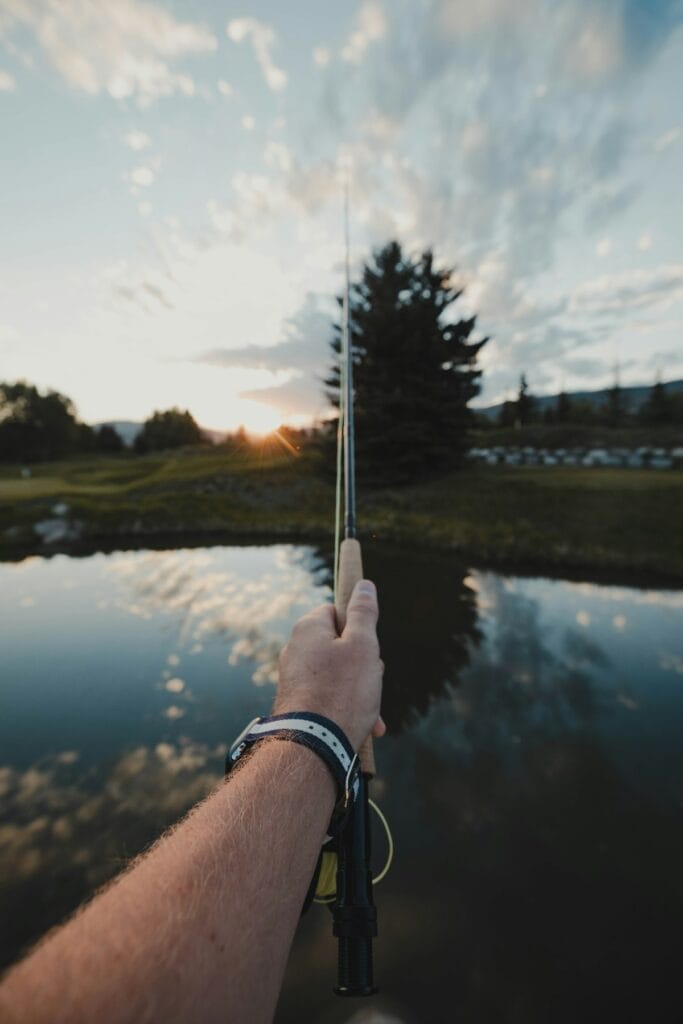
When summer bass pull off the bank and set up on offshore rock, gravel, and hard-bottom ledges, few baits pull them off the bottom like a football jig. The wide, football-shaped head was built for exactly this job: dragging across chunk rock and pea gravel without wedging in the cracks, all while standing the skirt up in a defensive, crawfish-imitating posture bass cannot resist. If you have been throwing crankbaits at your summer offshore spots and want a slower, more precise follow-up, the football jig is the tool that turns lookers into biters.
Why the Football Head Matters
The shape is not a gimmick. A round or Arky-style jig head tips forward and nose-dives into rock gaps, hanging up constantly. The football head has a wide, flat-sided profile that rides on its “shoulders,” rolling and tripping over rock instead of burying into it. That geometry does three things: it keeps you in contact with hard bottom, it kicks the skirt and trailer up when the head stalls against a rock, and it telegraphs bottom composition straight up your line so you can feel the difference between mud, gravel, and chunk rock. On offshore structure, feeling that transition from soft to hard bottom is often the whole game.
Where to Throw It in Summer
Football jigs shine on hard-bottom offshore structure in the 8 to 25 foot range. Prioritize these targets:
- Main-lake points with chunk rock or transition banks where gravel meets clay.
- Ledges and drops along the old river or creek channel, especially where the break is rock rather than mud.
- Offshore humps and roadbeds that top out in the strike zone and have hard, clean bottom.
- Long tapering flats that funnel into a channel swing, where bass stage to ambush shad and crawfish.
The bait excels on clean, hard bottom. If you are fishing heavy grass or dense wood, switch to a flipping or grass jig. The football jig is a rock-and-gravel specialist.
Choosing Weight, Color, and Trailer
Match your head weight to depth and wind. A 1/2 ounce head covers most 10 to 18 foot situations and gives you the sensitivity to feel every rock. Step up to 3/4 ounce for deeper structure, current, or windy days when you need to stay pinned to the bottom, and drop to 3/8 ounce in calm, shallow, or highly pressured water where a slower fall matters.
For color, keep it simple and lean on crawfish and shad tones. Green pumpkin and brown-and-orange are money in clear to stained water because summer bass on rock are eating crawfish. In dingier water, add a little more contrast with black-and-blue. Trailer choice controls your fall rate and action: a compact craw trailer with flapping claws adds displacement and a slower fall, while a beavertail or chunk streamlines the profile for a faster drop and a more subtle presentation. Trim the trailer to dial in the exact rate of fall the fish want that day.
The Retrieve: Drag, Don’t Hop
The number one mistake anglers make with a football jig is hopping it like a flipping bait. This is a dragging presentation. Cast past your target, let the jig hit bottom on a semi-slack line, then move the bait by sweeping your rod slowly to the side, low and parallel to the water. You are pulling the jig across the bottom and letting it tick and stall against rock, not jerking it off the bottom. Reel up the slack, drop your rod back toward the bait, and repeat.
Pay attention to what the head is telling you. When the jig climbs a rock and then falls off the back side, that momentary weightlessness is when a huge percentage of bites happen. Many strikes feel like nothing more than added weight, a spongy “mushy” sensation, or your line simply swimming off to the side. When in doubt, reel down and set the hook. Fishing offshore rock, you will rarely lose a fish by setting on a rock, but you will lose plenty by waiting too long.
Gear That Makes It Work
Sensitivity is everything with a football jig because you are reading the bottom with your hands. Use a 7-foot to 7-foot-4 medium-heavy casting rod with a fast tip so you can feel rock and drive the hook at distance. Spool up with 12 to 15 pound fluorocarbon; the low stretch transmits bottom detail and the invisibility helps in clear summer water, while the abrasion resistance holds up against rock. A reel in the 6.3:1 to 7.1:1 range lets you pick up slack quickly on the hookset without burning the bait too fast during the retrieve.
Putting It All Together
The football jig is not a search bait, so let electronics or a crankbait find the school first, then slow down and pick the spot apart with the jig. When you catch one, throw right back; summer offshore bass group up by the dozens, and a single hard-bottom sweet spot can produce fish after fish. Drag slowly, feel for the transition from soft to hard bottom, and pay off every rock the head trips over. Do that on the right piece of offshore structure this summer and the football jig will become the bait you reach for when you need to make a school bite.
Sandro
Bass Fishing Enthusiast & Founder of Bass Fishing Blueprint
Sandro has been chasing bass from the bank and the boat for over a decade. He created Bass Fishing Blueprint to share straightforward, practical tactics that help everyday anglers catch more fish â no fluff, no filler, just what actually works on the water.