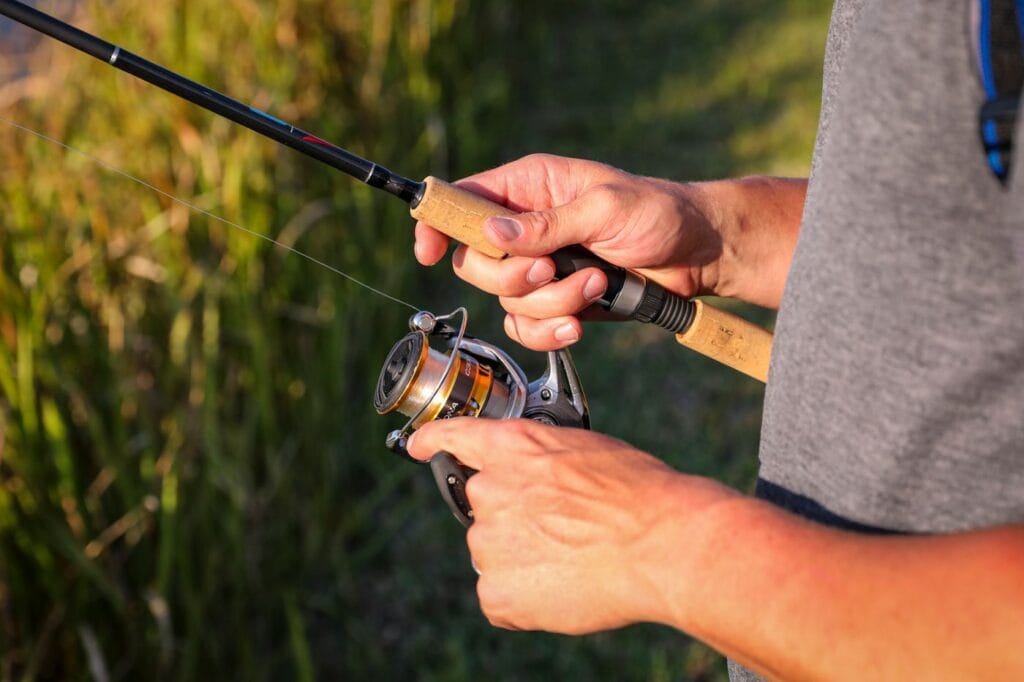
A crankbait might be the most misunderstood lure in the bass fishing world. Beginners throw them because they cast a mile and wiggle on their own. Experienced anglers throw them because a crankbait covers more productive water per hour than almost any other lure in the tackle box. The difference between the two is knowing which crankbait to throw, when to throw it, and how to retrieve it so bass actually commit instead of following and turning off.
This guide breaks down the three main categories of crankbaits, how to match them to depth and cover, the retrieves that trigger strikes, and the gear that turns a 15-minute crankbait session into an all-day pattern.
Why Crankbaits Work
Crankbaits imitate baitfish and crawfish, the two main things bass eat in most lakes. They push water, flash, and make noise on the retrieve, which lets bass find them in dirty water or from long distances. Most importantly, they deflect off cover. When a crankbait bangs into a rock, a stump, or a dock post and changes direction unpredictably, it triggers a reaction strike even from neutral fish that weren’t actively feeding.
The Three Categories You Need to Know
Squarebill Crankbaits
Squarebills dive 1 to 6 feet and are built specifically to deflect off shallow cover. The flat, square-shaped lip hits a stump or laydown and pops the bait off sideways instead of hanging up. This is your go-to crankbait for shoreline cover, laydowns, shallow rock, and any time bass are up skinny. Strike King’s KVD 1.5, Rapala’s BX Brat, and the 6th Sense Crush 50X are all excellent choices.
Medium-Diving Crankbaits
Medium divers run 6 to 12 feet and shine on secondary points, main-lake points, channel swings, and shallow offshore structure. They’re perfect for pre-spawn staging areas in spring and schooling bass on points in fall. The Rapala DT-10, Strike King 5XD, and Spro Little John MD are industry standards for this depth range.
Deep-Diving Crankbaits
Deep divers run 15 to 25+ feet and are the dominant summer ledge bait across the TVA lakes and reservoirs with clear offshore structure. They require a long cast, a long rod, and the right line to get down and stay down. The Strike King 6XD, 10XD, and Rapala DT-16 through DT-20 cover this water. These are tough-to-throw baits but they catch the biggest schools of bass on the lake in July and August.
Matching the Crankbait to Depth and Cover
The rule that catches more bass than any other: pick a crankbait that runs slightly deeper than the cover you’re fishing so it bangs into the bottom or structure on every cast. If the stumps are in 4 feet of water, throw a bait that runs 5 to 6 feet. If you’re fishing a ledge that tops out at 12 feet, throw a bait that runs 15. The deflection off cover is what triggers strikes; a crankbait that never touches anything is just swimming water.
For cover: squarebills excel around wood and irregular shallow cover. Medium divers shine on chunk rock, riprap, and secondary points. Deep divers live on offshore ledges, humps, and long tapering points.
Color by Water Clarity
- Muddy water (under 1 foot visibility): Chartreuse, black-back chartreuse, firetiger, or solid black. Sound and silhouette matter more than natural color.
- Stained water (1 to 3 feet): Sexy shad, chartreuse shad, red craw, and bluegill-pattern cranks.
- Clear water (3+ feet): Natural baitfish patterns like ghost shad, pro blue, or a matching bluegill pattern. Keep it subtle.
For craw-eating bass in spring, add red or orange. Red gets a bad rap but it’s deadly in March and April when craws are molting and turning reddish-orange on the rocks.
Retrieves That Trigger Strikes
Deflection retrieve: Cast past the target, reel until you feel the bait contact cover, then slow your reel momentarily as it deflects off. Most bites come in the first foot after deflection. This is the most important retrieve in cranking.
Stop and go: Reel three to five turns, pause for a count of one or two, then start again. Deadly in cold water or after a front when bass follow but won’t commit to a constant retrieve.
Burning: Reel as fast as you can. Counterintuitive but lethal in summer when schooling bass chase fleeing shad. Works especially well with medium divers over offshore structure.
Slow rolling: Crawl the bait just fast enough to feel the wobble. Best in cold water (under 55 degrees) and on lethargic post-front fish.
The Right Rod, Reel, and Line
A dedicated cranking rod is a game-changer. Look for a 7′ to 7’6″ medium or medium-heavy rod with a moderate or moderate-fast action. The softer tip loads on the cast for long distance and, more importantly, lets bass eat the bait without feeling resistance. Fast-tip bass rods rip trebles out of a bass’s mouth on the hookset. A true cranking rod keeps fish buttoned up.
Reel gear ratio matters too. A 5.4:1 or 6.3:1 baitcaster is ideal; slower gearing lets you crank long periods without burning out your arm and keeps the bait in the strike zone. Avoid 8:1 reels for cranking; they move too much bait and fatigue you in an hour.
For line, most pros throw 10 to 12 lb fluorocarbon for squarebills and medium divers. Fluorocarbon has zero stretch-on-set, sinks, and lets the bait reach max depth. For deep divers, drop to 8 to 10 lb fluoro to get a few extra feet of dive depth. In heavy cover where break-offs kill you, bump up to 15 lb with a slightly shallower-running bait.
When NOT to Throw a Crankbait
Crankbaits are power-fishing baits that struggle in the wrong conditions. Skip them on bluebird bluebird-sky, dead-calm, post-front days when bass are locked to cover; a jig or soft plastic will outfish a crank four to one. Skip them on highly pressured clear-water fish that have seen every pattern on the lake. And skip them in thick submerged vegetation where the trebles become snag magnets. In those conditions, use a chatterbait, jig, or soft plastic instead.
The Bottom Line
Crankbaits are efficiency tools. They let you eliminate unproductive water fast and find the cover and depth bass are using on any given day. Build a small but deliberate box with three squarebills, three medium divers, and three deep divers in shad, craw, and chartreuse patterns. Match the bait to the cover, deflect on every cast, and let the stretch of a moderate-action rod do the hookset work. The fish will come.
Sandro
Bass Fishing Enthusiast & Founder of Bass Fishing Blueprint
Sandro has been chasing bass from the bank and the boat for over a decade. He created Bass Fishing Blueprint to share straightforward, practical tactics that help everyday anglers catch more fish â no fluff, no filler, just what actually works on the water.