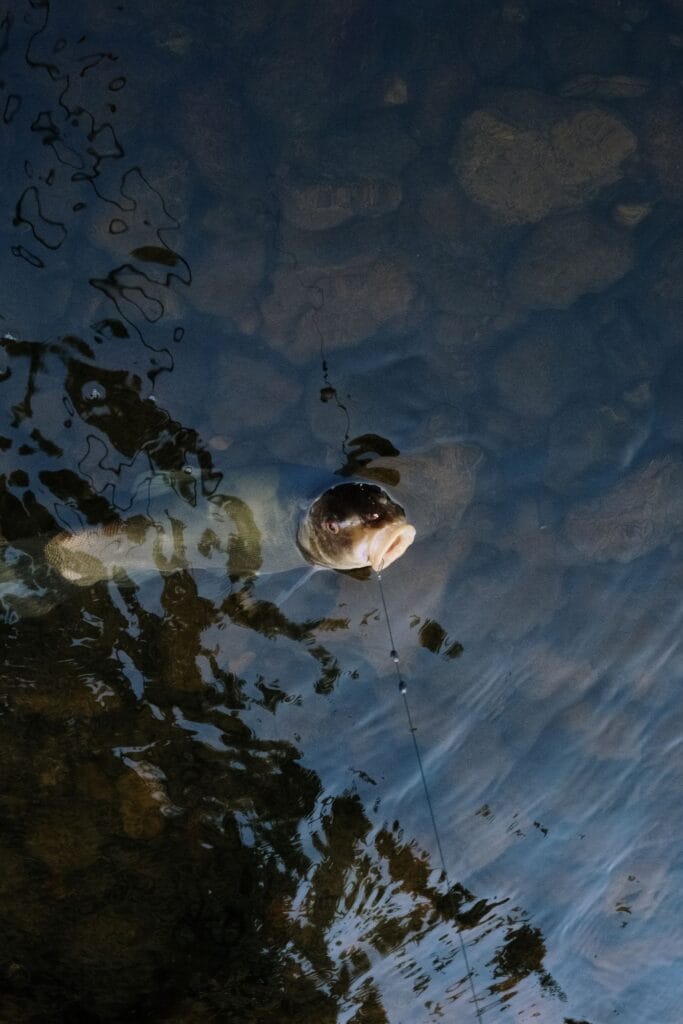
By August, a lot of lakes and rivers are running low and clear. Weeks without rain, drawdowns for flood control, and relentless sun leave water levels dropping and clarity increasing—and the bass respond by getting spookier, deeper, and far harder to fool. If your summer bite has fallen apart on gin-clear, low water, you are not doing anything wrong; the conditions have simply changed the rules. Here is how to adjust and keep catching fish through the toughest stretch of the year.
What Low, Clear Water Does to Bass
Two things happen when water drops and clears. First, bass can see much farther, which means they can inspect your bait, spot your line, and detect your approach from a long way off. Second, falling water pulls fish out of the shallow cover they used earlier in the year and repositions them on deeper, more defined structure. A stretch of bank that was loaded with fish in June can be bone dry or barren in August.
Clear water also makes bass more light-sensitive. They pin down tighter in shade during bright midday hours and feed hardest in low light. Understanding these two effects—longer sight lines and deeper positioning—drives every adjustment that follows.
Adjustment 1: Fish Early, Late, and After Dark
In clear water, low light is your friend. The first and last hour of daylight are prime, and the bite often shuts down hard once the sun gets high. If your schedule allows it, this is the season to fish before sunrise, stay out past sunset, or fish at night entirely. Bass feel far more secure moving up to feed when the light is off the water, and they will chase baits they would never commit to at noon.
Overcast days and any breeze that ripples the surface are gifts—they extend those low-light feeding windows and make fish less cautious. Watch the forecast and plan your best efforts around cloud cover and wind.
Adjustment 2: Downsize and Go Natural
When bass can scrutinize a bait, finesse presentations shine. This is the time to lean on lighter line and smaller, more natural baits.
- Drop shot and Ned rig with natural greens, browns, and translucent shad patterns let you show fish a subtle, realistic target and keep it in the strike zone.
- Spinning gear with fluorocarbon or a fluorocarbon leader reduces line visibility, which genuinely matters when the water is clear enough to see bottom in ten feet.
- Smaller profiles across the board—a 3-inch worm instead of a 6, a compact swimbait instead of a magnum—often outproduce big baits when fish are pressured and cautious.
The exception is topwater and reaction baits at first and last light, when a walking bait or a fluke can trigger aggressive strikes before the sun exposes every detail. Match the hatch—if bass are chasing shad, translucent and pearl patterns beat solid colors.
Adjustment 3: Move Out to Deeper Structure
As water falls, follow the fish out. The shallow bushes and bank grass that held bass in spring dry up, and fish slide to the nearest deeper sanctuary. Focus on well-defined structure: main-lake and secondary points, offshore humps, channel swings, ledges, and deep brush piles. These spots offer depth, current, and quick access to both shallow feeding flats and deep refuge.
Pay special attention to the deepest available cover in your body of water. In a low reservoir, that might be a standing timber flat that is now the only shade for a hundred yards. On a river, it might be the outside bend of a channel where current keeps water moving and slightly cooler. Bass concentrate on these community spots, so when you find one holding fish, you often find a lot of them.
Adjustment 4: Use Current and Cooler Water
Any moving water becomes a magnet in a low, hot system. On rivers and tidal systems, current positions bass predictably on the down-current side of rock, timber, and bridge pilings, where they can ambush food with minimal effort. On reservoirs, a little generation pull or wind-driven current turns neutral fish into feeders.
Creek mouths and spring-fed pockets can also hold surprisingly cool, oxygen-rich water in the dog days. If you have a temperature gauge, hunt for the coolest water you can find near deep structure—those subtle degrees can stack fish.
Adjustment 5: Lengthen Your Casts and Stay Quiet
Stealth is the difference-maker most anglers ignore. In clear water, bass see and hear you coming. Make longer casts than you think you need, keep your shadow off the water, and cut the noise—no dropped pliers, no banging trays, no trolling motor blasting on high across a shallow flat.
- Position your boat farther from targets and reach them with longer casts.
- Approach shallow, isolated cover with the trolling motor on low or drifting in.
- Keep your profile low, especially on bright, calm days when fish are edgy.
Bank anglers have a natural advantage here—stay back from the water’s edge, cast parallel to the bank before wading in, and you will catch fish that boat anglers push out.
Putting It Together
A productive low-water August day often looks like this: hit a main-lake point or a deep laydown at first light with a topwater or a fluke, catch your aggressive fish before the sun is up, then transition to a drop shot or Ned rig on the same structure and pick apart the fish that pulled deep. Chase shade and current through the middle of the day, keep your presentations small and natural, and save energy for the last hour of light when the feed fires back up.
Low, clear water is not a reason to stay home—it is a puzzle with a solution. Downsize, move out, fish the edges of the day, and respect how well these fish can see. Do that, and the toughest conditions of the year become the ones that separate you from anglers who quit when the water dropped.
Sandro
Bass Fishing Enthusiast & Founder of Bass Fishing Blueprint
Sandro has been chasing bass from the bank and the boat for over a decade. He created Bass Fishing Blueprint to share straightforward, practical tactics that help everyday anglers catch more fish â no fluff, no filler, just what actually works on the water.