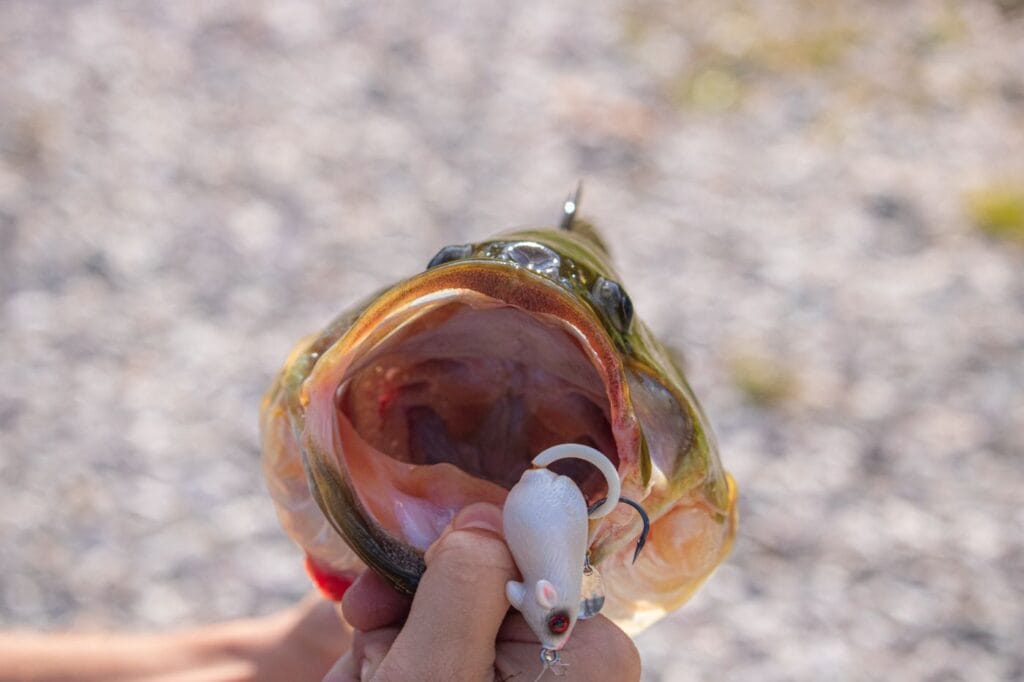
Few moments in bass fishing beat the sight of a largemouth blowing a hole in a mat of grass to eat a hollow-body frog. In the heat of summer, when bass bury themselves in the thickest cover on the lake, a frog is often the only bait that can reach them—and it triggers some of the most violent strikes in the sport. If you have been leaving fish in the slop because you did not know how to fish for them, this guide will get you dialed in.
Why a Frog Shines in Summer
When water temperatures push into the 80s, bass want two things: shade and oxygen. Matted vegetation, lily pads, and duckweed provide both. The canopy blocks sunlight and keeps the water below cooler, while the plants pump out oxygen during daylight hours. Bass slide up under this cover to ambush bluegill, frogs, and anything else that wanders overhead.
A hollow-body frog is weedless by design. The upturned double hook rides tight against the body, so you can drag it across the nastiest mats, pads, and reeds without fouling. That lets you present a bait directly over fish that no crankbait, spinnerbait, or open-hook worm could ever reach.
Two Frog Styles You Need to Know
- Popping frogs have a cupped, concave mouth that spits water and makes noise. Use them in open pockets, along grass edges, and in slightly stained water where you want to call fish from a distance.
- Pointed-nose (walking) frogs have a bullet-shaped head that slides easily and walks side to side. They are the choice for burying into heavy matted cover and for a subtle walk-the-dog action over sparse pads.
Color selection is simpler than tackle marketing suggests. Carry three: a white or bone frog for overcast skies and imitating shad, a natural green or brown for clear water and matching real frogs, and a black frog for low light, night fishing, and heavy cover where the fish sees a silhouette against the sky. If the bites feel right but the fish miss, color is rarely the problem—hookup mechanics usually are.
The Right Gear Setup
Frog fishing punishes light tackle. You are setting hard hooksets and dragging heavy fish out of vegetation, so build your setup around power.
- Rod: A 7-foot to 7-foot-4 heavy-power, fast-action casting rod. You need backbone to move fish and a tip crisp enough to walk the bait.
- Reel: A high-speed baitcaster, 7.5:1 or faster. When a fish eats and swims toward you, you must pick up slack instantly.
- Line: 50- to 65-pound braid, no leader. Braid slices through grass, has zero stretch for solid hooksets, and floats to help you work the bait. This is the one technique where braid straight to the frog is non-negotiable.
Retrieve and Cadence
Over open water and pads, a walk-the-dog cadence is deadly. Point your rod tip down and give short, rhythmic downward twitches while reeling slack, making the frog dart left and right in place. Slow down as you cross likely ambush spots—pockets, holes in the mat, shade lines, and any hard edge.
Over thick matted grass, change your approach. Crawl the frog slowly across the top, then pause it for two to three full seconds every time you reach an open hole or a thin spot. Most blowups come during that pause, when the frog is sitting still in a window the bass can see. Do not rush from one gap to the next.
The Hookset: Where Most Anglers Fail
The single biggest mistake in frog fishing is setting the hook on the sound or the splash. When a bass explodes on your frog, your instinct screams to swing—but if the fish has not actually taken the bait down, you rip it away from an empty mouth.
Instead, wait. When you see the blowup, drop your rod tip slightly and reel until you feel the weight of the fish loading up. Only then do you set—hard, sweeping up and to the side, and immediately start winching the fish out of the cover. A one-second delay dramatically improves your hookup ratio. If a fish misses, leave the frog sitting; bass will often come back and hit it a second or third time.
Where to Throw It
Target the heaviest, most isolated cover you can find. Look for irregularities: a point in the grass line, a hole in a mat, a clump of pads separated from the main field, or the shady side of a laydown draped in vegetation. Bass relate to edges and anomalies. In the morning and evening, work grass edges and sparse pads; as the sun climbs, push the frog into the thickest, shadiest mats where fish retreat.
Wind matters too. A light breeze breaking up the surface makes bass less cautious and extends the topwater window. On dead-calm, bluebird days, focus on the thickest cover and slow everything down.
Two Quick Tuning Tips
- If your frog rolls to one side or lands upside down repeatedly, bend the hooks up slightly and check that the legs are trimmed evenly. Trimming the rubber legs to about an inch and a half often improves the walking action and cuts down on short strikes.
- If you get repeated blowups but no hookups, upsize your hooks, add a small amount of weight inside the body to change the posture, or downsize to a smaller frog the fish can inhale more completely.
Frog fishing rewards patience and commitment. Pick a stretch of grassy, shallow water on your next summer trip, tie on braid and a heavy rod, and force yourself to fish it slowly for an hour. Once you experience that first blowup and feel a five-pounder come thrashing out of the slop, you will understand why so many anglers consider this the most addictive technique in bass fishing.
Sandro
Bass Fishing Enthusiast & Founder of Bass Fishing Blueprint
Sandro has been chasing bass from the bank and the boat for over a decade. He created Bass Fishing Blueprint to share straightforward, practical tactics that help everyday anglers catch more fish â no fluff, no filler, just what actually works on the water.