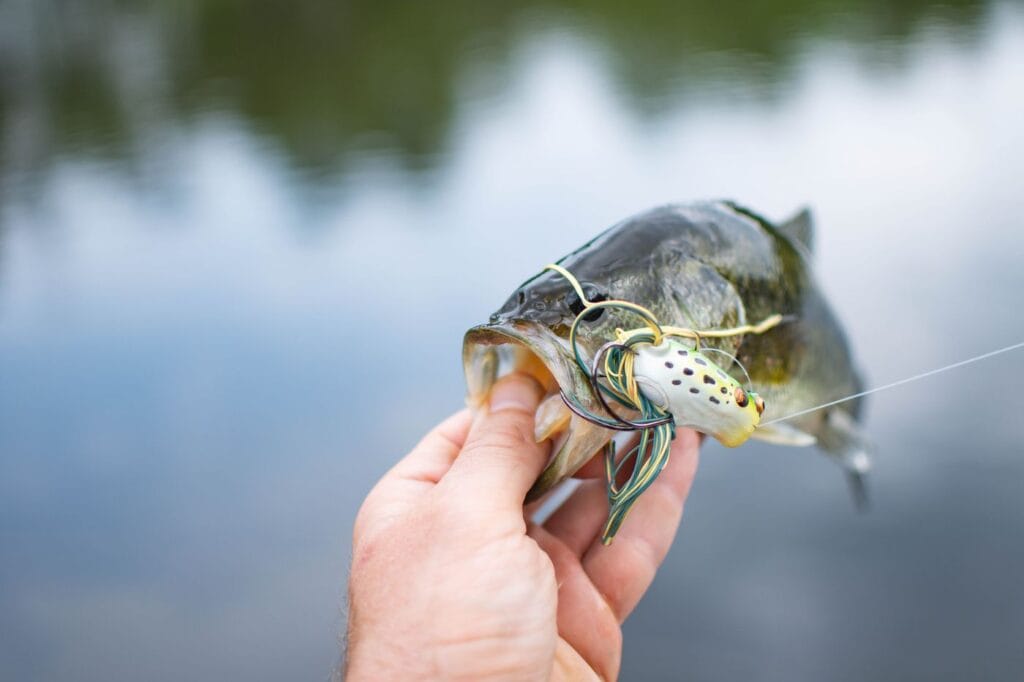
There is no more exciting moment in bass fishing than the surface erupting as a school of bass corners a ball of shad and tears into them from below. This “schooling” or “breaking” activity peaks in late summer and early fall, when bass gang up to chase shad in open water. For anglers willing to keep their eyes up and their trolling motor ready, August and September offer some of the fastest, most explosive fishing of the entire year. Here is how to find breaking bass and cash in when the water boils.
Why Bass School in Late Summer
By late summer, the year’s shad spawn has produced enormous numbers of young-of-the-year baitfish. These small, vulnerable shad roam open water in massive schools, and bass—along with white bass, hybrids, and stripers on many lakes—herd them to the surface and feed as a pack. The behavior is most intense in the low-light hours around dawn and dusk, but on cloudy, breezy days it can happen all day long. When it erupts, you will see splashing fish, scattering bait, and often diving birds pinpointing the action from above.
Where to Look for Breaking Fish
Schooling can happen anywhere shad congregate, but certain places produce far more consistently:
- Main-lake and secondary points where deep water meets a feeding shelf.
- The mouths of creeks and coves that funnel bait in and out.
- Flats adjacent to the river or creek channel, especially early and late in the day.
- Long tapering points and humps that let bass push bait up from below.
- Anywhere you see birds working—gulls and terns diving are the single best visual clue on the lake.
Position your boat where you can see a lot of water, kill the big motor, and watch. Keep the trolling motor down and a couple of rods rigged and ready, because when the fish come up, you may have only 15 to 30 seconds before they sound again.
The Best Baits for Schooling Bass
Schooling bass are keyed on small shad, so matching the size and profile of the bait is more important than color. Have these tied on and ready.
Topwater Walking Baits and Poppers
Nothing is more fun than catching schoolers on top. A walking bait you can cast a country mile lets you reach distant activity fast, and the side-to-side action mimics a fleeing shad. Poppers work when fish are up but finicky. Cast past the boil and bring the bait through the chaos.
Lipless Crankbaits and Small Swimbaits
When you need to reach fish quickly and cover water, a lipless crankbait or a small paddle-tail swimbait on a light jighead is deadly. They cast far, sink into the school, and let you catch the bass feeding just below the surface—often the bigger ones.
The Underspin and Spy Bait
On pressured lakes where fish blow up but will not commit to a topwater, a small swimbait on an underspin or a subtle spy bait fished just under the surface is a clutch follow-up. It shows the fish something more natural after they have seen a dozen topwaters.
The Fluke and Soft Jerkbait
A weightless soft jerkbait is the ultimate clean-up bait. Cast it into a boil, let it dart and flutter, and hang on. It perfectly imitates a wounded shad and catches fish that ignore hard baits.
Keys to Cashing In
- Cast beyond the boil, not into it. Splashing your lure directly on the fish can spook them. Land the bait past the activity and bring it through.
- Keep your distance. Use long casts and stay off the school. Running the boat over them ends the fun immediately.
- Downsize to match the bait. If they are chasing one-inch shad and ignoring you, a smaller lure almost always fixes it.
- Fish the memory. After a school sounds, the fish are still there below. Drop a spoon, a drop shot, or a swimbait straight down and keep catching them out of sight.
- Move fast and stay ready. Reposition quietly toward new activity and always have a rod in hand.
Don’t Ignore the Fish You Can’t See
The surface explosions get all the attention, but the smartest schooling anglers understand that the visible activity is only a fraction of the fish present. For every bass busting on top, several more are feeding on the same bait ball 10 to 25 feet down. When the surface goes quiet, do not run off—the school has simply dropped. Watch your electronics, and use a spoon, a drop shot, or a countdown swimbait to keep catching them vertically. This is how you turn a 20-second surface flurry into an hour of steady action.
Late-summer schooling bass reward the angler who stays alert, keeps multiple rods ready, and reacts fast. Spend a morning idling the main lake with your eyes on the horizon and a walking bait tied on, and you will experience the most heart-pounding fishing the season has to offer. When the water starts to boil, make a long cast, hang on, and enjoy one of the best shows in all of bass fishing.
Sandro
Bass Fishing Enthusiast & Founder of Bass Fishing Blueprint
Sandro has been chasing bass from the bank and the boat for over a decade. He created Bass Fishing Blueprint to share straightforward, practical tactics that help everyday anglers catch more fish â no fluff, no filler, just what actually works on the water.