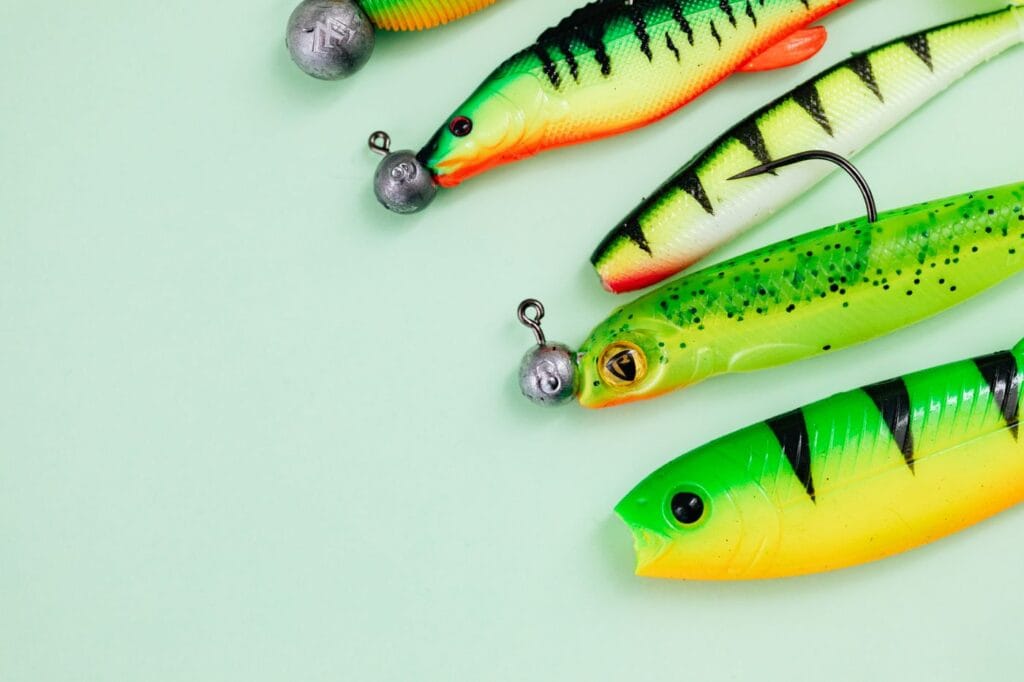
Most anglers put real thought into rod, reel, line, and lure, then grab whatever weight is on top of the pile. That is backwards. The sinker controls how fast your bait falls, how well you feel the bottom, how it comes through cover, and often whether a bass eats it at all. It is the cheapest part of your rig and one of the most consequential.
Here is a plain-English guide to bass fishing weights: what the materials actually do, what sizes to carry, and which rig needs what.
Tungsten vs. Lead: Is It Worth the Money?
Tungsten is roughly 1.7 times denser than lead. That means a 1/2 ounce tungsten weight is noticeably smaller than a 1/2 ounce lead weight of the same shape. Everything people claim about tungsten flows from that single fact.
What tungsten genuinely does better:
- Bottom feel. Tungsten is harder than lead, so it transmits vibration far better. Dragging tungsten, you can tell gravel from chunk rock from shell. With lead, it is mush. This is the real reason to buy it.
- Penetrating cover. A smaller profile at the same weight slips through matted vegetation and brush more easily. For punching, this is not a preference, it is a requirement.
- Compact profile. Less visual bulk in front of your bait in clear water.
Where lead is fine: Carolina rig weights that drag open bottom, drop shot weights you are going to break off constantly, and any application where you are not reading bottom composition through the weight. Lead costs about a fifth as much. Buying tungsten drop shot weights to fish rocky bottom is donating money to the tackle industry.
Practical answer: buy tungsten for Texas rigs, flipping, and punching. Buy lead for Carolina rigs and drop shots. Note also that lead sinkers are restricted or banned in some waters, so check local regulations.
Weight Shapes and What They Are For
Bullet Weight
The default. Cone-shaped, slides on the line, used for Texas rigs, flipping, and punching. The taper lets it slide through grass and brush. Long, skinny bullets penetrate mats better; short, fat ones deflect off rock and cover more erratically, which can be a good thing.
Barrel and Egg Weight
Rounded, made to roll across open bottom without wedging in rock. This is the Carolina rig weight. An egg weight rolling over gravel also kicks up silt, which is part of why the Carolina rig works.
Drop Shot Weights: Round vs. Cylinder
A meaningful distinction that gets ignored. Round drop shot weights are for rock and hard bottom: they roll instead of wedging, and they pull free of cracks. Cylinder (skinny, pencil-shaped) weights are for grass and sand: they slide out of vegetation cleanly. Using a round weight in hydrilla means constant hang-ups. Both use a line-pinching clip so you can adjust leader length without retying.
Nail Weight
Tiny cylinders you insert into a soft plastic. Used to add fall speed to a wacky rig or a Senko, or to change a bait attitude by weighting one end. A 1/32 ounce nail weight in the head of a stick bait turns a horizontal fall into a nose-down glide, which is a completely different presentation.
Split Shot
Pinch-on weights for split shot rigging and for adding a little casting weight to finesse presentations. Cheap and underused. A single split shot 12 inches above a Ned rig is an easy way to fish it deeper without changing heads.
How Heavy? The Part That Actually Matters
Two competing principles, and knowing which one applies is the skill.
Principle 1: Use the lightest weight you can get away with. A slower fall keeps the bait in the strike zone longer and looks more natural. This applies whenever fish are neutral or pressured, in clear water, and in open cover.
Principle 2: Use enough weight to maintain contact and get through cover. If you cannot feel bottom, you are not fishing, you are hoping. This applies in wind, current, depth, and thick cover.
The tiebreaker: can you feel the weight tick bottom on a semi-slack line? If not, go heavier, no matter how much you like the slow fall. A perfect fall rate you cannot detect catches nothing.
Weight Chart by Rig and Situation
| Rig / Situation | Weight Range | Notes |
|---|---|---|
| Texas rig, shallow, open cover | 1/8 to 3/16 oz | Slow fall; best for pressured or shallow fish |
| Texas rig, general purpose | 1/4 to 3/8 oz | The everyday default |
| Texas rig, deep or windy (15 to 25 ft) | 3/8 to 1/2 oz | Bottom contact wins over fall rate |
| Flipping brush and laydowns | 3/8 to 1/2 oz | Peg the weight |
| Punching matted grass | 1 to 2 oz | Tungsten only; peg it; heavy enough to break through on the first drop |
| Carolina rig | 1/2 to 1 oz | Lead is fine; heavier for deep or windy |
| Drop shot, shallow or calm | 1/8 to 3/16 oz | Lightest you can feel |
| Drop shot, deep or windy | 1/4 to 1/2 oz | Go heavier than feels right in 20+ ft |
| Wacky rig, nail weighted | 1/32 to 1/16 oz | Changes fall angle, not just speed |
| Shaky head | 1/8 to 1/4 oz | 3/16 covers most situations |
| Neko rig | 1/16 to 1/8 oz | Heavier nail for deeper water |
To Peg or Not to Peg
Pegging means fixing the weight against the bait with a bobber stopper or a rubber peg so they stay together.
Peg it when fishing cover: grass, brush, laydowns, mats. An unpegged weight separates from the bait and hangs in the branches while your worm floats uselessly. Pegging also makes the whole rig penetrate as one unit.
Do not peg it on open bottom, rock, or gravel. An unpegged weight hits bottom first and the bait glides down behind it on slack line, which is a far more natural fall and draws more bites. This is why the Carolina rig exists at all, and you can get a mild version of the same effect on a Texas rig by leaving the bullet free.
Use bobber stoppers rather than toothpicks. Toothpicks fray fluorocarbon at exactly the spot where you least want a weak point.
What to Actually Buy
You do not need thirty sizes. A complete, non-redundant bass weight kit:
- Tungsten bullet weights: 3/16, 1/4, 3/8, 1/2 oz. Five to ten of each. Add 1 oz and 1.5 oz only if you punch mats.
- Lead egg or barrel weights: 1/2 and 3/4 oz for Carolina rigs.
- Drop shot weights: 1/4 oz round and 1/4 oz cylinder, plus 3/16 for shallow. Lead is fine.
- Nail weights: 1/32 and 1/16 oz.
- Bobber stoppers: one pack. They cost nothing and last a season.
That is under fifty dollars and covers essentially every bass situation in freshwater.
The Habit Worth Building
The best anglers change weight far more often than they change baits. Same worm, same color, but 3/8 in the wind on the deep end of the ledge and 3/16 when they slide up shallow. If you fished all day on one weight, that is the easiest improvement available to you, and it costs nothing but the ninety seconds it takes to retie.
Sandro
Bass Fishing Enthusiast & Founder of Bass Fishing Blueprint
Sandro has been chasing bass from the bank and the boat for over a decade. He created Bass Fishing Blueprint to share straightforward, practical tactics that help everyday anglers catch more fish â no fluff, no filler, just what actually works on the water.