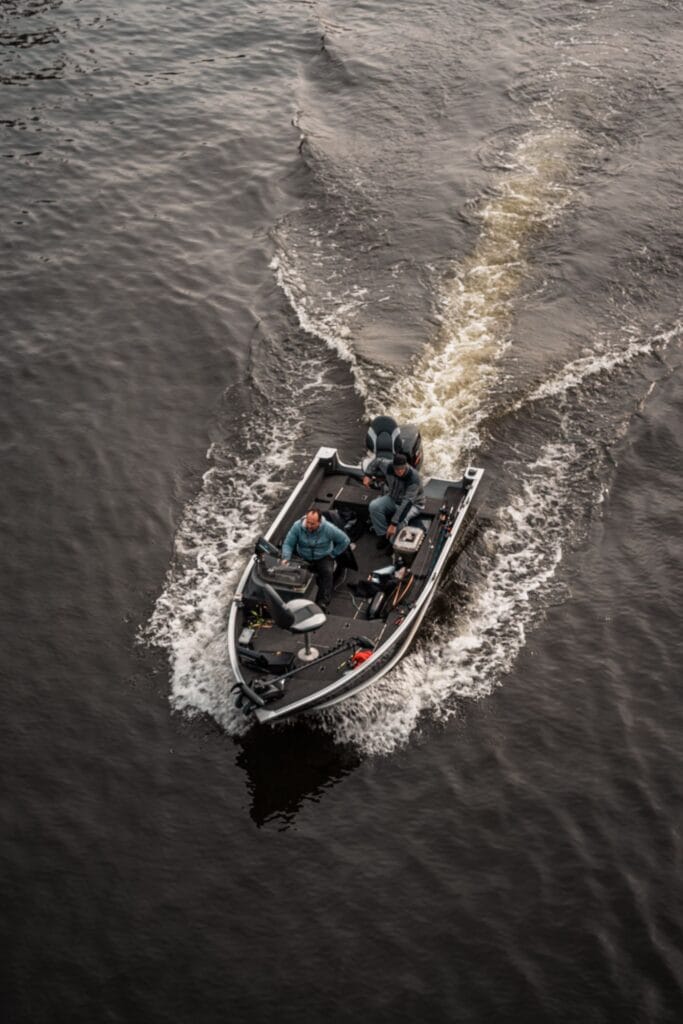
Once summer settles in and bass leave the banks, the anglers who keep catching fish are the ones who learn to fish offshore structure. Among the most productive and least crowded of those spots are humps: underwater high spots that rise off the bottom out in open water. Humps concentrate summer bass like few other features, yet most weekend anglers cruise right past them because they cannot be seen from the surface. Learn to find and fish humps and you unlock a whole new layer of the lake.
What Exactly Is a Hump?
A hump is an isolated underwater rise, an offshore mound or ridge that tops out shallower than the water surrounding it. Picture an underwater hill sitting in 25 feet of water that comes up to 12 feet on top. That high spot, surrounded by deeper water on all sides, is a magnet for baitfish and bass. Humps come in many forms: rounded mounds, long ridges, old roadbeds, submerged islands, and the tops of former hills now covered by a reservoir.
What makes humps special is access to depth. Bass holding on a hump can move shallow to feed and slide back to deep water to rest without traveling far. That vertical highway, combined with the isolation of the structure, lets a single hump hold a remarkable number of fish in summer.
How to Find Humps
Finding humps takes a little homework, but the payoff is spots that very few anglers fish. Use these tools to locate them.
- Lake maps and contour charts: look for concentric circles of depth lines out in open water, away from the bank. A bullseye of contours is the classic signature of a hump.
- Mapping electronics: high-detail mapping chips and your GPS let you idle around suspected areas and watch the contours build a picture of the rise.
- Your sonar: as you idle across open water, watch the bottom on your graph. A sudden rise from deep to shallow and back marks a hump worth investigating.
- Topographic clues: on highland reservoirs, humps are often submerged hilltops, so study the surrounding terrain for hints about what lies beneath.
When you find one, do not just fish it blind. Spend time idling over the entire hump to learn its shape, find the high point, and locate any cover or bottom changes on it. Drop waypoints on the key features so you can position precisely.
Find the Sweet Spot on the Hump
Bass rarely scatter randomly across a hump. They group on specific high-percentage features, and your job is to find them. The best humps almost always have something extra: a rock pile, a brush pile, a stump, a sharp turn in the contour, or the edge where one bottom type meets another. These are the spots that hold the most and biggest fish.
Pay special attention to the side of the hump nearest the main creek or river channel, the steepest breaking edge, and the very top where it transitions to deep water. Current, when present, also positions fish, so the up-current side and any spot that breaks the flow tends to load up. When you catch a fish, note exactly where it came from and mark it, because the next several bites usually come from the same small zone.
Best Lures and Techniques for Humps
Once you are on a hump, attack it with a one-two punch: a search bait to find active fish, then a slower bottom bait to clean up the rest.
- Deep crankbaits: a deep diver that ticks the top of the hump triggers reaction strikes and covers the whole structure fast.
- Carolina rigs: drag a Carolina rig up and across the hump to feel the bottom and tempt less aggressive fish.
- Football jigs: a 3/4-ounce football jig crawled over rock and gravel imitates a crawfish and pulls big bites.
- Big worms (Texas rig or shaky head): a magnum worm worked slowly along the high spot is a summer staple.
- Swimbaits and flutter spoons: when fish suspend over the top or chase shad, a swimbait or a flutter spoon fished vertically can be deadly.
Start with the crankbait or swimbait to locate the active, feeding fish and to gauge their mood. When the reaction bite slows, slow down with the jig, Carolina rig, or big worm and pick the sweet spot apart. This pattern of fast-then-slow lets you maximize every fish a hump is willing to give.
Boat Position Makes or Breaks the Hump
Because a hump is surrounded by deep water, the angle you cast from matters enormously. The most common approach is to position your boat out in the deep water and cast up onto the hump, then retrieve your bait down the slope into deeper water, mimicking baitfish fleeing toward safety. This keeps your lure in the strike zone longer and presents it the way bass expect to see prey on a high spot.
Try multiple angles before you give up on a hump. Sometimes fish will only bite a bait coming from a specific direction, so work the structure from the channel side, the shallow flat side, and straight across the top. Use your trolling motor and spot-lock feature to hold precisely on the productive zone once you find it, and keep your boat off the fish so you do not spook the school.
Putting It All Together
Humps reward anglers who do their homework. Study a contour map before your next trip and mark every offshore high spot you can find, then spend the first hour on the water idling over them to learn their shape and locate the cover and sweet spots. Start with a crankbait to find the active fish, slow down with a jig or Carolina rig to finish them off, and position your boat in the deep water so you can pull baits up and over the structure. Master this and you will catch summer bass on the very spots that the rest of the lake drives right over.
Sandro
Bass Fishing Enthusiast & Founder of Bass Fishing Blueprint
Sandro has been chasing bass from the bank and the boat for over a decade. He created Bass Fishing Blueprint to share straightforward, practical tactics that help everyday anglers catch more fish â no fluff, no filler, just what actually works on the water.