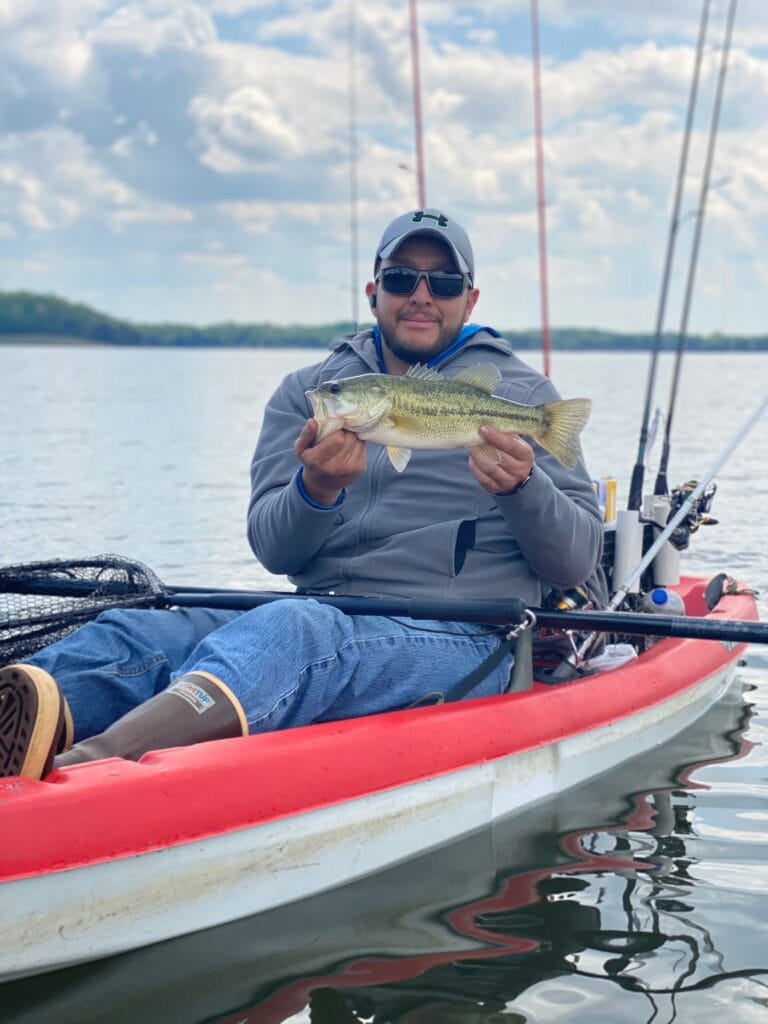
A bass fishing kayak unlocks water that most boat anglers will never reach: backwater ponds, no-motor lakes, skinny creeks, and shallow flats where the only sound is your paddle dipping. But the kayak market in 2026 is overwhelming. Models range from $400 paddle craft to $5,000 pedal-driven fishing platforms, and the marketing makes every one of them sound like the perfect bass machine. This guide cuts through the noise and walks through what actually matters when picking a bass kayak for the way you fish.
Pedal vs Paddle: The Big Decision
This is the first question, and it is the one that determines most of the rest. Pedal kayaks free your hands so you can fish while you move, hold position into the wind, and cover ground far more efficiently than a paddle craft. Paddle kayaks are simpler, lighter, cheaper, and easier to load alone. Neither is universally better — the right choice depends on the water you fish.
- Choose pedal if you fish big lakes, deal with consistent wind, often fish from a kayak more than four hours at a time, or want to throw moving baits while staying in the strike zone.
- Choose paddle if you fish small ponds and creeks, transport in a small vehicle, fish mostly from anchor or in calm conditions, or are price-sensitive at $1,000 or less total spend.
One thing to consider in 2026: pedal-drive technology has matured to the point where reverse pedaling is standard on most major brands, and that single feature changes how you can hold position over a brushpile, point, or grass edge. If you can swing it financially, the productivity gain on a windy day is enormous.
Sit-On-Top Is the Standard for Bass
For bass fishing specifically, a sit-on-top kayak is the right form factor 95 percent of the time. They offer a stable platform, easy entry and exit, plenty of mounting space for rod holders and electronics, and the option to stand and fish on the more stable models. Sit-in kayaks are warmer, faster, and better in cold weather or rough open water, but they limit casting motion and gear access.
Specs That Actually Matter
- Length: 10 to 12 feet for ponds and creeks, 12 to 14 feet for big lakes and rivers. Longer kayaks track better and cover more water; shorter kayaks turn quicker and load easier.
- Width: 33 to 36 inches gives you the stability to stand and sight-fish. Anything narrower than 32 inches will be a tippy platform for most anglers.
- Capacity: Plan for at least 100 lb above your loaded weight. Underloading the capacity rating preserves freeboard and stability.
- Hull weight: If you load and unload solo, 75 lb is a practical ceiling without a cart. Past that, you need a kayak cart or a partner.
- Seat: A high-quality elevated frame seat with multiple positions makes a bigger difference for all-day comfort than almost any other feature.
- Standing pad: A non-slip pad with adequate width and a stable hull makes sight-fishing and accurate casting possible — a real edge in clear water.
Top Bass Kayak Picks for 2026
Best Overall Pedal Kayak: Hobie Pro Angler Series
Hobie still sets the bar for pedal-drive bass kayaks. The MirageDrive 360 is reliable, efficient, and now standard with reverse on all current Pro Angler models. The wide hull is rock solid for standing, and the layout is built for serious tournament-level rigging. The price tag is substantial, but the resale value holds better than nearly any other kayak on the market.
Best Value Pedal Kayak: Old Town Sportsman BigWater PDL
The Sportsman BigWater PDL delivers a polished pedal experience at a meaningful discount to the premium brands. The propeller-style drive is intuitive, the hull is exceptionally stable for its width, and the deck layout includes flush-mount rod holders, accessory tracks, and a roomy tankwell. A great pick for an angler who wants pedal performance without paying flagship money.
Best All-Around Paddle Kayak: Wilderness Systems ATAK
For anglers who want a paddle craft that does not feel like a compromise, the ATAK is hard to beat. The wide platform allows comfortable standing for casting and sight-fishing, the tankwell holds a milk crate or cooler, and the AirPro seat is one of the best in the industry. It is a paddle-only kayak that performs in conditions that would push lesser hulls.
Best Budget Bass Kayak: Pelican Catch Series
Under $1,000, Pelican gives you a stable, fishable platform with rod holders, a basic seat, and a wide hull that handles small lakes and ponds well. It is not going to win any speed races and the seat will be the first upgrade most owners make, but as a starter bass kayak that you can actually fish out of the box, the Catch series remains the leader in the sub-$1,000 segment.
Best Stand-Up Sight-Fishing Kayak: Bonafide SS127
If you spend a lot of time on clear water hunting bedded bass or sight-casting to fish in shallow grass, the SS127 deserves a serious look. The HiRise frame seat and full-length deck pad make it one of the most comfortable kayaks to stand and pole all day. The hull tracks well under paddle and stays composed in chop.
Rigging Essentials Beyond the Hull
Even the most expensive kayak is just a starting point. Plan for these accessories before you commit to a budget:
- Anchor system: A 1.5 lb folding grapnel anchor with a trolley keeps you positioned in wind. A stake-out pole is faster in shallow water.
- Fish finder: A 5 to 7 inch unit with side-imaging or a basic forward-facing sonar mount transforms how you fish brush, points, and ledges.
- Rod holders: Two flush-mount holders behind you and one or two adjustable holders within arm’s reach.
- PFD with pockets: A fishing-specific PFD with rod-leash points and front pockets is non-negotiable. Wear it.
- Kayak cart: Almost mandatory for any kayak over 65 lb if you launch alone.
Common Buying Mistakes
- Buying a kayak you cannot load alone, then never using it.
- Choosing a fast, narrow hull and discovering you cannot stand to cast.
- Skimping on the seat — every long day on the water reminds you of the upgrade you avoided.
- Overlooking transport and storage. A 14-foot kayak does not fit on every roof or in every garage.
- Buying a paddle kayak for a windy reservoir and pedaling envy within a season.
Final Thoughts
The best bass kayak is the one you will load up and use most often. For most anglers, that means a stable sit-on-top in the 11 to 13 foot range with a quality seat and enough capacity for a fish finder, a battery, and a small tackle setup. If your budget allows pedal drive and your water rewards mobility, make the upgrade — you will fish longer and cover more water. Whatever you buy, get on the water, learn how the boat handles in wind, and let the bass tell you what to fix on the next rigging session.
Sandro
Bass Fishing Enthusiast & Founder of Bass Fishing Blueprint
Sandro has been chasing bass from the bank and the boat for over a decade. He created Bass Fishing Blueprint to share straightforward, practical tactics that help everyday anglers catch more fish â no fluff, no filler, just what actually works on the water.