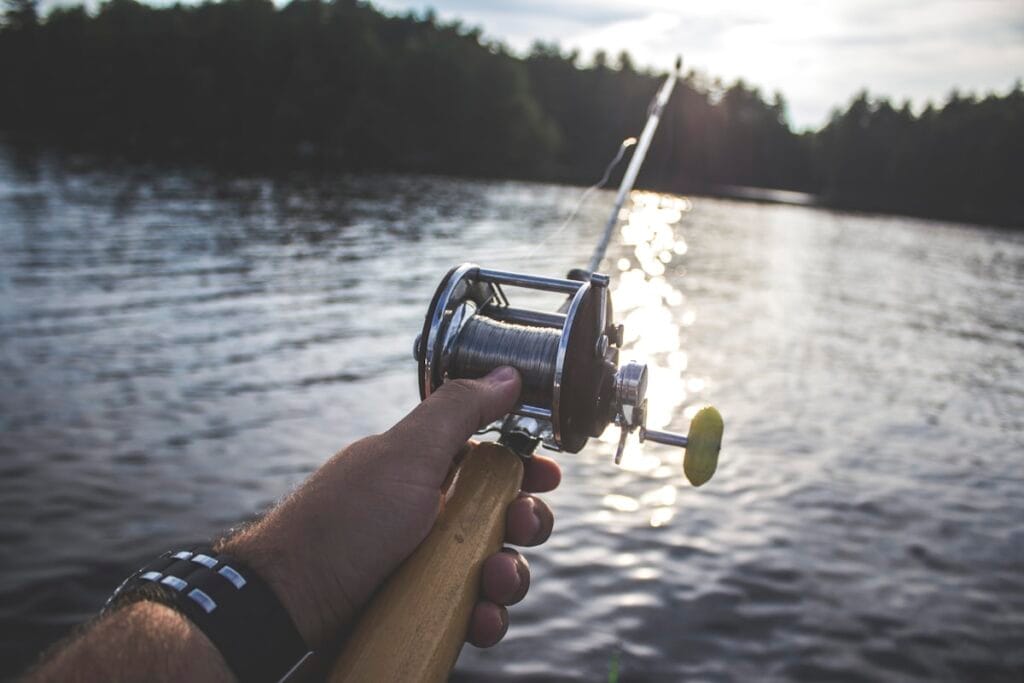
Summer bass fishing gets a bad reputation. The water is hot, the fish go deep or go nocturnal, and a lot of anglers give up by July. But summer is actually one of the most productive seasons for bass if you understand the patterns — where bass go when it gets hot, why they go there, and how to adapt your presentation.
Understanding Summer Bass Behavior
When water temperatures exceed 75–78°F, bass face two problems: declining dissolved oxygen in warm shallow water, and an accelerated metabolism that requires more frequent feeding. They solve both problems the same way — they move deep, where water is cooler and more oxygenated, then make fast, aggressive feeding runs to shallower water during peak feeding windows.
The result is predictable behavior: bass are in two modes all summer — deep resting mode (most of the day) and shallow feeding mode (early morning and evening). Crack that pattern and summer becomes very productive.
Where to Find Bass in Summer
Ledges and channel edges (daytime): The primary summer holding area in most reservoirs is deep structure — channel bends, ledges, and submerged points at 15–25 feet. These areas provide cool, oxygenated water adjacent to deep channels where bass suspend over shad schools.
Shallow flats (early morning and evening): In the first two hours after sunrise and the last 30–60 minutes before dark, bass push onto shallow flats, riprap banks, dock edges, and points in 2–6 feet of water to feed aggressively.
Docks with shade: Shaded dock edges, especially docks over 8–12 feet of water, provide a thermal refuge closer to shore. Bass stack under these docks during midday.
Main lake points: Any point that drops sharply from 4–6 feet to 15+ feet is a summer highway. Bass use these for feeding runs morning and evening, then retreat to deep water during midday.
Best Summer Bass Lures
Deep-diving crankbait (daytime): A Strike King 10XD or Rapala DT20 that reaches 18–25 feet is the most efficient way to locate and catch summer ledge bass. Work it along channel edges and ledges, keeping the bait contacting the bottom.
Football jig (daytime): A 3/4 to 1.5 oz football jig dragged very slowly along the bottom of a ledge is the precision tool after crankbaits locate the fish. The heavy weight keeps bottom contact in deep water; the bulky profile looks like a crawfish.
Topwater (early morning): A buzzbait, Whopper Plopper, or walking bait along shallow flats and points in the first hour of daylight produces aggressive, explosive strikes. Once the sun clears the treeline, this window typically closes.
Night fishing lures: Large black plastic worms, black buzzbaits, and black/blue bladed jigs fished from dusk through midnight produce excellent summer action as bass move in to feed under the cover of darkness.
Summer Bass Fishing Strategies
Fish early and late: In high summer, the shallow bite is almost entirely limited to the first 90 minutes of daylight and the last 45 minutes before dark. Plan accordingly — alarm at 4:30 AM, or fish from 7 PM until legal darkness.
Go deep at midday: Find the deepest accessible structure with good bottom composition and work it with heavy jigs and deep crankbaits. The bass are there — they’re just dormant.
Use electronics: Summer bass are on specific pieces of structure, often in specific spots on that structure. Learn to read your graph in summer and mark productive spots with buoys.
Night fish in extreme heat: When daytime highs exceed 95°F, night fishing solves the problem entirely — bass feed aggressively on shallow structure from dusk to midnight. It’s the most reliable way to beat a summer heat wave.
Summer Bass Fishing by Region
In the Deep South and Texas, July and August can be nearly impossible during the day — nighttime and early morning fishing dominates. In the northern states and Canada, summer water temperatures may only briefly reach difficult levels, and the bass fishing remains productive throughout the day. Know your local conditions and adjust your schedule accordingly.
Frequently Asked Questions
Why is summer bass fishing so difficult?
Summer bass fishing is challenging because warm water temperatures push bass deep (15–25 feet) during the day to find cooler, more oxygenated water. The shallow bite is compressed into short early morning and evening windows, leaving midday anglers working unproductive water.
What is the best time to bass fish in summer?
The first 90 minutes after sunrise is the single best summer bass fishing window. Bass push shallow to feed aggressively before retreating to deep structure as the sun rises. The last 45 minutes before dark is a second productive window. Night fishing also produces well during extreme heat.
What depth should I fish for bass in summer?
In summer, fish 2–6 feet depth during early morning and evening feeding windows, and 15–25 feet during midday on ledges, channel bends, and deep structure. Transition depths of 10–15 feet on main lake points produce during the mid-morning and late afternoon windows.
What lures work best for summer bass fishing?
Deep-diving crankbaits and football jigs are the best midday summer lures for fishing deep ledges. Topwater lures like buzzbaits and Whopper Ploppers work early morning. During extreme heat, a drop shot in 12–18 feet catches bass that won’t chase active presentations.
Sandro
Bass Fishing Enthusiast & Founder of Bass Fishing Blueprint
Sandro has been chasing bass from the bank and the boat for over a decade. He created Bass Fishing Blueprint to share straightforward, practical tactics that help everyday anglers catch more fish â no fluff, no filler, just what actually works on the water.