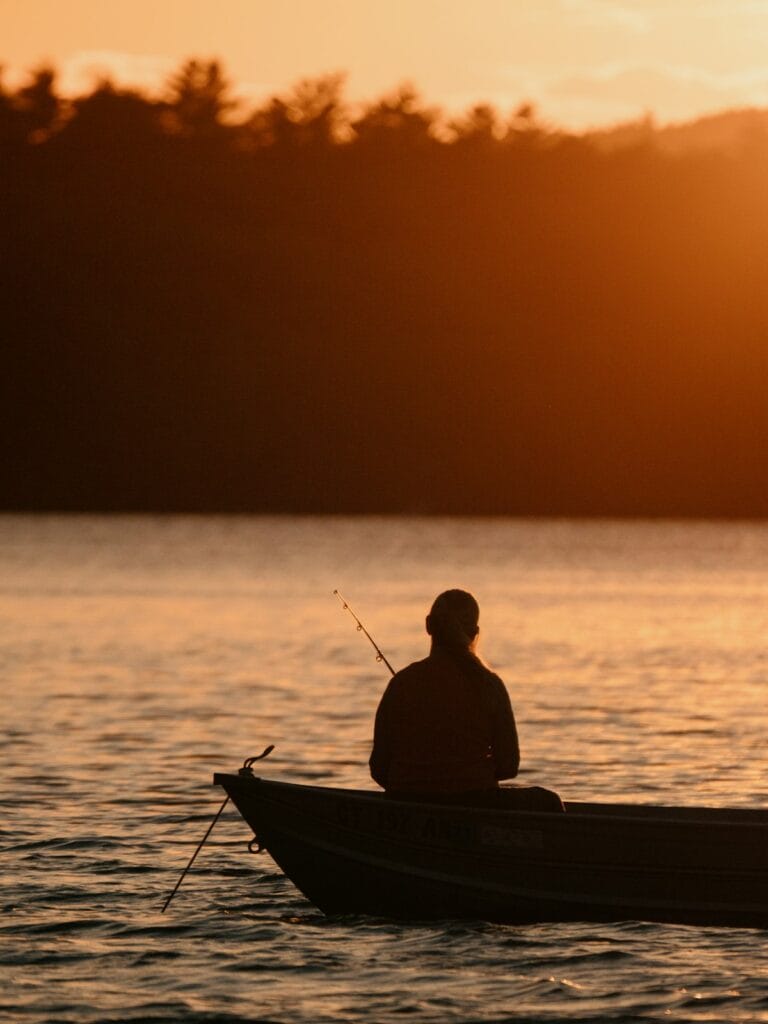
Nothing humbles a bass angler like a cold front. You drove two hours to the lake, launched before sunrise, and the fish have collectively decided not to cooperate. Skies are crystal clear, the wind died, and the barometer is rising fast. Welcome to cold front fishing.
The good news: bass don’t stop eating after a cold front. They just make you work for it. Here’s how to adjust and still catch fish when conditions turn tough. And if you can time your trip ahead of the front instead — while it’s still overcast and drizzling — bass fishing in the rain is usually far more productive than the bluebird day that follows.
What Happens to Bass After a Cold Front
Cold fronts affect bass in several interconnected ways:
- barometric pressure spikes: Rapid pressure increases after a front passes cause discomfort in bass’s swim bladder. They compensate by dropping deeper or hugging the bottom tight.
- Water temperature drops: Sudden cold snaps slow bass metabolism, reducing their willingness to chase prey.
- Cleared skies increase light penetration: High-clarity, bright blue-bird days make bass feel exposed in shallow water. They retreat to cover or depth.
- Wind dies: The surface chop that previously provided cover disappears, making bass more wary of predation.
The result: bass that were chasing topwater 24 hours ago are now sitting motionless under docks and in the deepest available cover, reluctant to move more than a few inches to eat.
How Long Does the Cold Front Effect Last?
The worst fishing typically occurs 12–36 hours after the front passes — right when conditions look perfect to a casual observer. Clear skies and calm water look pleasant but fish terrible.
Recovery happens as conditions stabilize. By 48–72 hours post-front, bass begin feeding again. By the time clouds return and the next weather system approaches, the bite often rebounds strongly.
In warm months, recovery is faster — sometimes 24 hours. In late fall and winter, a hard cold front can lock bass down for 4–5 days.
Where to Find Bass After a Cold Front
Go Deeper
This is the most important adjustment. Whatever depth bass were at before the front, they’ve moved 2–6 feet deeper. If you were catching fish at 4 feet, start looking at 8–10 feet. If you were fishing 10 feet, try 15–18 feet.
Target Tight Cover
Post-frontal bass don’t roam — they tuck into the thickest, darkest cover available. Laydowns with multiple branches, standing timber, dock pilings (especially deeper docks with shade), rock piles, and undercut banks all hold post-frontal fish.
South-Facing Banks and Shallow Dark-Bottomed Coves
On cold, sunny post-front days, south-facing banks absorb solar radiation and warm faster than north-facing areas. Dark mud bottoms also absorb heat. Bass seeking the warmest available water will position in these areas.
Wind-Protected Areas
Cold front wind typically comes from the northwest. The opposite bank is protected from the wind and often holds slightly warmer water. Bass that would normally be on the exposed windward bank relocate here after a front.
Best Baits for Cold Front Bass Fishing
Finesse Presentations — Your Primary Tool
Post-frontal bass want small, slow-moving, easy-to-eat presentations. Downsizing is the single most important bait adjustment you can make:
- drop shot: A 3/16 oz weight with a 4-inch finesse worm (Roboworm, Zoom Finesse Worm) on 6 lb fluorocarbon is devastating on post-frontal bass. Keep the bait in the strike zone as long as possible — gentle shakes with zero forward movement trigger reluctant biters.
- Shaky head: A 1/8 oz shaky head jig with a 5-inch straight worm, shaken slowly along the bottom. The quivering action is irresistible to inactive fish.
- Ned rig: A 3-inch TRD on a 3/16 oz mushroom head is one of the best post-frontal baits available. It stands up on the bottom naturally and demands minimal effort from the bass to eat.
Tube Bait
A 3.5-inch tube on a 3/16 oz internal jig head, dragged slowly along rocky bottom, is a classic cold-water, cold-front bait. The tentacles flutter naturally, and the compact profile is easy for a lethargic bass to inhale.
Suspending Jerkbait — Extended Pause
In clear water post-front conditions, a suspending jerkbait with an exaggerated pause (8–15 seconds) can trigger strikes. The extended pause lets the bait sit suspended at eye level for a bass tucked in cover. The slight nose-down drift of a properly weighted suspending bait is often all it takes.
Flipping Tight to Cover
A 3/8 oz flipping jig or a Texas-rigged beaver bait, flipped precisely into tight cover, can score big fish even on post-frontal days. The key word is “precisely” — you need to drop the bait directly on top of the bass, because they won’t move to meet it. This is a patience game.
Presentation Adjustments
Slow Down Dramatically
If you think you’re fishing slowly, fish slower. Post-frontal bass are not in an aggressive, reaction-bite mode. They need time to decide to eat. Count to 10 at every pause. Count to 20. Then move the bait an inch and count again.
Downsize Everything
Smaller bait, lighter line, smaller hook. A 5-inch worm becomes a 4-inch worm. Twelve-pound fluorocarbon becomes 8-pound. A 3/8 oz jig becomes a 1/4 oz jig. These small changes make baits fall and behave more naturally, which is critical when bass are scrutinizing every offering.
Use Natural Colors
In clear, bright post-frontal water, natural and subtle colors outperform bright attractors. Green pumpkin, watermelon, brown, and natural craw tones. Save the chartreuse and fire tiger for stained water and active fish.
Long Fluorocarbon Leaders
If using braid as main line, use a long (15–20 foot) fluorocarbon leader in post-frontal clear water. The near-invisibility of fluorocarbon makes a measurable difference when bass are cautious and conditions are bright.
Mindset for Cold Front Days
Cold front days teach patience. Accept that you’ll have fewer bites, and approach each cast with the intention of making it perfect. One well-placed drop shot in the right spot will outperform 50 lazy casts with the wrong bait.
Also: adjust your expectations. A limit of 2-pound fish is a great day post-front. Focus on learning the pattern rather than filling the livewell, and you’ll leave the lake having learned something valuable about bass behavior.
The anglers who consistently catch fish in tough conditions aren’t miracle workers — they just adjust faster and fish slower than everyone else.
❓ Frequently Asked Questions
How does a cold front affect bass fishing?
Cold fronts cause bass to go lockjaw — they drop deeper, tuck into tight cover, and stop chasing fast-moving baits. The cause is a combination of rapid barometric pressure increase, cleared skies, and sudden temperature drop.
How long does a cold front affect bass fishing?
The worst fishing is 12–36 hours after the front passes. By 48–72 hours post-front, bass begin feeding again. In summer, recovery is faster (sometimes 24 hours). In fall and winter, a hard cold front can suppress the bite for 4–5 days.
What is the best lure after a cold front for bass?
Finesse presentations are best post-cold front — a 4-inch drop shot worm on 6 lb fluorocarbon, a Ned rig, or a shaky head worked very slowly. Smaller baits, lighter line, and slower retrieves are the three most important adjustments.
Do bass still bite when it’s cold?
Bass bite in cold water, but very slowly. In water below 50°F, their metabolism slows dramatically. Target the deepest available structure with slow, precise finesse presentations. A bite may take 30 seconds to develop where a summer bite happens instantly.
📖 Keep Reading
Sandro
Bass Fishing Enthusiast & Founder of Bass Fishing Blueprint
Sandro has been chasing bass from the bank and the boat for over a decade. He created Bass Fishing Blueprint to share straightforward, practical tactics that help everyday anglers catch more fish â no fluff, no filler, just what actually works on the water.