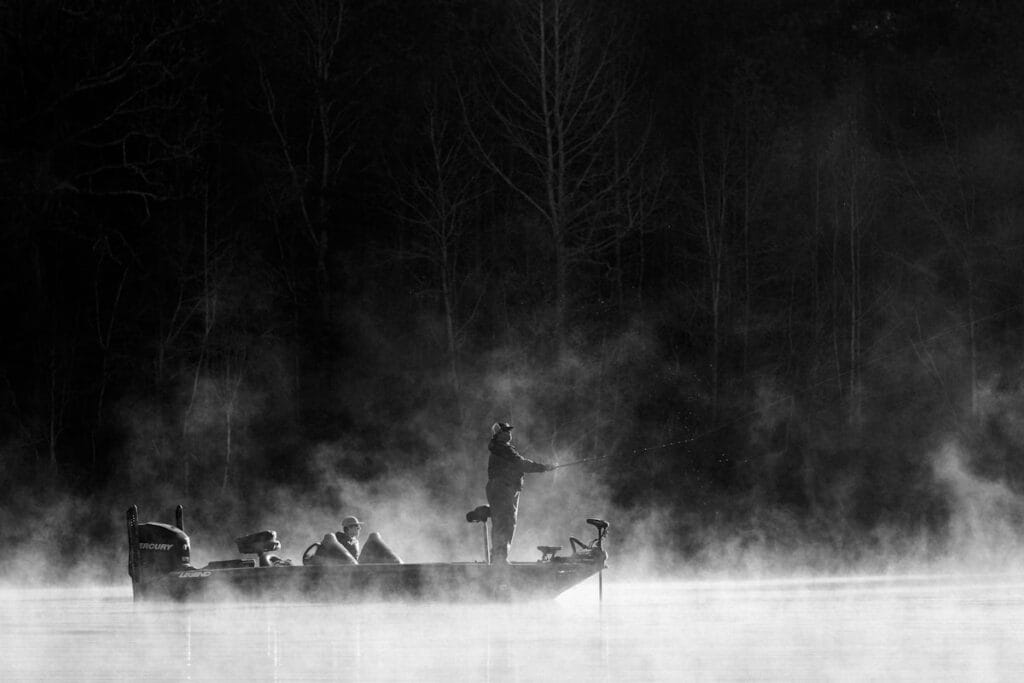
I’ve fished bass for a long time, and the single thing I’d tell anyone trying to get better fast is this: when you fish matters more than what you throw. I’ve had days where I had the wrong color, the wrong rod, and a wind I didn’t want, and I still caught fish because the timing window was open. I’ve also had perfect lures and zero bites because I showed up at 1 PM in August. This is the cheat sheet I wish someone had handed me twenty years ago — hour by hour, season by season, weather by weather — built from a lot of bad days that finally taught me what the good ones look like.
Why Timing Matters for Bass
Bass are cold-blooded, which is a polite way of saying their whole day runs on water temperature, light, and pressure — they don’t pick when to feed, the lake picks for them. Once that clicked for me I stopped grinding through dead hours hoping for a miracle and started showing up when the lake was actually telling me to. A friend of mine used to fish three afternoons a weekend and gripe about getting skunked; he started fishing one early window and one evening window instead and tripled his fish without adding a single hour on the water. The lake will tell you when to fish if you stop arguing with it.
Best Time of Day to Fish for Bass
Early Morning (Sunrise to 9 AM) — Peak Feeding Window
If I could only fish two hours a day for the rest of my life I’d take the two hours after sunrise every time. Water’s cool, oxygen is up, shad and bluegill are flickering near the surface, and bass slide shallow to hunt with the lights still low. I’ve caught more 4-pound-plus fish in that window than in every other hour of the day combined. The bite is usually short — sometimes 45 minutes, sometimes a full three hours — but while it’s on you can be ridiculously aggressive and they’ll still eat.
Work topwater lures, poppers, and frogs during this window. The strikes are aggressive and the action can be explosive. Don’t sleep in on a fishing day.
Late Evening (5 PM to Dark) — Second Feeding Window
As the sun drops and water cools, bass move shallow again. The evening bite is often as good as the morning bite, especially in summer when midday heat pushes fish deep. Topwater and shallow crankbaits shine here.
Midday (10 AM to 3 PM) — Tough Conditions
High sun angles push bass deep or into heavy shade. They’re still catchable, but you need to adjust. Drop shots, shaky heads, and deep diving crankbaits targeting 10–25 feet of water can still produce. Work slower and more methodically.
Night Fishing
Summer nights are underrated. Bass that went dormant during the heat become aggressive feeders after dark. Large swimbaits, black-colored buzzbaits, and slow-rolled spinnerbaits along the bottom can produce trophy fish when everyone else is asleep.
Best Season to Fish for Bass
Spring (March–May) — Best Overall Season
Spring is the best season to fish for bass and it’s not particularly close. Once the water creeps from the 50s up into the low 70s the lake basically wakes up — bass leave the deep winter stuff and pile into shallow flats, coves, and the backs of pockets you couldn’t buy a bite out of in February. My best stretch of bass fishing every single year, without fail, is the three weeks when the dogwoods bloom and the bluegills start fanning beds. I’ve marked that on the calendar at home in red ink. Skip Christmas before you skip those three weeks.
pre-spawn fish (water 55–65°F) are in feeding frenzy mode, bulking up before the spawn. Target points, channel swings, and transition areas with jigs, swimbaits, and lipless crankbaits.
Spawning fish (65–72°F) are on beds in 2–8 feet of water. Sight fishing with flukes, senkos, and lizards is highly effective.
Post-spawn females recover in deeper water nearby while males guard fry in the shallows. Target both groups separately.
Summer (June–August) — Early/Late Focus
Summer bass fishing is feast or famine. The morning and evening bites can be incredible, but midday is brutal. Thermoclines form in many lakes — bass suspend along the oxygen-rich layer just above the thermocline, often at 12–20 feet.
Deep structure (humps, ledges, channel edges) holds big schools of summer bass. A Carolina rig, deep-diving crankbait, or drop shot can connect with fish that most bank anglers never reach.
Fall (September–November) — Shad Chase Season
Fall bass follow shad schools into shallow creeks and coves. As water cools back into the 60s°F, bass feed aggressively to fatten up for winter. Reaction baits — spinnerbaits, shallow crankbaits, lipless crankbaits — are deadly when you locate baitfish schools.
This is an excellent time to cover water fast. Bass can be anywhere, so move until you find them, then work the area thoroughly.
Winter (December–February) — Slow and Deep
Bass metabolism slows dramatically in cold water. They’re lethargic and won’t chase fast-moving baits. Work slowly and precisely with finesse presentations — hair jigs, drop shots, and blade baits in 15–30+ feet of water.
Winter bass tend to school up tightly. Find one and you’ve often found 20. Target the deepest nearby structure: main lake points, bluffs, channel bends.
How Weather Affects the Best Time to Fish
Barometric Pressure
Rising pressure after a front clears often triggers a feeding bite as conditions stabilize. Falling pressure before a storm can also turn on the bite for a short window — one reason bass fishing in the rain is often better than anglers expect. Stable pressure — whether high or low — produces predictable fishing. Rapidly changing pressure is tough.
Cloud Cover
Overcast skies are a bass angler’s friend. Clouds reduce light penetration, which emboldens bass to move shallow and feed throughout the day — not just at dawn and dusk. An overcast day in spring or fall can produce all-day action.
Wind
Light to moderate wind is beneficial. It oxygenates the water, creates surface chop that reduces bass wariness, and pushes baitfish against windward shorelines. Strong wind makes boat control difficult but can concentrate bass on specific banks.
cold fronts
The 24–48 hours after a cold front passes are notoriously tough. Skies clear, pressure rises fast, and bass go lockjaw. Downsize your baits, slow down, and fish the deepest structure in the area. It’s survivable with patience.
Best Time to Fish by Water Temperature
- Below 50°F: Tough bite. Slow finesse presentations, deepest structure available.
- 50–60°F: Bass waking up. Pre-spawn movement begins. Jigs and swimbaits on transition areas.
- 60–75°F: Prime feeding temperature. All presentations work. This is the sweet spot.
- 75–85°F: Early/late bite. Midday fish go deep. Topwater mornings; deep structure midday.
- Above 85°F: Bass stressed. Focus on deep water with high oxygen levels.
Putting It All Together
If you handed me a wish list, the day I’d build is this: late spring, overcast at sunrise, a slow rising barometer or one that’s been steady for two days, and water somewhere in the 62-to-72 range. That’s the day I’ve had my best limits, my biggest fish, and the few trips I still talk about. I’ve had three or four of those days in the last decade. They’re not common, but when one lines up you cancel whatever else you had planned.
But honestly, you don’t need that perfect day. Most of the bass I’ve caught came on average days where I made one or two adjustments that fit the conditions. The single highest-ROI thing I ever did for my fishing was keep a beat-up notebook in the truck — date, water temp, pressure trend, what worked, what didn’t. After about a year and a half of that, patterns showed up on my home lake that no article anywhere on the internet was going to tell me. Your home lake has its own rules. Write them down.
❓ Frequently Asked Questions
What is the best time of day to fish for bass?
The best time of day for bass fishing is the first two hours after sunrise. Dissolved oxygen is high, water temperature is comfortable, and bass move shallow to ambush prey in low light. The evening hour before dark is the second-best window.
What month is best for bass fishing?
May is generally the best month for bass fishing in most of the country. Water temperatures are in the ideal 65–72°F range, bass are either spawning or in aggressive post-spawn feeding mode, and fish are distributed throughout the water column.
Is bass fishing good in hot weather?
Bass fishing in hot weather requires adjusting your approach — fish very early, very late, or after dark. Midday summer fishing requires targeting deep structure at 15–25 feet where bass retreat to cooler, more oxygenated water.
Does barometric pressure affect bass fishing?
Yes. Stable or slowly rising pressure produces the most predictable fishing. Rapidly falling pressure before a storm can trigger a short feeding frenzy. The worst conditions are the 24–48 hours after a cold front, when pressure spikes and skies clear.
📖 Keep Reading
Sandro
Bass Fishing Enthusiast & Founder of Bass Fishing Blueprint
Sandro has been chasing bass from the bank and the boat for over a decade. He created Bass Fishing Blueprint to share straightforward, practical tactics that help everyday anglers catch more fish â no fluff, no filler, just what actually works on the water.