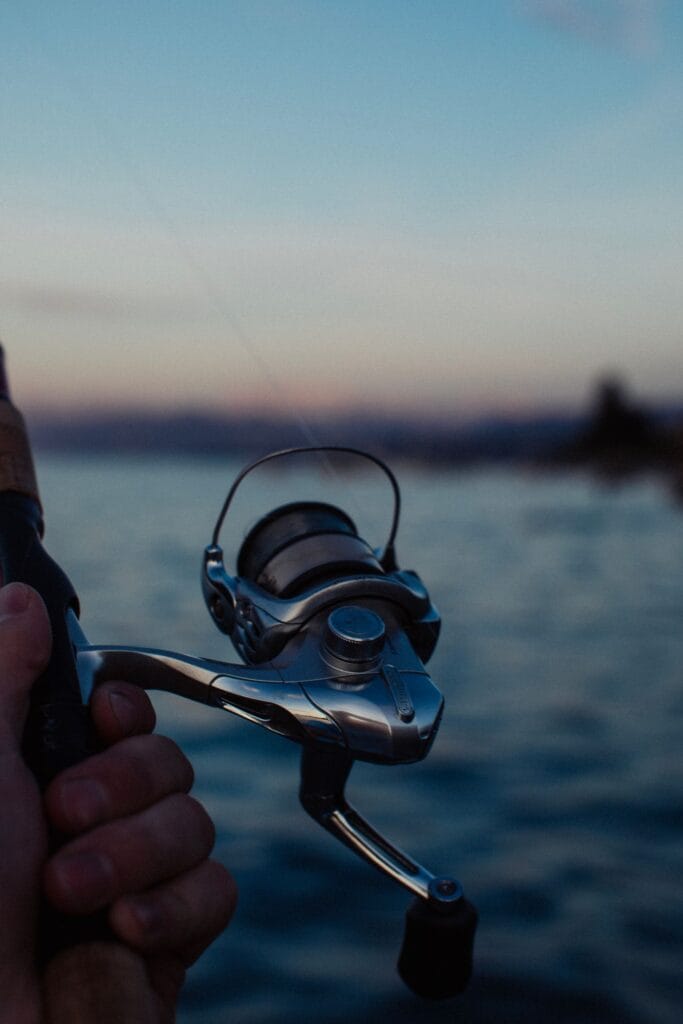
Tidal bass fishing breaks the rules you learned on a reservoir. The spot that produced five fish at 7 a.m. is dry mud by 11. The current that was pushing left this morning pushes right this afternoon. Depth is not a fixed number. For anglers used to lakes, the first trip to a tidal fishery like the Potomac, the James, the Delta, or the Chesapeake tributaries is usually humbling.
But tidal water in July is also one of the best-kept secrets in summer bass fishing. While reservoir bass are sulking at 22 feet in 88-degree water, tidal bass are shallow, aggressive, and eating in two feet of water at noon. You just have to fish the clock instead of the calendar.
The One Thing That Matters: Current, Not Water Level
New tidal anglers obsess over high tide and low tide. That is the wrong frame. What actually turns bass on is moving water.
At the top of the high tide and the bottom of the low tide, there is a slack period where water is barely moving. In those windows the bite typically dies. The bite fires during the middle of a falling or rising tide, when current is strongest. Slack water is when you reposition, eat lunch, and idle to your next stretch.
Think of it exactly like a dam pulling water on a river. When the current runs, bass set up on ambush points and feed. When it stops, they scatter and shut off. On a tidal system, the moon does the job the dam does.
Falling Tide: The Money Window
If you can only fish part of a tidal day, fish the falling tide. It is the most predictable bite in this kind of water, and the reason is mechanical.
As water drains off flats, marsh grass, and shallow backwaters, it pulls baitfish, shrimp, and crabs out with it. Everything living in that shallow cover gets flushed into deeper channels. Bass know this. They stack on the drains and eat things as they come by, and they do it with total predictability.
Where to be on a falling tide:
- Creek mouths and drains. Any place where a shallow flat funnels into a ditch or channel. The narrower the funnel, the better. Position downstream of the drain and cast up into the flow.
- Grass edges on the outside bend. Current pushes into the outside bend, and bass sit just off the grass line where the water speeds up.
- Isolated wood at the mouth of a cut. A single laydown at a drain on a falling tide is often worth several fish.
- Dock pilings in current. Bass sit on the downstream side of the piling, in the eddy, facing into the flow.
The rule for all of it: present the bait so it moves with the current, not against it. Nothing in nature swims upstream past a bass. Cast up-current and bring the bait back with the flow, the same way you would fish a trout stream.
Rising Tide: Follow Them In
The rising tide is harder because the fish spread out, but it can be excellent if you commit to the shallow game.
As water floods back onto flats and into grass, bass push up with it and get very shallow. This is when tidal water produces those absurd one-foot-of-water bites in the middle of a July afternoon. Fish the same places you fished on the fall, but move progressively shallower and further back as the water climbs.
The high tide window is when you go into the places that were unreachable four hours ago: the backs of marsh cuts, flooded grass, and shallow pockets behind docks. Bring a frog.
How to Actually Plan a Tidal Day
This is where most people go wrong. They pick a spot and stay. On tidal water you chase the tide stage across the system.
Here is the key insight: the tide does not happen everywhere at once. On a big system, there can be a two to four hour lag between the mouth of the river and the upper reaches. That means if you fish the perfect falling-tide window at the lower end, you can run upriver and fish the same falling-tide window again. Good tidal anglers routinely fish three or four hours of prime falling tide by moving with it.
Practical planning steps:
- Pull the tide chart for the station nearest your launch. NOAA publishes them free, and the phone apps are fine.
- Identify the two falling tide windows in your day and build the trip around them.
- Note the lag for upriver stations. Learn it once for your system and it never changes.
- Plan to be at your best drain-and-funnel stretch at the start of the fall, not at slack.
- Use the slack windows to run, not to fish.
Also check the moon. Spring tides around the new and full moon move much more water than neap tides at the quarter moons. More water movement generally means a stronger, shorter, more concentrated bite. Neap tides are softer and the bite is more spread out.
Baits That Fit Tidal Water in July
Tidal bass are usually shallow, usually around grass or wood, and usually in stained water. That narrows things considerably.
- Hollow body frog. On the high and the early fall, over flooded grass and pads. This is the signature tidal summer bait.
- Chatterbait or spinnerbait. For grass edges in current. A bladed jig fished with the flow along a grass line on a falling tide is hard to beat.
- Texas rig with a craw or beaver. 3/16 to 3/8 oz, pegged, for wood and grass. Tidal bass eat crabs and crayfish heavily; do not overlook crab-colored plastics on brackish water.
- Squarebill crankbait. For riprap, hard bottom, and dock pilings in current.
- Swim jig. The all-purpose tidal grass bait. Fish it with the current, let it deflect off cover.
Notice what is missing: deep offshore baits. You almost never need a football jig or a deep crank on tidal water. Most tidal bass live in under six feet, year round.
Things Nobody Warns You About
- You can strand your boat. That cut you ran into on a high tide may have eight inches in it three hours later. Pay attention to how you got in, and leave before you have to.
- Salinity moves the fish. In a dry summer, salt pushes further up the system and largemouth back off it. After heavy rain, fresh water pushes down and fish follow. Bass tolerate a little brackish water but they will not stay in it.
- Yesterday means nothing at the same clock time. Tides shift roughly 50 minutes later each day. The spot that was perfect at 8 a.m. Saturday is perfect at about 8:50 Sunday. Log the tide stage of every bite, not the time of day.
That last point is the whole discipline in one sentence. Keep a log with tide stage and location, and after a season you will have something far more valuable than waypoints: you will have a schedule.
Why It Is Worth Learning
Tidal fisheries are more work than a reservoir. The payoff is that in mid-July, when every lake in the region has gone deep and sullen, tidal bass are shallow, feeding on a schedule you can read off a chart, and eating a frog in a foot of water. The water is doing the work of finding fish for you. All you have to do is show up when it moves.
Sandro
Bass Fishing Enthusiast & Founder of Bass Fishing Blueprint
Sandro has been chasing bass from the bank and the boat for over a decade. He created Bass Fishing Blueprint to share straightforward, practical tactics that help everyday anglers catch more fish â no fluff, no filler, just what actually works on the water.