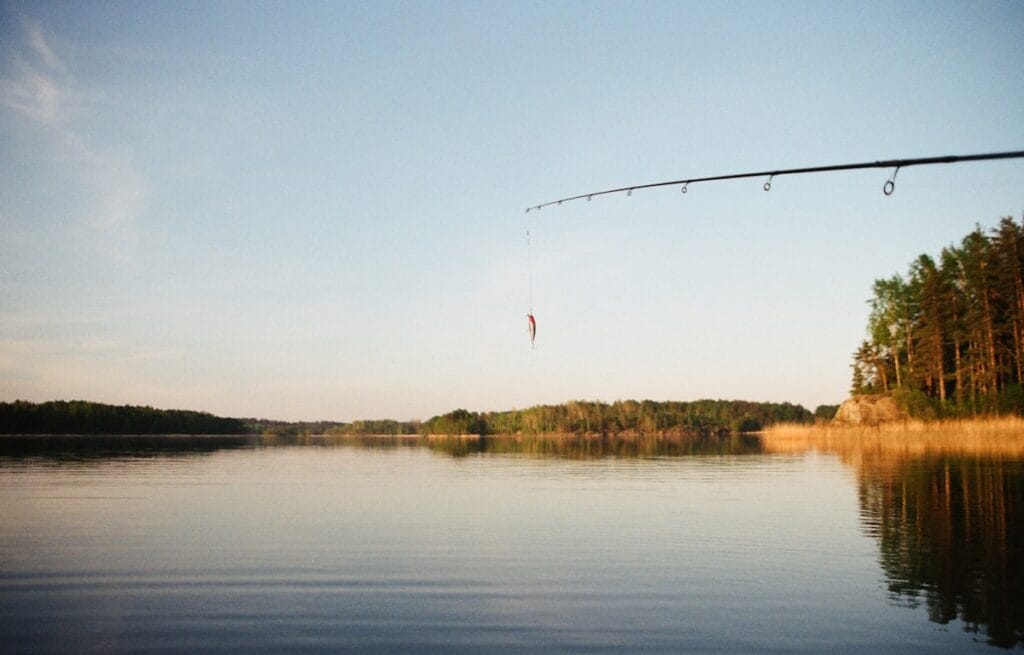
When summer drives bass off the bank and out to deep structure, few lures cover water and trigger reaction strikes like a deep-diving crankbait. A big-billed crankbait deflecting off rock, shell, and stumps in 10 to 18 feet of water can fire up an entire school of post-spawn bass that have ignored everything else. The problem is that deep cranking has a reputation for being hard work, and most anglers either fish the wrong bait, fish it too shallow, or quit before they figure out the depth the fish actually want. This guide breaks down how to choose, tune, and fish a deep-diving crankbait so you can turn an empty graph into a livewell full of summer bass.
Why Deep Crankbaits Shine in Summer
After the spawn, bass pull out to the first major drops and structure adjacent to their spawning flats: main-lake points, channel swing banks, ledges, and offshore humps. They group up in schools and feed heavily on shad and other baitfish. A deep crankbait does two things no other lure does as well at once: it reaches the strike zone quickly and it stays there while moving fast enough to draw aggressive, reaction-based bites. When you locate a school on your electronics, a crankbait lets you fan-cast and trigger several fish before they wise up, which is exactly what you want when you’ve found a wad of feeding bass.
Choosing the Right Bait
The single most important number on a deep crankbait is its diving depth, and the honest truth is that most baits dive shallower than the package claims unless you fish them correctly. As a rule, you want a crankbait rated to dive a few feet deeper than the structure you’re targeting, because a bait that ticks the bottom and deflects catches far more fish than one swimming cleanly above it. For most ledge fishing, baits in the 12-to-20-foot class are your workhorses. Carry a range of running depths so you can match the exact zone where fish are positioned.
Color is simpler than the tackle wall suggests. In clear to lightly stained water, shad and chartreuse-and-blue patterns cover the majority of situations because they mimic the baitfish summer bass are keyed on. In dirtier water, lean on chartreuse with a black back or a citrus-shad pattern for added visibility. Keep it simple and let presentation do the heavy lifting.
The Right Gear Makes Deep Cranking Possible
Deep cranking is tackle-dependent in a way most techniques are not. The right setup lets the bait reach its maximum depth, keeps fish pinned, and saves your wrists and elbows over a long day.
- Rod: A 7-foot-4 to 8-foot moderate-action composite or glass cranking rod. The longer length helps you make long casts (critical for depth) and the soft tip keeps fish from tearing off treble hooks.
- Reel: A low-gear-ratio reel in the 5.1:1 to 5.4:1 range. The slower retrieve gives you cranking power and naturally keeps the bait in the strike zone longer.
- Line: Fluorocarbon in the 10-to-14-pound range. Thinner line dives deeper, so don’t over-size it. Fluorocarbon’s lack of stretch and its sink rate both help the bait reach its rated depth.
One overlooked detail: the longer the cast, the deeper the bait runs, because the lure spends more of the retrieve at maximum depth. A long rod, thin line, and a smooth, far cast can add several feet of depth to the exact same bait.
Finding the Fish Before You Cast
Deep cranking is a structure game, so spend the first part of your day idling and graphing. Look for the sweet spots on a ledge: a small point or turn in the contour, an isolated stump or rock pile, a patch of shell, or a slight depth change where the bottom transitions from hard to soft. Bass relate to these irregularities, and a school can stack on one tiny feature while a hundred yards of identical-looking ledge holds nothing. When you mark fish or bait, drop a waypoint and set up so your casts pull the crankbait across the structure, ideally from shallow to deep so the bait digs in as it crosses the high spot.
Working the Bait: Deflection Is Everything
The magic of crankbait fishing is contact. You want the bill to be ticking bottom, banging rock, and bouncing off cover throughout the retrieve, because that erratic deflection is what triggers a reaction strike. Make a long cast past the target, reel down fast to get the bait digging, then settle into a steady retrieve while feeling for the bottom. When the bait knocks into something, don’t pull it away — let it deflect and even pause for a split second. Most strikes come the instant the bait recovers from hitting cover.
If you’re not occasionally hanging bottom or feeling cover, you’re fishing too shallow. Change to a deeper-diving bait, lengthen your cast, or let out a little extra line. On the flip side, if you’re constantly burying the bait in soft mud, back off to a shallower model so it stays in the strike zone instead of plowing.
Speed, Cadence, and Triggering Tricks
Start with a steady, moderate retrieve and let the fish tell you what they want. When the bite is tough, two adjustments consistently produce. The first is the stop-and-go: reel the bait into the strike zone, then pause and let it float up slightly before resuming. That hesitation imitates a dying baitfish and is deadly on schooled, finicky fish. The second is the speed burst: a sudden acceleration after the bait deflects off cover, which mimics a fleeing shad and often draws a violent strike. Experiment within a single school until you find the cadence that’s getting bit, then repeat it.
Working a School for Multiple Fish
When you catch one, the work is just beginning. Summer schools can hold dozens of fish, and the key is to keep the school fired up without spooking them. Stay back and make long casts rather than sitting on top of the fish. When the crankbait bite slows after a few fish, follow up with a slower presentation like a football jig or a Carolina rig on the same spot — the commotion of the crankbait often pulls fish up and gets them competing, and the follow-up bait mops up the ones that wouldn’t commit to the fast-moving lure. Rotate back to the crankbait once the school resets.
Common Mistakes to Avoid
- Fishing too shallow. If the bait never touches bottom, it’s not in the zone. Bottom contact is non-negotiable.
- Setting the hook too hard. With treble hooks and a soft rod, simply reel into the fish and lean back. A violent hookset rips trebles free.
- Using line that’s too heavy. Thick line robs you of depth. Drop to the lightest line you can confidently land fish on.
- Leaving fish to find fish. Once you locate a productive structure type, look for the same features elsewhere on the lake. Bass set up on similar spots all over a body of water.
Deep cranking rewards anglers who commit to it. Once you trust your electronics, dial in your tackle so the bait reaches bottom, and learn to read deflection, you’ll have a pattern that produces big summer limits when shallow anglers are struggling. Find the structure, make contact, and let the reaction bite do the rest.
Sandro
Bass Fishing Enthusiast & Founder of Bass Fishing Blueprint
Sandro has been chasing bass from the bank and the boat for over a decade. He created Bass Fishing Blueprint to share straightforward, practical tactics that help everyday anglers catch more fish â no fluff, no filler, just what actually works on the water.