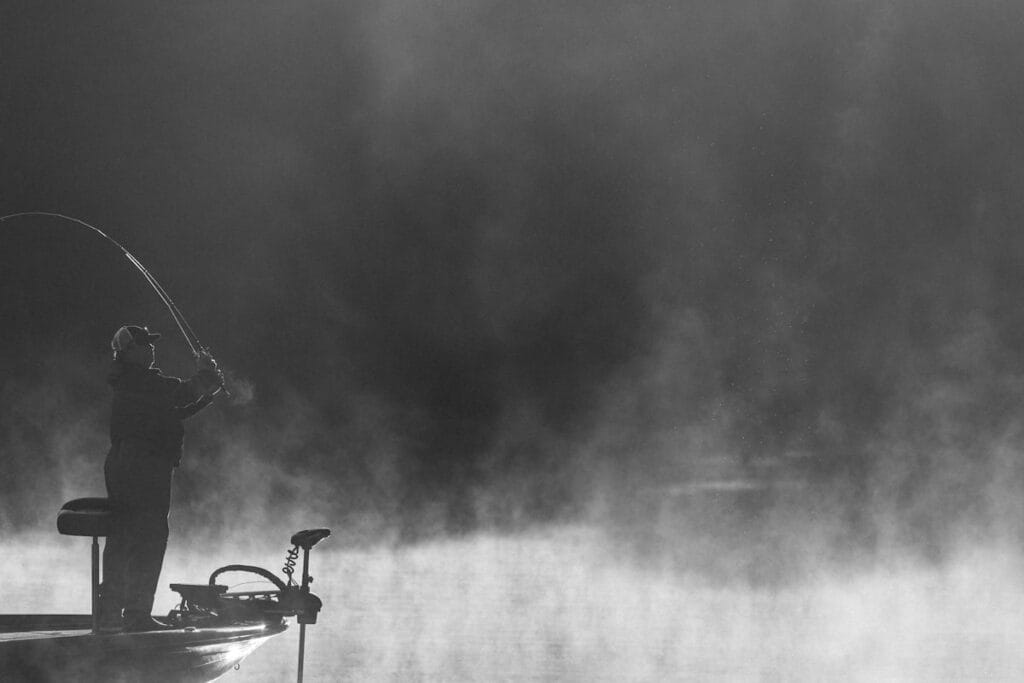
When bass slide off the banks and set up on deep structure in early summer, few rigs cover water and trigger bites like the Carolina rig. The “ball-and-chain” gets a reputation for being slow and boring, but anglers who learn to fish it correctly catch more and bigger fish from June through September than they ever will throwing a crankbait blind. This guide breaks down exactly how to build, deploy, and work a Carolina rig so you can put it to work on your next trip offshore.
What a Carolina Rig Is and Why It Works
A Carolina rig separates the weight from the bait. You slide a heavy sinker onto your main line, add a bead and a swivel, then run a long leader to a hook with a soft plastic. The result is a bait that crawls and floats naturally well behind a weight that is pounding the bottom. That separation is the entire point: the noisy sinker calls fish in and stirs up the bottom, while the bait trailing two to four feet back looks like an unsuspecting meal drifting along just off the floor.
Bass in summer relate to bottom composition changes, and a Carolina rig is one of the best tools ever invented for feeling those changes. As you drag the weight, you feel gravel turn to mud, hard clay turn to chunk rock, or the edge of a shell bed. Those transitions are where bass live, and the rig tells you when you have found one before you ever get a bite.
How to Build a Carolina Rig
Start with your weight. A 3/4-ounce tungsten or lead sinker is the do-everything choice; step up to 1 ounce in deep water, current, or wind, and drop to 1/2 ounce in shallower or pressured situations. Tungsten transmits bottom detail better and is more compact, but lead is cheaper and works fine. Thread the weight onto your main line.
Next add a glass or plastic bead behind the weight. The bead protects your knot and clicks against the sinker for extra sound. Tie on a barrel swivel below the bead. Then attach your leader to the other end of the swivel. The swivel stops the weight from sliding all the way to the hook and reduces line twist.
- Main line: 15- to 20-pound fluorocarbon or braid for the rod-to-weight section.
- Weight: 1/2 to 1 ounce tungsten or lead, sized to depth and wind.
- Bead: one 6mm glass or plastic bead to protect the knot and add sound.
- Swivel: a small barrel swivel to stop the weight and cut line twist.
- Leader: 12- to 18-pound fluorocarbon, 18 to 48 inches long.
- Hook: 3/0 to 5/0 offset worm hook (EWG for bulky baits, straight shank for slim ones).
Dialing In Your Leader Length
Leader length is the adjustment most anglers ignore, and it matters more than the bait. Start at three feet as a baseline. When fish are aggressive and feeding up, lengthen the leader to four feet or more so the bait rises higher off the bottom and stays in the strike zone longer. When fish are tight to the bottom or pressured, shorten the leader to 18 to 24 inches to keep the bait crawling right in their face. On grassy or stumpy bottoms, a shorter leader also helps you keep the bait above the cover instead of burying it.
Best Baits for a Carolina Rig
Because the leader lets the bait float and glide, you want plastics with subtle, lifelike action. Lizards are the traditional choice and still produce, especially in early summer when bass remember post-spawn nest raiders. Creature baits and beaver-style plastics give a bulkier profile for bigger bites. Flukes and finesse worms shine in clear water or when fish are finicky. Many anglers add a small amount of buoyancy by choosing floating plastics so the bait stands up off the bottom between drags.
Match color to water clarity: green pumpkin and watermelon in clear to stained water, and darker colors like junebug or black-and-blue in muddy water. Keep it simple and let the presentation do the work.
How to Fish It: The Retrieve
The Carolina rig is a dragging bait, not a hopping bait. Make a long cast, let everything sink to the bottom, then drag the weight by sweeping your rod slowly to the side, low and parallel to the water. Reel up the slack as you bring the rod back to the starting position, then sweep again. The goal is to keep that weight in constant contact with the bottom, plowing along and kicking up debris while the bait follows behind.
Sweep with the rod rather than reeling, because reeling pulls the bait up and away from the bottom and ruins the natural drift. Pause whenever you feel a transition, a piece of cover, or the edge of structure. Most bites come on the pause or just as you start the next sweep, and they often feel like mushy weight or a slight tick. When in doubt, sweep into the fish and reel down before setting the hook hard.
Where and When to Throw It in Summer
Early summer is prime Carolina-rig season. As bass finish the spawn and pull out to the first major structure they encounter, they stack on main-lake and secondary points, channel swing banks, long tapering flats, humps, and ledges. The rig covers these large areas efficiently and lets you keep contact with the bottom in 8 to 25 feet of water where so many fish live this time of year.
Use your electronics to find hard-bottom transitions and isolated cover, then position your boat to drag the rig across those sweet spots from multiple angles. Points are the classic starting place: fan-cast the entire point, paying special attention to the deepest end and any bottom-composition change you feel. When you catch one fish, slow down and pick that area apart, because summer bass group up tightly.
Rod, Reel, and Gear Setup
The long sweeping motion and heavy weight call for a longer rod. A 7-foot-3-inch to 7-foot-6-inch medium-heavy baitcasting rod with a moderate-fast tip gives you the leverage to move line and the give to keep fish pinned. Pair it with a reel in a 6.3:1 to 7.1:1 ratio so you can quickly pick up slack. Spool with a braided main line for sensitivity and a fluorocarbon leader for invisibility, or run straight fluorocarbon if you prefer simplicity.
Common Mistakes to Avoid
- Fishing it too fast. The Carolina rig rewards patience. Slow your drag down and feel everything.
- Reeling instead of sweeping. Reeling lifts the bait off the bottom and kills the presentation.
- Ignoring leader length. Adjust it to the fish’s mood rather than leaving it the same all day.
- Setting the hook too early. Reel into the weight of the fish and sweep, do not jerk on the first tick.
- Fishing structureless water. Pick targets with your electronics instead of dragging open mud.
The Carolina rig will never be flashy, but it is one of the most reliable ways to catch summer bass that have abandoned the shallows. Build one tonight, find a good point tomorrow morning, and drag it slowly until you feel that telltale mushy weight. Once you trust the rig, it becomes the first thing you reach for when the fish go deep.
Sandro
Bass Fishing Enthusiast & Founder of Bass Fishing Blueprint
Sandro has been chasing bass from the bank and the boat for over a decade. He created Bass Fishing Blueprint to share straightforward, practical tactics that help everyday anglers catch more fish â no fluff, no filler, just what actually works on the water.