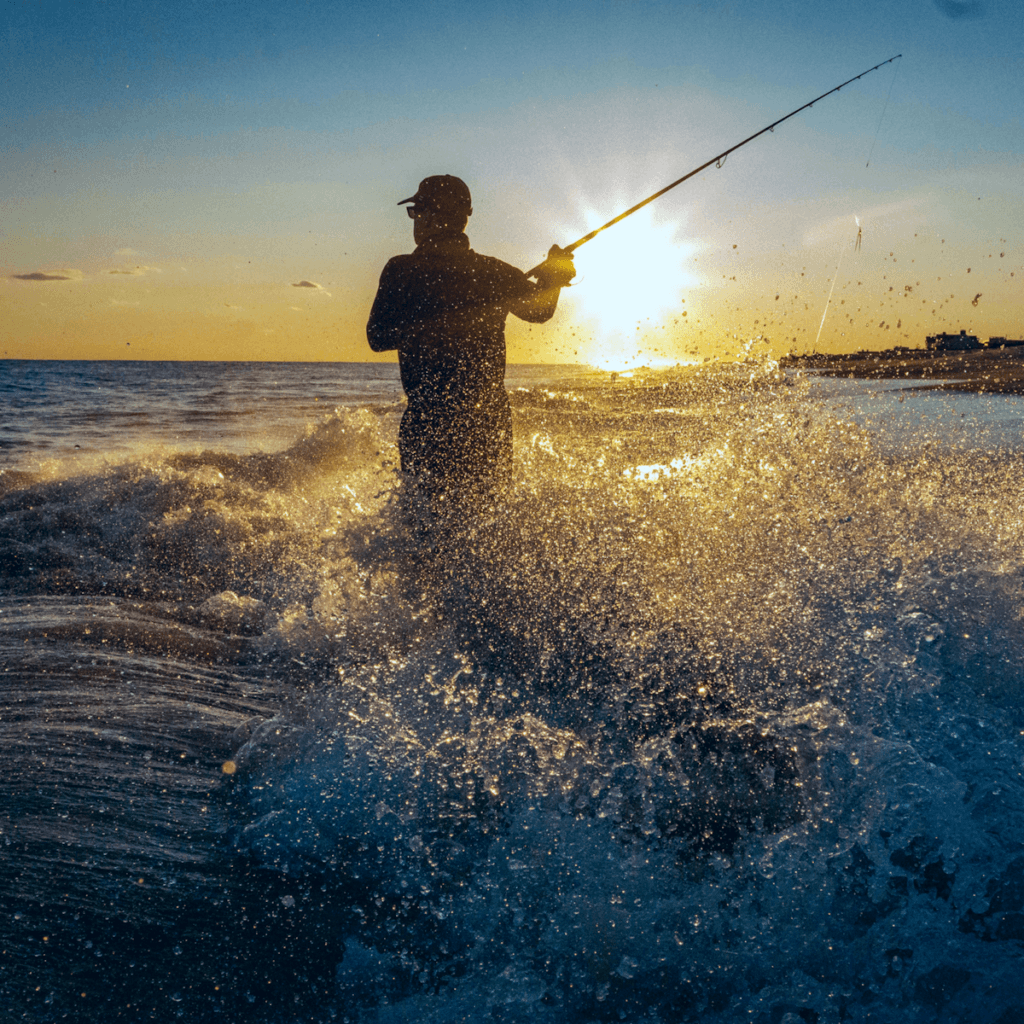
Few sounds in bass fishing are as addictive as the squeal of a buzzbait blade slicing across calm water — followed by the violent boil of a largemouth crushing it from below. From the tail end of the spawn through midsummer, and especially during the post-spawn window of May and June, a buzzbait can outproduce nearly every other topwater lure when fished correctly. This guide walks through how to choose, rig, and fish a buzzbait like a tournament angler: when to throw one, what to throw, where to throw it, and how to convert more of those short strikes into landed fish.
What Makes a Buzzbait So Effective
A buzzbait is a wire-frame lure with a propeller-style blade riding on top that churns water and air as it moves. Unlike a popper or walking bait that needs cadence and rod work, a buzzbait essentially fishes itself — you cast it, reel it, and let the noise and wake do the work. That simplicity is exactly why it triggers reaction strikes from bass that ignore subtler presentations. The sound, the bubble trail, and the silhouette overhead all combine to imitate a fleeing baitfish, frog, or even a small rodent crossing the surface. In post-spawn, when bass are aggressive, recovering, and looking up, a buzzbait turns neutral fish into committed eaters.
Anatomy of a Buzzbait
Understanding the parts helps you pick the right one for the conditions. Every buzzbait has four key components: the head, the blade, the skirt, and the wire frame. Heads typically range from 1/4 to 1/2 ounce. The blade is the noise-maker — usually two-bladed (a clacker) or three-bladed depending on the brand. Skirts are silicone or rubber and add bulk and a pulsing action. Many anglers also add a trailer and a trailer hook to dial in size, profile, and hookup rates.
- 1/4 oz buzzbaits — slow-rolling shallow water and ponds; great around grass tops.
- 3/8 oz buzzbaits — the everyday workhorse. Casts well in wind and runs cleanly at moderate speeds.
- 1/2 oz buzzbaits — long bombs across flats, windy main-lake banks, and points.
When to Throw a Buzzbait
The single most important factor is water temperature. Buzzbaits start producing once surface temps climb into the upper 50s and become a primary topwater option from the low 60s through the upper 70s. That puts the prime window squarely in May and June for most of the country, with a second productive run in early fall. Within that seasonal window, the buzzbait shines brightest in low-light conditions: the first hour after sunrise, the last hour before dark, overcast days, and any time wind is putting a heavy ripple on the surface. Calm, slick mornings under low light can also produce, but cloud cover or a slight chop almost always beats glass.
Pay close attention to the post-spawn transition. Females recovering on shallow flats and males still guarding fry will both crush a buzzbait dragged overhead. After the first big bluegill spawn rolls in, switch to bigger, louder buzzbaits with white or chartreuse skirts that mimic a panicked bream getting eaten on the surface — bass are conditioned to that easy meal in late May and June.
Where to Throw a Buzzbait
Buzzbaits cover water, so they reward anglers who fish them in high-percentage areas instead of randomly chunking and winding. Focus on shallow cover with hard edges and ambush points: matted grass and pad lines, laydowns and blowdowns, isolated stumps, dock perimeters, riprap, and the seam where shallow flats drop into the first deeper break. In rivers and creeks, target current edges, eddies behind boulders, and wood-laden cuts. Anywhere you would throw a frog, you can usually throw a buzzbait first to call up the most aggressive fish.
Cast past your target, not directly to it. Bass strike a buzzbait that is already moving and making noise, so landing it five to ten feet beyond the cover and reeling it across the strike zone outproduces a splash-down on top of the fish. The exception is heavy isolated cover like a single laydown, where a close, parallel cast that runs the bait along the wood for four to five feet often draws the bite.
Tackle Setup
- Rod: 7’0″ to 7’4″ medium-heavy, moderate-fast action. The softer tip lets the bass eat the bait before you pull it away — a fast-tip flipping stick yanks buzzbaits out of fish on the strike.
- Reel: A 6.3:1 to 7.5:1 baitcaster. Faster reels help keep the blade churning when fish boil and miss.
- Line: 30 to 50 lb braid is the standard; 17 to 20 lb monofilament is a strong alternative for natural buoyancy and stretch that helps with hookups. Avoid fluorocarbon — it sinks and pulls the head down.
Retrieve Techniques That Trigger Strikes
Step one is keeping the blade on the surface from the moment it lands. Hold the rod tip high, start reeling before the lure splashes down, and adjust speed to keep the head riding just above the water with the blade fully exposed. From there, your retrieve is a tool for triggering bites:
- Steady wake: The default. A consistent moderate retrieve that lets the blade squeal in a rhythm.
- Bump and pause: Tick the bait into a stump, dock post, or grass clump and let it momentarily fall. The change in cadence triggers reluctant followers.
- Burn-and-kill: Speed it up across an ambush point, then briefly slow it. This works extremely well on schooling fish.
- Slow roll: Late spring evenings on calm water — barely moving, blade just turning. This subtle approach catches bigger pressured fish.
Trailers and the Trailer Hook
Two simple modifications dramatically improve any buzzbait. First, add a soft-plastic trailer — a small swimbait, fluke, or split-tail grub — to bulk up the profile and slow the lure down without changing speeds. A trailer also helps the bait ride higher, which is critical when you are working over thick grass.
Second, run a trailer hook. Buzzbait strikes are notoriously short — bass often slap or boil on the bait without inhaling the main hook. A free-swinging treble or a single trailer hook attached behind the main hook will convert a meaningful percentage of those swings into landed fish. Use surgical tubing or a piece of plastic to keep the trailer hook aligned and prevent it from fouling on weeds.
Color Selection Made Simple
- White or white/chartreuse: Default for clear water, sunny conditions, and shad imitation.
- Black or black/blue: Low light, dawn, dusk, night fishing, and stained or muddy water — the silhouette is what fish key on.
- Bluegill or bream patterns: May and June around bream beds, pads, and docks.
Blade color matters too. Gold blades flash more in stained water, silver blades work better in clean water, and black blades are deadly at first light. Many anglers paint or scuff their blades to dial in the noise — a slightly worn blade often clacks louder than a brand-new one.
How to Handle Short Strikes and Misses
Bass miss buzzbaits constantly. The single biggest mistake anglers make is setting the hook the instant they see the strike. Wait until you feel the weight of the fish loading the rod, then sweep set sideways — do not jerk straight up. If a bass blows up and misses, do not stop reeling. Maintain the same speed, then either let the bait briefly sink at the next piece of cover or follow up immediately with a soft-plastic stickbait or a buzzbait trailer like a soft jerkbait. Many missed buzzbait fish will eat a slowly twitching follow-up bait within seconds.
Common Mistakes to Avoid
- Reeling too slowly at the start of the retrieve — the blade sinks and the bait loses its action.
- Using fluorocarbon line, which pulls the head under and kills the squeal.
- Setting the hook on the splash instead of the load.
- Skipping the trailer hook, then losing every short-striking fish.
- Throwing only at sunrise — overcast windy afternoons in late May can produce all day.
Final Thoughts
If you are not throwing a buzzbait during May and June, you are leaving some of the most violent topwater strikes of the year on the table. Pick a 3/8 oz black buzzbait for low light and a 3/8 oz white-and-chartreuse buzzbait for everything else, add a trailer hook and a small swimbait trailer, and start covering shallow cover at sunrise and sunset. Once you experience your first true post-spawn buzzbait blow-up, you will understand why this lure has stayed in tournament boxes for decades.
Sandro
Bass Fishing Enthusiast & Founder of Bass Fishing Blueprint
Sandro has been chasing bass from the bank and the boat for over a decade. He created Bass Fishing Blueprint to share straightforward, practical tactics that help everyday anglers catch more fish â no fluff, no filler, just what actually works on the water.