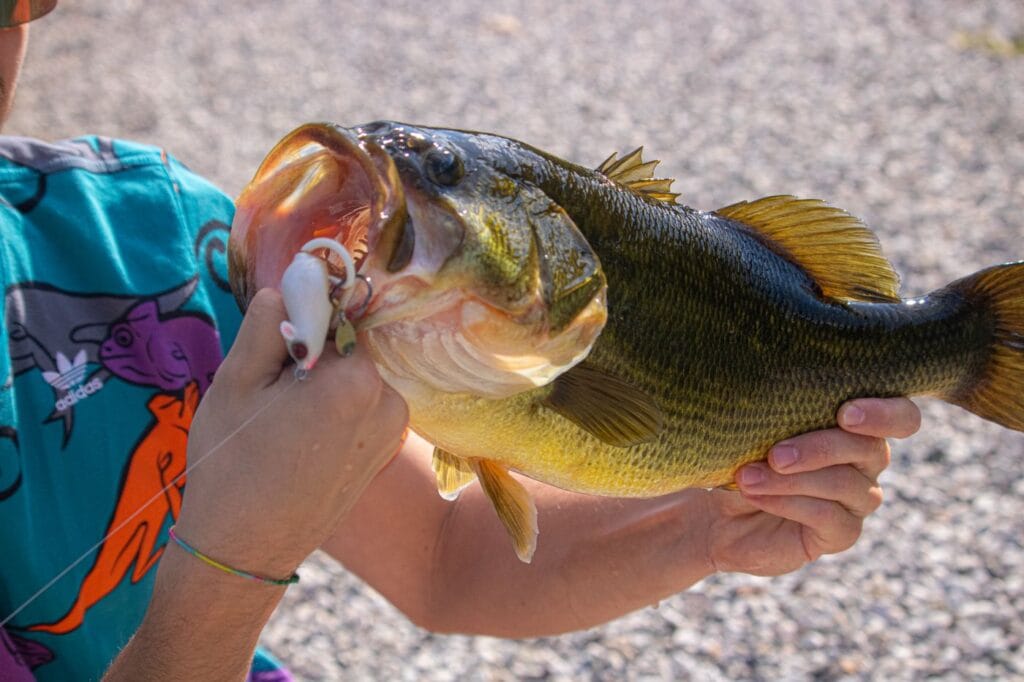
I’ve been throwing topwaters for bass since I was old enough to hold a rod, and the moment a fish blows up on a surface lure still gets me every single time. Nothing else in fishing comes close. But topwater is also the technique I see anglers get wrong the most — they pick the wrong window, throw the wrong lure for the cover, or work it too fast. This is the way I fish topwater after a couple decades of mostly missing fish before I figured it out.
When to Fish Topwater for Bass
The shortest answer: low light, warm water, calm-ish surface. The longer answer is what actually catches fish.
Early morning and late evening are obvious — the sun is off the water and bass are willing to look up. I’d rather have the first hour after sunrise than just about any other window in a summer day. Once the sun gets overhead and the surface lights up, the bite usually dies until evening.
Overcast days are the cheat code. Cloud cover stretches the topwater bite out across the entire day. If I see overcast in the forecast in summer, I’m rearranging my schedule.
Water temp matters more than people give it credit for. I’ve found anything below about 60°F is a tough sell on the surface. From 65 up through the high 80s is when bass really commit. Below that, you can still get a few, but you’re swimming upstream.
Rain changes everything. Light rain that doesn’t muddy the water is some of the best topwater fishing of the year — the surface dimples cover your boat, your line, your lure, and the bass push shallower. Heavy rain that turns the water to chocolate milk shuts the surface bite down fast. After a storm passes and the water starts clearing back up, the bite often comes roaring back.
Wind is the variable nobody agrees on. A light chop helps — it diffuses the light and the bass aren’t as picky. But once you’ve got whitecaps you can’t see the bait, can’t work it right, and the strike rate drops. I’ve fished plenty of windy mornings where I was sure the topwater was done, and then it ripped off again the second the wind laid down.
Best Topwater Bass Lures
I keep a handful of topwaters in the boat at all times. Each one does a job the others don’t.
Walking Baits
A Heddon Zara Spook is one of the original topwaters and still one of the best. The walk-the-dog cadence draws bass from a long way off — I’ve watched fish come up from deeper water and chase a Spook 20 feet across a flat. They work best in calm to lightly choppy conditions and around long visible targets like points, flats, and the outer edges of grass. The Sammy 100 and the Lucky Craft Gunfish do the same job with a little tighter action if you’re fishing pressured water.
Poppers
Poppers are short-range, slow-bite tools. A Rebel Pop-R or a Rapala Skitter Pop fished in tight to laydowns, dock posts, and flooded brush will outfish a walking bait when the fish are sitting on cover and don’t want to chase. I twitch it once, let it sit until the rings disappear, then twitch it again. Most of my bites come on the pause.
Buzzbaits
The buzzbait is the most underrated topwater there is. A 3/8 oz black buzzbait dragged across the surface in low light is a giant-fish bait — I’ve caught some of my biggest summer largemouth on one. Cast past your target, get it up on top fast, and don’t ever stop reeling. If a bass blows up and misses, keep reeling. Stopping costs you the fish nine times out of ten.
Hollow-Body Frogs
Frogs are for situations no other topwater can handle. Thick matted vegetation, lily pads, slop — places where you’d snag any treble-hooked lure on the first cast. A SPRO Bronzeye or a Booyah Pad Crasher walked across the mat and paused in the open holes is brutal. The trick most anglers miss: when a fish blows up on the frog, count to two before setting the hook. They almost always come up under it and need a second to get it. Set too fast and you pull it out of their mouth.
Whopper Plopper
The Plopper is the bait that broke the rules. It moves fast, it makes noise that no other lure makes, and it’s pulled bass out from under docks and out of weed mats that wouldn’t move for anything else. The 90 size is my everyday Plopper for largemouth, and I bump up to a 110 if I’m targeting bigger fish or fishing dirtier water. Steady retrieve, just fast enough to get the tail churning.
Topwater Fishing Techniques
The single biggest mistake I see is people working topwaters too fast. Bass need time to find the bait, especially in dirty water or under heavy cover. Cast past your target. Let the lure sit until the splash rings disappear. Then start your retrieve.
The pause is the bite. Walking baits, poppers, frogs — most of my bites come on the pause, not the action. If I’m walking a Spook and not getting hit, the first thing I do is slow it down and add longer dead pauses between cadences. That fix has saved more fishing days than I can count.
Don’t set on the splash. This is the single hardest topwater discipline to learn. When a bass explodes on your lure, every instinct in your body says set the hook now. Don’t. Wait until you feel weight on the line, then sweep-set. If you set too early on a topwater, you’ll come back with nothing about half the time.
Cover the same water more than once. Topwater bass commit on emotion as much as hunger. A fish that ignored your lure the first pass will sometimes crush it the second or third time through. I’ve gone back over a single laydown four casts in a row and gotten bit on the fourth.
Topwater Rod and Line Setup
Topwater is one place where line choice actually matters a lot. Use mono or braid, never fluorocarbon. Fluoro sinks, and a sinking line pulls the nose of your topwater down and kills the action. I throw 30-50 lb braid for frogs and Whopper Ploppers, and 15 lb mono (Trilene Big Game) for walking baits and poppers. Mono floats, has just enough stretch to keep you from pulling the lure out of a fish’s mouth on the strike, and is cheap.
For the rod, a 7′ to 7’2″ medium-heavy with a moderate or moderate-fast tip is my standard. The softer tip is the key — it lets the fish eat the bait before the hooks come tight. A pure fast-action rod sets the hook so quickly you’ll yank the lure away from the fish on a lot of strikes. I learned that one the hard way over a season throwing a fast-action flipping stick on topwaters and wondering why my hookup rate was awful.
Reel-wise, anything 7.1:1 or faster. You need to pick up slack quickly when a fish eats and turns toward the boat — a slow reel will cost you fish on a topwater bite.
Frequently Asked Questions
When is the best time for topwater bass fishing?
The best topwater windows are the first hour after sunrise and the last hour before dark, when low light and calm water combine with active shallow-feeding bass. On heavily overcast days, topwater action can continue through midday. Late spring through early fall (65–80°F water) is the best overall season.
What is the best topwater bass lure?
The Whopper Plopper is arguably the most effective topwater bass lure for covering water, combining easy straight-retrieve fishing with a distinctive rotating tail sound. The Heddon Zara Spook remains the classic for open-water schooling fish, while buzzbaits excel in heavy cover and low-light conditions.
Why do bass miss topwater lures?
Bass miss topwater lures for several reasons: the angler sets the hook too fast before the fish fully eats the bait, the fish strikes short, or the lure is moving too fast. With buzzbaits and frogs especially, wait until you feel weight before setting the hook — set on sound and you’ll miss fish.
What line should I use for topwater bass fishing?
Braided line (30–50 lb) is the best choice for most topwater fishing because it floats, has zero stretch for instant hooksets, and handles heavy cover. For walking baits and poppers in clear water where visibility may spook fish, 12–15 lb fluorocarbon on a baitcaster is a viable alternative.