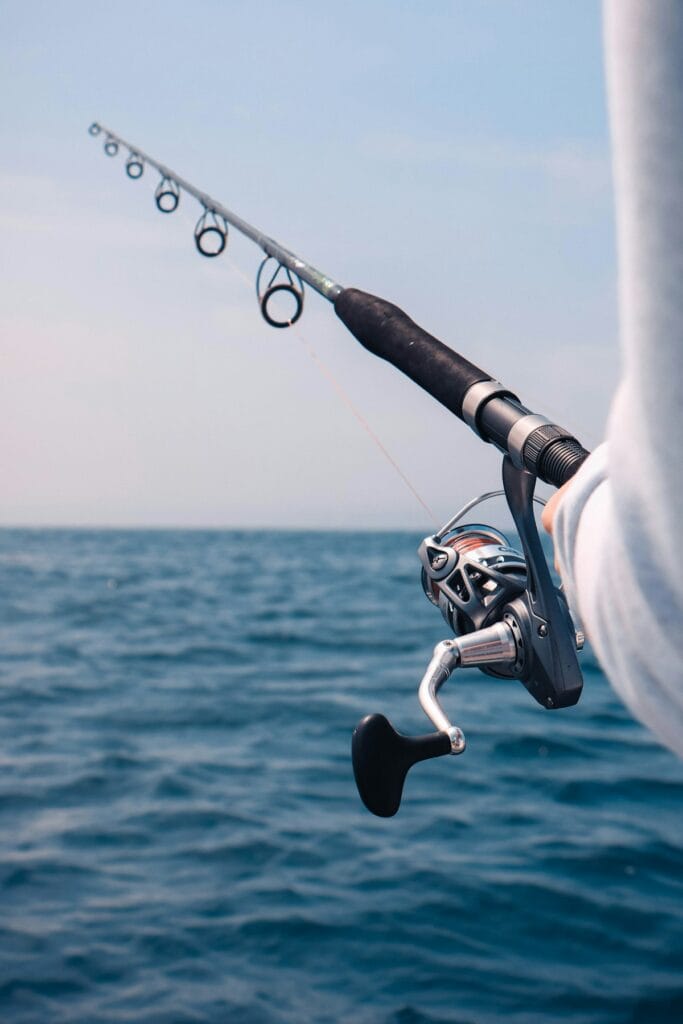
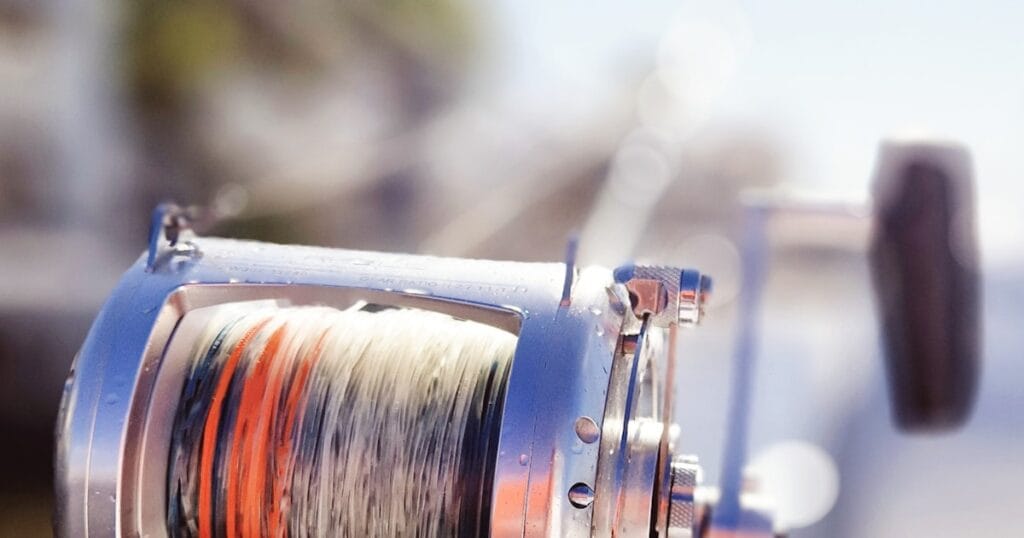
Fishing line is the most underappreciated piece of tackle most bank fishers own. People will spend three hours researching rods, obsess over which lure color to use, tie on a new hook before every trip — and then spool up with whatever was on sale at the gas station without a second thought.
That’s backwards. Your line is the only connection between you and the fish. Everything else you feel, every bite you detect, every hookset you land — it all travels through that line first. Bad line costs you bites you never even knew you had. Good line, matched to the right technique, is a legitimate advantage.
There are three types of fishing line that matter for bass: monofilament, fluorocarbon, and braid. Each has a different set of properties, and each is better suited to certain situations. Here’s the straight version of what those differences actually mean on the bank.
Monofilament: The Old Standard
Mono is what most people learn on, and there’s a reason it stuck around for decades — it works, it’s cheap, and it’s forgiving. But for serious bank bass fishing it’s the weakest option of the three in most situations, and I’ll tell you why.
Monofilament stretches. A lot. Up to 25–30% under load. That stretch acts like a shock absorber when a fish runs or jumps, which sounds like a good thing until you realize it also absorbs your hookset. On a long cast, you can swing hard and still not drive a hook home cleanly because there’s fifteen feet of stretch in the line before the force ever reaches the hook. From the bank, where you’re often making long casts, this is a real problem.
Mono also has memory — it coils off the spool in tight loops when it’s been sitting for a while, especially in cold weather. Those coils create slack in your line that delays hooksets and makes it harder to feel subtle bites.
Where mono still makes sense: topwater fishing. The stretch in monofilament acts as a built-in delay that keeps you from ripping a topwater bait away from a bass before the fish has fully committed to it. A lot of experienced topwater anglers specifically fish mono for this reason. 12–17 lb monofilament on a medium or medium-heavy setup is still a perfectly fine topwater choice. Berkley Trilene XL is the one I’ve used longest. It’s reliable, it handles well, and it won’t break the bank.
Fluorocarbon: The One You Should Be Using Most
If I had to fish one line for everything from the bank, it would be fluorocarbon. Not because it’s perfect — it has real drawbacks — but because it’s the best all-around compromise for the way most bank fishers fish.
Fluorocarbon has a refractive index almost identical to water, which means it’s essentially invisible underwater. In clear water, this genuinely matters. I’ve watched bass in shallow clear water follow a bait on mono and turn away at the last second — the same presentation on fluorocarbon gets bit. That’s not coincidence.
It also sinks, which keeps your line out of the surface tension and gives you a cleaner connection to your bait. On a Texas rig or a jig, fluoro hugs the bottom better than mono and gives you more direct contact with what’s happening down there.
And it has significantly less stretch than mono — not zero stretch, but enough less that your hooksets land harder and you detect bites more clearly. On a finesse presentation with subtle bites, this difference is meaningful.
The downsides: fluorocarbon is stiffer than mono, especially in cold weather, which can cause issues with line management on spinning reels if you go too heavy. It’s also more expensive, and lower-quality fluoro can be brittle at the knot. Don’t cheap out on fluorocarbon — a bad batch will cost you fish.
The brands I trust: Seaguar Invizx and Sunline Super FC Sniper are both excellent for spinning reels — they’re softer and more manageable than most fluoro. For baitcasting, I’ll use Seaguar AbrazX when I’m dragging a jig through rocks, because the abrasion resistance is noticeably better.
Line weights to use: 10–12 lb for spinning reels with finesse presentations. 12–15 lb for medium-power baitcasting setups. 15–20 lb for flipping jigs into heavy cover on a heavy rod.
Braid: When You Need It, Nothing Else Will Do
Braid has zero stretch. That means every tiny movement at the end of your line — a fish mouthing a bait, the bait ticking a piece of grass, the bottom composition changing — transmits directly to your rod tip and your hands. Nothing else offers that level of sensitivity.
It’s also incredibly strong for its diameter. Thirty-pound braid is roughly the same diameter as 8–10 lb monofilament. That thin diameter means it cuts through water and vegetation better, casts farther with less air resistance, and fits a lot more line on a spool.
From the bank, braid shines in two specific situations: fishing heavy vegetation (punching mats, working frogs over pads) and any situation where you want maximum sensitivity and casting distance. A 30 lb braid main line on a baitcaster with a 12–15 lb fluorocarbon leader tied on with an Alberto knot gives you the best of both worlds — braid’s sensitivity and casting distance with fluoro’s invisibility near the bait.
For spinning reels, 10–15 lb braid (which casts like a dream) with a 10 lb fluorocarbon leader is an excellent setup for finesse fishing. The braid shoots through the guides, the fluoro leader keeps things invisible, and the zero-stretch connection means you’ll detect bites on a Ned rig that you’d miss on straight monofilament.
The downside of braid: it’s visible, it’s loud in the water at higher speeds, and fish in very clear water sometimes won’t commit to a bait they can trace back to a thick, bright line. Always use a fluoro leader in clear water.
My go-to braid is PowerPro Spectra or Sufix 832. Both cast well, hold up to abrasion reasonably, and are widely available. For heavier applications around mats and pads I’ll go to 50 or 65 lb braid — you need the muscle to horse fish out of that stuff.
The Simple Guide: Which Line for Which Technique
Here’s how I actually decide what to spool up:
Texas rig or Ned rig (spinning): 10 lb Seaguar Invizx fluorocarbon, straight through.
Texas rig or jig (baitcasting): 15 lb Seaguar AbrazX fluorocarbon, or 30 lb braid with 15 lb fluoro leader.
Topwater (any reel): 14–17 lb Berkley Trilene XL monofilament. The stretch helps.
Spinnerbait or crankbait: 15 lb fluorocarbon. Sinks, low-vis, enough give to keep fish pinned on trebles.
Heavy cover (flipping mats, frogs): 50–65 lb braid, no leader.
Finesse spinning (Ned rig, shaky head, drop shot): 10 lb braid with 8 lb fluorocarbon leader, or straight 8 lb fluoro.
One Thing That Costs More Bites Than Any Lure Choice
Old line. Line that’s been on the reel for two seasons, sitting out in the sun, absorbing UV damage and moisture. It looks fine. It doesn’t feel different in your hands. But it’s weaker than it should be, it has more memory than it should have, and it’s costing you fish on hooksets and on bite detection.
Change your main line at least once a season. More often if you fish frequently. Fluorocarbon and monofilament degrade faster than braid — braid can honestly last multiple seasons if you inspect it regularly for fraying and cut back the last few feet when it gets worn. But fluoro and mono? Fresh line, every season, is cheap insurance against losing the fish of a lifetime to a line that should have been on a trash can six months ago.
The line doesn’t have to be expensive. A $10 spool of good fluorocarbon is one of the best returns on investment in fishing. Do it at the start of every season and you’ll never look back.
❓ Frequently Asked Questions
What is the best rod for bass fishing?
A 7-foot medium-heavy fast-action casting rod is the most versatile bass fishing rod for most techniques. For finesse fishing, a 6’10” medium-power spinning rod handles lighter lures and thinner line better.
What pound test line should I use for bass?
For most bass fishing, 12–17 lb fluorocarbon on a baitcasting setup works great. For finesse techniques, 6–10 lb fluorocarbon on spinning gear. For flipping heavy cover, 50–65 lb braided line gives the strength to horse fish out.
What is the best reel for bass fishing?
A 7:1 gear ratio baitcasting reel handles the widest range of bass techniques. High gear ratios (8:1) are better for burning fast lures like spinnerbaits; lower ratios (6.3:1) provide more torque for deep cranking.
📖 Keep Reading
Frequently Asked Questions
Is fluorocarbon or braid better for bass fishing?
It depends on the technique. Fluorocarbon is better for finesse presentations, clear water, and anything where invisibility matters (drop shot, shakey head, deep cranking). Braid is better for heavy cover, topwater, and any situation where strength and sensitivity trump invisibility (frogging, flipping, punching).
What pound test fluorocarbon should I use for bass?
For most bass fishing, 12-17 lb fluorocarbon covers the majority of situations. Use 10-12 lb for finesse techniques like drop shot and ned rig. Use 14-17 lb for jigs, Texas rigs, and crankbaits. Go up to 20 lb if you are fishing heavy cover or pitching to thick grass.
Does fishing line color matter for bass?
Line color matters most in clear water where bass can inspect lures closely. Clear or low-visibility fluorocarbon and monofilament get more bites in clear conditions. In stained or muddy water, line color is nearly irrelevant. High-visibility lines (yellow, green) can be useful for tracking your line during topwater fishing.
Sandro
Bass Fishing Enthusiast & Founder of Bass Fishing Blueprint
Sandro has been chasing bass from the bank and the boat for over a decade. He created Bass Fishing Blueprint to share straightforward, practical tactics that help everyday anglers catch more fish â no fluff, no filler, just what actually works on the water.